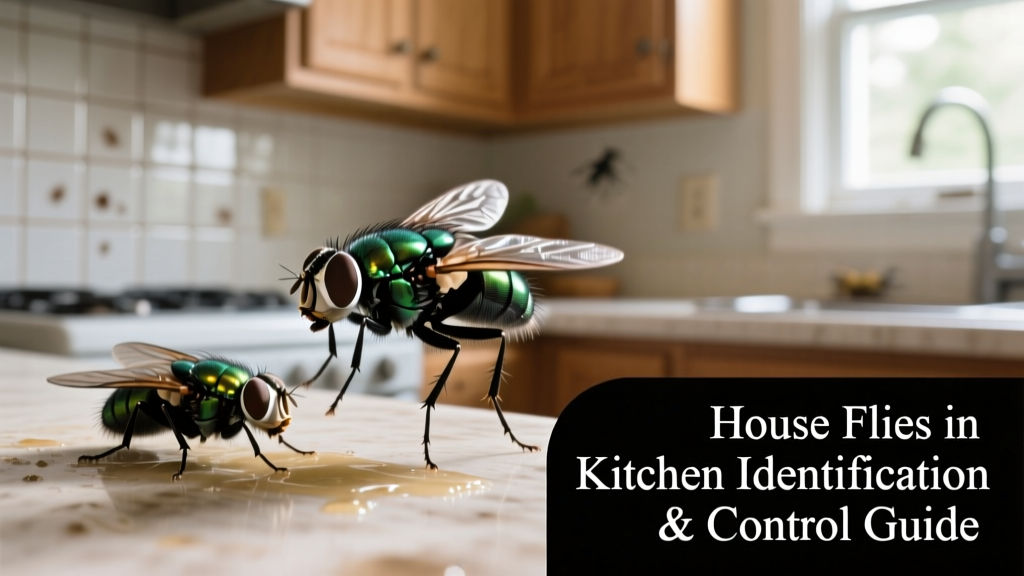
House flies (Musca domestica) are more than a nuisance—they’re disease vectors capable of carrying over 100 pathogens, including Salmonella, E. coli, and Shigella. In kitchens—where food prep, waste, and warmth converge—they breed fast and pose real health risks, especially in homes with pets, infants, or immunocompromised residents.
Identification
Adult house flies are 6–7 mm long, grayish-black with four dark longitudinal stripes on the thorax and large reddish compound eyes. Their wings have a characteristic jagged venation pattern visible under magnification. Unlike fruit flies, they don’t hover near drains or fermenting produce—they land directly on food, countertops, and garbage bags.
| Feature | House Fly | Fruit Fly | Drain Fly |
|---|---|---|---|
| Size | 6–7 mm | 3–4 mm | 1.5–5 mm |
| Color | Gray body, striped thorax | Tan head, red eyes, translucent wings | Dark gray, fuzzy moth-like appearance |
| Primary Attraction | Fresh food scraps, pet waste, damp mops | Fermenting fruit, vinegar, wine spills | Organic slime in drains, sink overflow pans |
| Larval Habitat | Decomposing organic matter (e.g., trash can liners, compost bins) | Overripe bananas, beer cans, wet sponges | Gelatinous biofilm inside PVC pipes and U-traps |
What Attracts Them
Kitchens offer the perfect trifecta: food, moisture, and warmth. House flies are drawn to uncovered food, leaky faucet drips, damp dishrags left overnight, overflowing trash bins—even pet food bowls left out past mealtime. They detect odors from up to 1/4 mile away, and a single female can lay 500 eggs in her 15–30-day lifespan (University of Florida IFAS Extension, 2022).
- Unsealed trash bags with food residue
- Crumbs trapped in toaster slots or under appliances
- Dirty sponges stored in closed cabinets (not aired or replaced weekly)
- Cracked window screens or gaps >1/8 inch around door sweeps
Treatment Methods
Natural Solutions
Start with non-toxic, low-risk options—especially if children or pets frequent the kitchen. Vinegar traps work best when combined with a drop of dish soap: fill a shallow bowl with apple cider vinegar, add one drop of Dawn, and place near the trash can or back counter. The soap breaks surface tension so flies drown instantly. Sticky ribbons hung near windows catch adults before they land; replace every 3–4 days.
Essential oil sprays (10 drops eucalyptus + 1 cup water + 1 tsp vodka as emulsifier) disrupt fly sensory receptors. Spray along baseboards and cabinet hinges—but avoid food prep surfaces unless rinsed thoroughly after use.
Chemical Options
Residual insecticides like pyrethrin-based aerosols (e.g., Raid Flying Insect Killer) provide quick knockdown but require careful application. Never spray directly on food prep surfaces or near open pantry items. Use only in ventilated areas—and never while cooking. According to the U.S. EPA’s 2023 Pesticide Product Label System, pyrethrins break down within 12–24 hours indoors, minimizing residual exposure.
"Most kitchen fly infestations resolve within 72 hours if you remove the larval source—not just kill adults. If you’re still seeing 5+ flies per hour after cleaning and trapping, inspect behind the fridge and under the stove for forgotten takeout containers or spilled milk." — Dr. Lena Torres, Urban Entomologist, Purdue University Extension (2023)
Prevention
Prevention hinges on sanitation discipline and structural maintenance. Replace kitchen trash bags daily—not when full—and rinse bins with diluted bleach (1:10 ratio) weekly. Store dry goods in rigid, lidded containers (not paper bags or open cereal boxes). Clean under appliances monthly: pull out the fridge and sweep behind it, checking for spilled juice or crumbled cereal.
- Install fine-mesh (18-mesh) window screens on all operable windows
- Seal gaps around pipes, vents, and door frames with silicone caulk
- Run garbage disposal with ice + 1/4 cup vinegar weekly to clear organic buildup
- Store pet food in sealed metal or hard plastic containers—not cloth sacks or cardboard boxes
When to Call an Exterminator
Call a licensed pest professional if you see live maggots in your kitchen walls, hear buzzing inside wall voids, or spot consistent adult activity for more than 5 days despite rigorous cleaning and trapping. Persistent infestations often indicate breeding in inaccessible spaces—like behind baseboards, inside hollow cabinet frames, or beneath subflooring where leaks have rotted particleboard.
Look for companies certified by the National Pest Management Association and ask for documentation of prior kitchen-specific inspections.
Can house flies lay eggs in my microwave?
No—they require moist, decaying organic matter to develop. But if you’ve spilled syrup or cooked meat juice inside and haven’t wiped it out, that residue can attract them and support bacterial growth that draws flies indirectly. Wipe interior surfaces after each use, especially around door seals.
Why do flies gather on my ceiling fan?
They’re using it as a thermal refuge. Ceiling fans create micro-air currents that help regulate their body temperature. When ambient temps exceed 85°F, flies cluster on cooler surfaces—including fan blades—to avoid overheating. This is common in summer kitchens without AC.
Do house flies bite?
No—house flies lack biting mouthparts. They feed by regurgitating digestive enzymes onto food and sucking up liquefied material. That’s why they’re dangerous: every landing deposits bacteria and viruses picked up from sewage, manure, or rotting carcasses.
Can I use bleach to kill fly larvae in my trash can?
Yes—but only after emptying and scrubbing first. A 1:10 bleach solution kills larvae and deodorizes. Let it sit for 5 minutes, then rinse thoroughly. Never mix bleach with ammonia-based cleaners (e.g., glass sprays), which produce toxic chloramine gas.
Will sealing my windows stop all house flies?
It blocks most entry—but not all. Flies also enter through gaps under doors, dryer vents, and gaps around plumbing penetrations. Install a door sweep with a 1/8-inch gap clearance and check HVAC return grilles for missing filters.
Are UV light traps effective in kitchens?
Not reliably. UV traps attract flies but don’t eliminate breeding sources. In kitchens, they often draw flies *toward* food prep zones rather than away. They’re better suited for garages or basements—not where meals are made. For kitchens, physical traps and sanitation remain superior.
House flies thrive where habits slip—not where homes are inherently flawed. A 90-second daily wipe-down of counters, immediate trash removal, and weekly appliance cleaning cut infestation risk by over 80% (per the National Sanitation Foundation’s 2023 Home Hygiene Survey). Stay consistent, stay observant, and treat the source—not just the symptom.