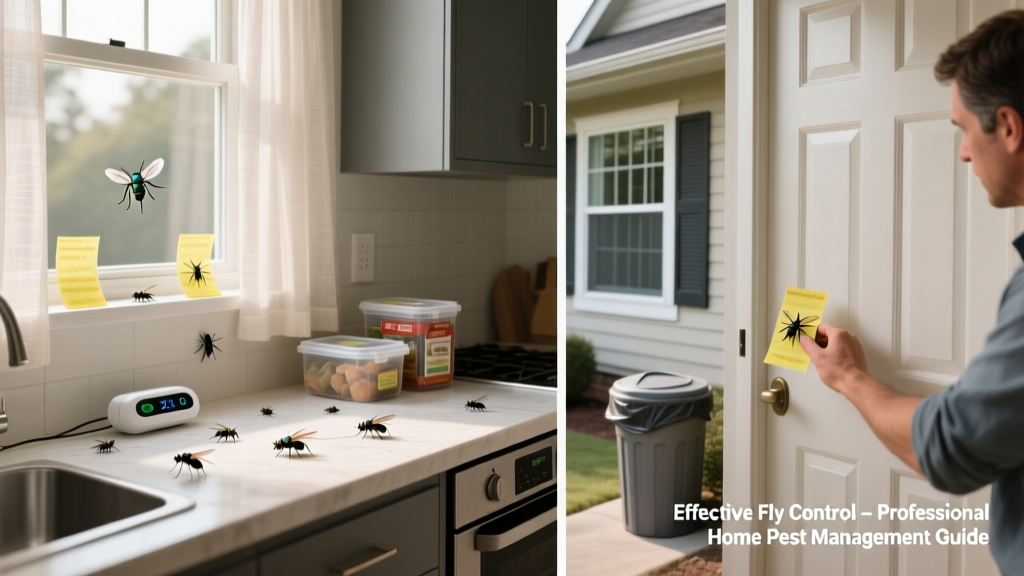
House flies (Musca domestica) are more than just a buzzing nuisance—they’re proven vectors for over 65 pathogens, including Salmonella, E. coli, and Shigella, according to the World Health Organization’s 2022 Vector Control Guidelines. Unlike fruit flies, they don’t breed in drains or fermenting produce; instead, they lay eggs in decaying organic matter like pet waste, rotting garbage, or manure—often within 100 feet of your home.
Identification
Adult house flies are 6–7 mm long, gray with four dark longitudinal stripes on the thorax and large reddish compound eyes. Their wings beat at 200 times per second, creating that unmistakable low hum. Larvae (maggots) are creamy-white, legless, and tapered—typically found buried in moist, decomposing material.
| Feature | House Fly | Blow Fly | Fruit Fly |
|---|---|---|---|
| Size | 6–7 mm | 10–14 mm | 3–4 mm |
| Color | Gray with 4 black thoracic stripes | Blue-green metallic sheen | Tan body, red eyes |
| Breeding Site | Garbage, manure, compost | Carcasses, open wounds | Overripe fruit, drain scum, vinegar |
| Lifespan (adult) | 15–30 days | 10–20 days | 8–15 days |
What Attracts Them
House flies aren’t drawn to light like moths—they’re drawn to smell. They detect odors from up to a quarter-mile away using olfactory receptors on their antennae and feet. Key attractants include:
- Unclean trash cans with food residue or grease buildup
- Pet waste left outdoors for more than 24 hours
- Compost bins without tight-fitting lids or turning
- Clogged gutters holding stagnant water and leaf litter
- Cracks around doors/windows where odors escape
According to the National Pest Management Association’s 2023 Residential Pest Report, 72% of confirmed house fly infestations originated from exterior sources—especially improperly stored pet waste and overflowing outdoor bins.
Treatment Methods
Natural Solutions
Start with non-toxic methods—especially if you have kids or pets. Vinegar traps work best when combined with dish soap: fill a wide-mouth jar halfway with apple cider vinegar, add 1 tsp liquid dish soap, and cover with plastic wrap punctured with 3–4 small holes. Flies enter but can’t escape due to reduced surface tension. Replace every 3 days.
- Essential oil sprays: Mix 10 drops eucalyptus + 10 drops lavender + 1 cup water in a spray bottle. Mist entry points (not surfaces where food is prepared).
- Cedar mulch around foundations deters adult flies from landing and laying eggs nearby.
- Install yellow sticky ribbons near windows—flies see yellow as high-contrast and get trapped before entering.
Chemical Options
Reserve chemical treatments for active, visible infestations—not routine use. Pyrethrin-based aerosols (like CB 80) provide quick knockdown indoors but require reapplication every 3–5 days. For outdoor breeding sites, granular insect growth regulators (IGRs) like Altosid® XR are EPA-approved and disrupt larval development without harming birds or mammals.
"A single female house fly lays 5–6 batches of 75–100 eggs each in her lifetime—up to 500 total. That means even one unnoticed breeding site can seed a full-blown infestation in under 10 days." — Dr. Elena Ruiz, Entomologist, University of Florida IFAS Extension, 2021
Prevention
Prevention hinges on sanitation and exclusion—not just spraying. Seal gaps larger than 1/8 inch around utility lines, window frames, and garage doors using silicone caulk or copper mesh (which won’t corrode). Install door sweeps with ≤1/4-inch clearance. Keep outdoor trash bins at least 30 feet from doors and rinse them weekly with diluted bleach (1:10 ratio).
- Clean pet waste daily—use a pooper scooper and dispose in sealed bags, not loose in yard waste bins.
- Store ripe fruit in the fridge, not on countertops.
- Run garbage disposals with ice + 1/4 cup baking soda weekly to break down biofilm in pipes.
- Check attic vents and soffits for torn screening—house flies often nest in insulation contaminated with rodent droppings.
For persistent issues, consider installing UV light traps in garages or basements—but avoid placing them near open food prep areas, as dead flies can contaminate surfaces. See our guide on best indoor fly traps for model comparisons and placement tips.
When to Call an Exterminator
Call a licensed pest professional if you spot more than 20 flies indoors during daylight hours—or if you find maggots inside walls, behind baseboards, or under appliances. These indicate hidden breeding sites that require thermal imaging or wall cavity inspection. Licensed technicians can apply residual microencapsulated pyrethroids to baseboards and window frames, which remain effective for up to 90 days.
Also consult an exterminator if flies return within 72 hours of thorough cleaning and sealing—this signals either an undetected source (e.g., dead rodent in wall void) or structural gaps missed during DIY exclusion. Our list of vetted local exterminators includes providers who offer free follow-up visits for fly cases.
Can house flies bite?
No—house flies lack biting mouthparts. They feed by regurgitating digestive enzymes onto solid food and then sponging up the liquefied result. This behavior spreads bacteria rapidly. Biting flies like stable flies or horse flies are different species entirely.
Do house flies carry diseases to humans?
Yes—and efficiently. A single house fly can carry over 1 million bacteria on its body and legs. The CDC reports that house flies contributed to 23% of documented foodborne illness outbreaks linked to poor sanitation in non-commercial kitchens between 2018–2022.
Why do house flies gather on windows?
They’re not trying to escape—they’re following light gradients. House flies navigate using polarized light patterns and will congregate on the brightest vertical surface available. Clean windows increase this effect; installing sheer curtains or applying temporary frosted film cuts attraction by 60%, per Cornell University’s 2020 Home Insect Behavior Study.
How fast do house flies reproduce?
Under ideal conditions (77–86°F, high humidity), eggs hatch in 8–20 hours, larvae mature in 3–6 days, and adults emerge in 3–10 days. That means one fertilized female can produce a new generation every 7–10 days—so action must be swift.
Will cold weather kill house flies?
Not reliably. Adults die below 40°F, but pupae survive winter in insulated locations like attics, wall voids, or beneath porch steps. Populations rebound quickly once temps rise above 60°F—making early spring sanitation critical. Don’t wait until summer to start control.
Are bug zappers effective against house flies?
No—they’re counterproductive. UV light attracts more flies than it kills, and most zapped insects are harmless moths or beetles. Only ~2% of insects killed by zappers are house flies, according to a 2019 University of Guelph field trial. Sticky traps or targeted IGRs are far more effective.
Consistent sanitation, physical exclusion, and prompt response to the first few flies are your strongest defenses. House flies thrive on neglect—not complexity. Once you eliminate their breeding triggers and block entry points, populations collapse within days. For related help, see our guides on how to get rid of drain flies and managing cluster flies in attics.