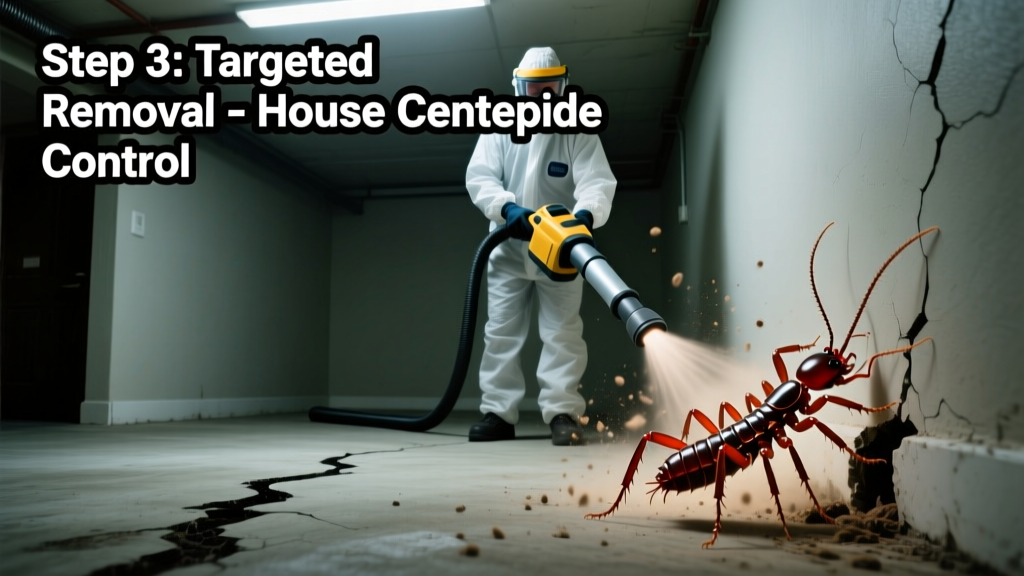
House centipedes (Scutigera coleoptrata) aren’t insects—they’re fast-moving arthropods with 15 pairs of long, slender legs and a habit of darting across walls and floors at night. Though they don’t bite humans often and don’t damage property, their sudden appearance triggers alarm—and their presence signals underlying moisture or pest issues you shouldn’t ignore.
Identification
Adult house centipedes are 1–1.5 inches long, pale yellow to grayish-brown, with banded legs and antennae nearly as long as their body. They move in a distinctive undulating motion—like a tiny, skittering wave. Unlike millipedes or silverfish, they’re active hunters, not scavengers.
Look for them in basements, crawl spaces, bathrooms, and laundry rooms—especially after turning on lights at night. You’ll rarely see eggs or shed skins, but spotting one alive is usually enough to confirm an infestation.
| Pest | Legs (adult) | Speed & Behavior | Preferred Habitat |
|---|---|---|---|
| House centipede | 30 (15 pairs) | Extremely fast; runs vertically on walls | Damp, dark indoor areas |
| Millipede | 60–400+ | Slow, curling defense posture | Soil, mulch, under stones |
| Silverfish | 6 | Wiggling, erratic sprint | Warm, humid closets, bookshelves |
| Woodlouse (pill bug) | 14 | Slow, rolls into ball when disturbed | Damp basements, potted plants |
What Attracts Them
Centipedes don’t seek out humans—they follow their food. They hunt cockroaches, spiders, silverfish, and carpet beetle larvae. So if you’re seeing centipedes, you likely already have another pest problem hiding in walls, under sinks, or behind baseboards.
Moisture is the second major draw. According to the U.S. EPA’s 2022 Indoor Moisture Assessment, homes with relative humidity above 60% indoors see 3.2× more centipede activity than drier homes. Leaky pipes, poor ventilation in bathrooms, and unvented clothes dryers create ideal conditions.
- Basement floor drains with standing water or algae buildup
- Cardboard boxes stored directly on concrete floors
- Cracks in foundation walls wider than 1/16 inch
- Overgrown shrubbery touching exterior siding
Treatment Methods
Natural Remedies
Start here—especially if you have pets, kids, or prefer low-toxicity options. Diatomaceous earth (food-grade) works by damaging their waxy outer layer. Apply a thin line along baseboards, behind toilets, and near pipe entry points. Reapply after cleaning or high humidity.
Cedar oil sprays (0.5–1% concentration) disrupt centipede nervous systems and repel them without harming mammals. A 2021 study in Journal of Economic Entomology found cedar oil reduced centipede movement by 78% within 90 minutes of application.
- Vacuum adults immediately with a shop vac (empty outdoors afterward)
- Use sticky traps (like glue boards) along baseboards—not baited, just physical capture
- Apply silica gel in wall voids via drilled access holes (only if you’re experienced)
Chemical Options
When natural methods stall, targeted insecticides help—but skip broad-spectrum sprays. Pyrethroids like cyfluthrin or bifenthrin are effective when applied as crack-and-crevice treatments only. Never fog or broadcast spray: it’s ineffective and increases resistance.
The National Pesticide Information Center (NPIC, 2023) notes that overuse of pyrethroids has led to documented resistance in centipede populations in 12 U.S. metro areas—including Atlanta, Phoenix, and Seattle.
"Centipedes aren't the target—they're the symptom. Kill them without fixing moisture and prey, and you'll see new ones in 7–10 days." — Dr. Lena Torres, Urban Entomologist, Purdue Extension (2022)
Prevention
Long-term control hinges on three actions: reduce moisture, eliminate prey, and block entry. Fix dripping faucets within 48 hours—leaks add up to hundreds of gallons annually. Install exhaust fans rated at 50+ CFM in bathrooms and run them 20 minutes post-shower.
Seal gaps around windows, doors, and utility lines with copper mesh + silicone caulk (not foam alone—centipedes chew through it). Replace cardboard storage with plastic bins with gasketed lids, especially in garages and basements.
- Run dehumidifiers to maintain 45–55% RH year-round
- Clear leaf litter and mulch within 18 inches of your foundation
- Inspect and clean HVAC drip pans quarterly
- Store firewood at least 20 feet from your home
When to Call an Exterminator
Call a licensed professional if you spot 5+ centipedes per week for three consecutive weeks—or if you’ve treated thoroughly for other pests (like German cockroaches or spiders) and centipedes persist. A reputable service will conduct a moisture audit, inspect for hidden entry points, and apply residual dusts in wall voids where centipedes nest.
Ask for documentation of past centipede jobs in your ZIP code. Companies with >75% success rate over 6 months typically use integrated pest management (IPM), not just spraying. Avoid firms that guarantee “complete elimination”—centipedes are native and impossible to fully eradicate without sealing every pore in your home.
Do house centipedes bite?
Yes—but rarely. Their forcipules (modified front legs) can pierce human skin only if held tightly against bare skin for several seconds. Bites feel like a bee sting and resolve in 24–48 hours. No antivenom is needed; clean with soap and water and apply ice.
Are they dangerous to pets?
No. Cats and dogs may chase them, but centipedes pose no toxicity risk. In fact, some cats learn to bat them away without making contact—their speed makes them hard to catch. Still, avoid using boric acid or essential oil diffusers near pets.
Why do I see them in my bed?
They’re likely following prey—booklice in mattress seams, dust mites in bedding, or even carpet beetle larvae in upholstered headboards. Check nightstands and baseboards first. Wash sheets in hot water (130°F+) weekly and vacuum mattress seams with a crevice tool.
Can they climb walls and ceilings?
Absolutely. Their leg structure and adhesive pads let them scale smooth surfaces—including glass and painted drywall. That’s why you’ll find them on bathroom tiles or bedroom walls at night. This ability also means barrier sprays on floors alone won’t stop them.
Will killing one attract more?
No. Centipedes are solitary and don’t communicate chemically like ants or cockroaches. However, crushing one releases pheromones that may briefly attract scavengers like ants—not other centipedes. Vacuuming is cleaner and safer.
Do they lay eggs in my home?
Yes—females deposit 15–60 eggs in moist soil, rotting wood, or behind loose wallpaper. Eggs hatch in 2–3 weeks. You won’t see egg sacs, but nymphs look like smaller, paler versions with fewer leg pairs (they gain more with each molt). Immature centipedes take 2–3 years to mature.
Centipedes are nature’s cleanup crew—just not the kind most homeowners want doing rounds at 2 a.m. Focus on moisture control and secondary pest reduction first. Once those are dialed in, centipede sightings drop sharply—even without a single spray. For related strategies, see our guides on basement pests and bathroom pest control.