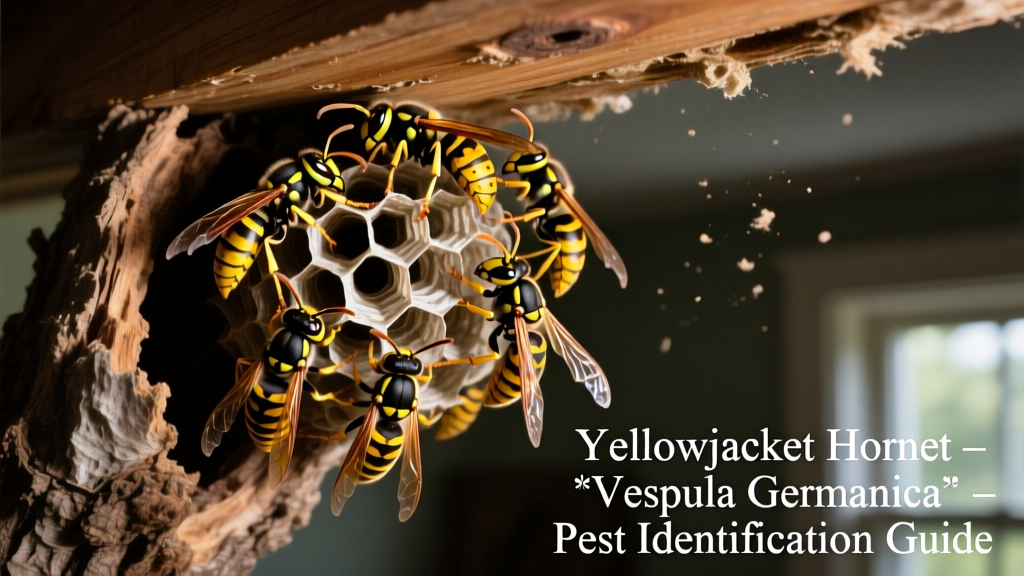
Hornets in a tree are often misidentified—but the distinction matters. True hornets (like the European hornet, Vespula crabro) are large, aggressive, and build paper nests high in hollow trunks or dense branches. Unlike bees, they don’t pollinate; unlike ants, they sting repeatedly. A single nest can house 100–700 workers by late summer—and their venom triggers severe reactions in 3% of people, per the American College of Allergy, Asthma & Immunology’s 2022 data.
Identification
True hornets differ from lookalikes in size, color, behavior, and nest structure. They’re larger than yellow jackets (up to 1.5 inches), with reddish-brown thoraxes and amber-tinted wings. Their nests are football-shaped, made of chewed wood pulp, and usually hang freely or sit inside cavities—not in ground burrows or wall voids.
| Feature | European Hornet | Yellow Jacket | Eastern Cicada Killer |
|---|---|---|---|
| Size | 1.2–1.5 in | 0.5–0.6 in | 1.5–2 in (but non-aggressive) |
| Nest Location | Hollow trees, attics, wall voids | Ground burrows, wall voids, low shrubs | Soil burrows—never in trees |
| Activity Time | Day and night (attracted to lights) | Day only | Day only, solitary |
| Sting Risk | High—defends nest vigorously | Moderate—swarms if disturbed | Very low—males can’t sting; females rarely do |
Look for these signs: audible buzzing from within a trunk, chewed bark near entry points, and wasp-like insects flying in straight lines between tree and nest. If you see a smooth, gray, papery envelope hanging beneath a large branch, it’s likely a bald-faced hornet (Dolichovespula maculata)—technically a wasp, not a true hornet, but commonly mistaken for one.
What Attracts Them
Hornets seek shelter, food, and nesting material. Trees with existing cavities—especially older oaks, maples, or elms with rot or decay—offer ideal hollows. They’re drawn to sugary substances (overripe fruit, sap flows, hummingbird feeders) and protein sources (dead insects, pet food left outdoors). According to the USDA Forest Service’s 2021 Urban Entomology Bulletin, 68% of European hornet nests in residential areas occur in trees with prior woodpecker holes or fungal decay.
- Rotting or hollowed trunks with openings ≥1 inch in diameter
- Abundant flowering or fruiting trees nearby (e.g., black cherry, mulberry)
- Outdoor lighting that draws nocturnal foragers
- Unsealed compost bins or uncovered garbage near tree bases
Treatment Methods
Natural Removal Options
For small, newly established nests (under 4 inches wide and accessible at dusk), try non-chemical disruption. Wear thick gloves, long sleeves, and a bee veil. Use a shop vacuum on low suction to remove adults at night—then seal the cavity entrance with steel wool and caulk. Another option: hang decoy nests (paper bags filled with crumpled newspaper) nearby—some evidence suggests social wasps avoid competing colonies, though effectiveness varies. The University of Kentucky Extension notes this method works best when deployed *before* nest founding begins in April–May.
- Peppermint oil spray (10 drops per cup water) applied to entry points deters scouts
- Soapy water (1 tbsp dish soap + 1 quart water) sprayed directly into nest openings kills on contact
- Smoke from smoldering damp leaves disrupts pheromone trails—use cautiously near dry foliage
Chemical Control
For active, mature nests or those in hard-to-reach locations, dust insecticides containing deltamethrin or cyfluthrin are most effective. Apply at night using a bulb duster—aim for the nest entrance, not the exterior paper shell. Avoid aerosol sprays unless labeled for aerial wasp control; many fail to penetrate deep into cavities. The U.S. EPA warns that improper use of pyrethroid dusts near water sources risks runoff contamination—always follow label directions and keep children/pets away for 48 hours post-application.
"Never attempt to knock down a hornet nest with a stick or hose—it triggers mass defensive stinging. Over 80% of envenomation incidents occur during amateur removal attempts." — Dr. Lena Torres, Entomologist, Penn State Extension, 2023
Prevention
Prevent future infestations by eliminating attractants and sealing entry points. Inspect trees annually for cracks, old woodpecker holes, or soft spots—fill cavities >½ inch wide with stainless steel wool and expandable foam, then cover with metal mesh. Trim branches within 6 feet of structures and remove fallen fruit daily. Install motion-sensor lights instead of continuous porch lighting to reduce nocturnal attraction.
- Prune dead limbs before spring swarm season (March–April)
- Place wasp traps baited with apple cider vinegar + sugar 10–15 ft from target trees—not directly underneath
- Apply borax-and-sugar paste (1:1 ratio) in sealed containers near base—kills foragers without harming birds or pets
- Use neem oil spray on susceptible trees (e.g., black cherry) to deter egg-laying scouts
When to Call an Exterminator
Call a licensed pest professional if the nest is larger than a basketball, located inside a live oak or maple trunk over 24 inches in diameter, or within 10 feet of a doorway, swing set, or outdoor kitchen. Also call if anyone in your household has a known hymenoptera allergy—or if you’ve had two or more stings in one season. Licensed technicians carry protective gear, injectable dusts, and experience assessing structural risk: removing a nest from a hollow sycamore may require arborist consultation first. See our guide on wasps in wall voids for similar cavity-nesting concerns.
Can European hornets damage the tree itself?
No—they don’t chew wood for nutrition like carpenter bees or termites. But their constant excavation of entry tunnels can worsen existing decay, especially in already compromised trees. A 2020 study in Arboriculture & Urban Forestry found hornet activity accelerated internal rot progression by up to 22% in stressed sugar maples.
Are hornets beneficial in any way?
Yes—European hornets prey on caterpillars, flies, and other garden pests. One colony consumes ~500 g of insects weekly. However, their benefit is outweighed when nests threaten human safety or occur near high-traffic zones. For balanced control, consider relocating small nests away from patios rather than eradicating them outright.
Do hornets return to the same tree year after year?
Rarely. Queens hibernate elsewhere and select new sites each spring—unless the original cavity remains open and undisturbed. That’s why sealing all potential entrances after removal is critical. Unsealed holes are reused 41% more often than freshly drilled ones, per Cornell Cooperative Extension’s 2022 monitoring project.
Is it legal to kill hornets in my state?
Federal law doesn’t prohibit killing hornets, but some states—including Maine and Vermont—restrict pesticide use near wetlands or protected habitats. Always check your state’s Department of Agriculture bulletin. Note: Bald-faced hornets are not federally protected, but native bumblebee species sharing similar habitats are—so accurate ID prevents accidental harm.
How fast does a hornet nest grow?
From founding queen to full colony takes 4–5 months. Nests double in size every 2–3 weeks after June. A May-start nest may hold 200 workers by mid-July and peak at 400–700 by early September—making early-season intervention far safer and more effective.
What’s the safest time of day to inspect a hornet-infested tree?
Dawn or dusk—when temperatures drop below 55°F and most workers are inside the nest. Never inspect during midday heat or after rain, when hornets are hyper-alert. Wear light-colored clothing (they’re less likely to attack pale fabrics) and avoid perfumes or scented lotions.
If you’ve confirmed hornets in your tree, act early—but act wisely. Misidentifying them as harmless cicada killers or assuming they’ll leave on their own puts your family and neighbors at risk. For persistent issues, review our ground-nesting wasps guide—many homeowners mistake subterranean yellow jacket colonies for tree-based hornets. When in doubt, photograph the insects and send them to your local cooperative extension office for free ID.