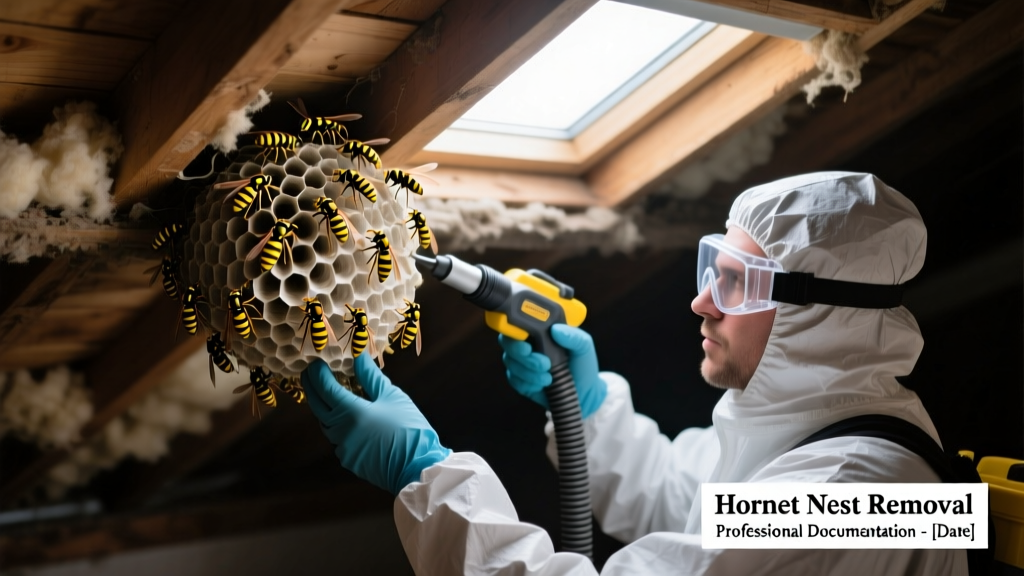
Hornets—especially the bald-faced hornet (Dolichovespula maculata)—frequently build large, papery, football-shaped nests in attic eaves, soffits, and wall voids. Unlike bees, they’re aggressive defenders of their colonies and can sting repeatedly. A single nest may house 200–700 workers by late summer, and attic nesting poses fire hazards (nest material near wiring) and health risks from venom exposure.
Identification
Bald-faced hornets are black with white facial markings and measure ½–⅝ inch long. Their nests are grayish, multi-layered, and often hang freely from rafters or joists—but in attics, they’re commonly built against insulation or tucked into corners. You’ll hear a low buzzing sound near vents or soffits, spot repeated flights near roofline gaps, or find chewed wood pulp near entry points.
| Insect | Nest Location | Nest Material | Aggression Level |
|---|---|---|---|
| Bald-faced hornet | Attic rafters, soffits, wall voids | Chewed wood fiber (gray, papery) | High—stings without provocation if nest disturbed |
| Yellowjacket | Wall cavities, drop ceilings, insulation | Similar pulp, but often hidden inside walls | Moderate to high—more defensive near food sources |
| Honeybee | Rare in attics unless swarm enters; prefers hollow trees | Wax combs, not paper | Low—unless hive is threatened or queen is endangered |
What Attracts Them
Hornets seek sheltered, dry, elevated spaces with small entry points—exactly what attics offer. Key attractants include:
- Unsealed soffit vents, gable vents, or roofline gaps larger than ¼ inch
- Decaying wood or fascia that’s easy to chew for nest-building material
- Proximity to outdoor protein sources (e.g., bird feeders, pet food, garbage bins within 50 feet)
- Warmth retention—attics that stay above 60°F year-round encourage early spring colony founding
According to the National Pest Management Association’s 2022 Structural Pest Report, 38% of hornet infestations in residential structures begin through unsealed attic ventilation points.
Treatment Methods
Natural Methods
For small, newly established nests (less than 4 inches wide and with minimal activity), natural options can work—if applied at dusk or dawn when hornets are least active:
- Soapy water spray (1 tbsp dish soap + 1 cup water): clogs spiracles and immobilizes adults on contact
- Diatomaceous earth (food-grade): dust lightly around nest base or entry point—dehydrates exoskeletons over 2–3 days
- Mint oil spray (10 drops peppermint oil + 1 cup water): deters foraging but does not eliminate established nests
Never use smoke, vinegar, or citrus sprays—these lack efficacy and may agitate the colony.
Chemical Methods
For medium-to-large nests (6+ inches) or nests near electrical wiring or insulation, targeted insecticides are necessary. Use only EPA-registered products labeled for aerial wasps/hornets:
- Aerosol wasp & hornet spray (e.g., Spectracide Wasp & Hornet Killer): delivers a 15–20 ft stream; apply at night, aiming directly into nest opening
- Dust formulations (e.g., DeltaDust containing deltamethrin): puff into wall voids or behind soffits using a hand duster—effective for hidden nests
- Residual liquid sprays (e.g., Tempo SC Ultra): treat entry points and surrounding wood after nest removal to prevent reinfestation
"A single missed worker can restart a colony in 72 hours—always monitor for 3–4 days post-treatment before removing the nest," says Dr. Lena Cho, Entomologist at the University of Florida IFAS Extension (2023).
Prevention
Preventing future hornet colonies means sealing access *before* spring swarming begins (March–April in most U.S. zones). Focus on:
- Installing ⅛-inch stainless steel mesh over all attic vents, soffits, and ridge vents
- Sealing gaps around plumbing stacks, chimneys, and recessed lighting with expanding foam or copper mesh + caulk
- Trimming tree branches within 6 feet of the roofline to limit landing zones
- Removing standing water sources (clogged gutters, leaky AC drip pans) that attract foraging hornets
Also inspect nearby yellowjackets in walls—they exploit similar entry routes and are harder to detect early.
When to Call an Exterminator
Call a licensed pest professional immediately if:
- The nest is larger than a basketball or located inside insulation or wall voids
- You’ve experienced multiple stings or have known venom allergies in the household
- The nest is within 3 feet of electrical panels, HVAC ductwork, or gas lines
- You see >20 hornets entering/exiting per minute during daylight hours
Certified technicians use protective gear, thermal imaging to locate hidden nests, and follow strict EPA guidelines for pesticide application. The average cost for attic hornet removal ranges $250–$600, depending on nest size and accessibility (PestWorld.org 2023 pricing survey).
Can I remove a hornet nest myself?
Yes—only if it’s under 4 inches, accessible without climbing, and you’re wearing full protective gear (veil, thick gloves, long sleeves, sealed pants). Never attempt removal during daylight or in high heat. If unsure, start with wasp nest removal safety tips.
Do hornets return to the same attic next year?
Rarely. Queens hibernate alone in bark crevices or leaf litter—not in old nests. But if entry points remain open, a new queen may choose the same location. That’s why sealing is more critical than nest cleanup.
Are hornets beneficial?
Yes—they prey on caterpillars, flies, and other pests. But attic nesting puts them in conflict with humans. Relocation isn’t feasible; their nests can’t be moved intact. Conservation value applies only to natural habitat nesting (e.g., hollow trees).
How fast do hornet nests grow?
A founding queen builds the first 20–30 cells in 10–14 days. By mid-July, a mature nest may contain 400+ workers and expand 1–2 inches per week. Peak size occurs August–early September.
Will hornets damage my attic structure?
Not directly—they don’t chew wood like carpenter ants. But they strip softwood fibers for nest pulp, which can weaken fascia boards over time. More critically, nests near wiring pose fire risk if hornets chew insulation or cause short circuits.
What’s the difference between a hornet and a cicada killer?
Cicada killers are solitary, 1.5-inch wasps that dig ground burrows—not attic dwellers. They rarely sting and target cicadas, not people. Hornets are social, build aerial nests, and defend territory aggressively.
Once the nest is gone and entry points sealed, monitor for 30 days with sticky traps near vents. If activity resumes, inspect for secondary nests or overlooked gaps. Keep attic ventilation functional—don’t block airflow while sealing. For ongoing protection, consider seasonal inspections in March and August, especially in homes with cedar shake roofs or older soffit materials.