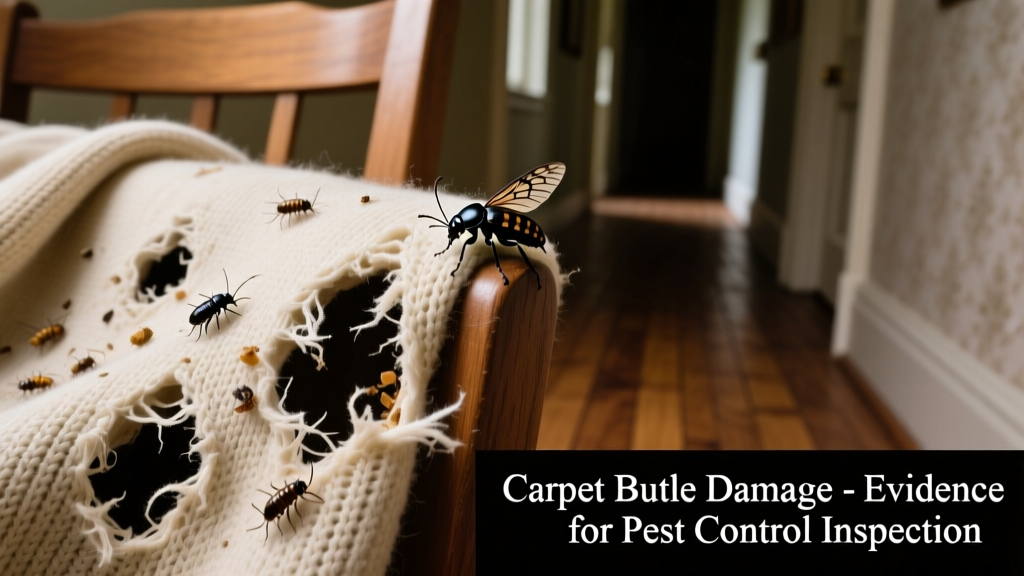
Holes in your favorite sweaters, wool coats, or cashmere scarves aren’t random—they’re evidence of a hidden infestation. Most commonly, these damages are caused by the larval stage of clothing moths or carpet beetles, both of which feed on keratin-rich natural fibers like wool, silk, fur, and feathers. Left unchecked, they can destroy hundreds of dollars’ worth of garments—and even damage upholstery, rugs, and taxidermy.
Identification
Adult moths and beetles rarely eat fabric; it’s their larvae that do the damage. Correct identification hinges on inspecting the holes, surrounding debris, and life-stage clues—not just the adult insect you might spot fluttering near a closet.
- Clothes moth larvae leave irregular, scattered holes—often near seams, folds, or under collars where sweat residue accumulates.
- Carpet beetle larvae create more random, shallow surface nibbling—sometimes leaving behind tiny black specks (their feces) or molted skins.
- Moth adults are pale beige or buff-colored, ¼-inch long, with narrow wings held roof-like over their backs. They avoid light and rarely fly toward windows.
- Carpet beetles (varied species) are rounder, 1/8-inch, often patterned with orange, black, and white scales—like tiny ladybugs—and *do* fly toward light.
| Feature | Clothes Moth | Carpet Beetle |
|---|---|---|
| Adult appearance | Pale beige, slender, wings folded tent-like | Round, oval, mottled black/orange/white scales |
| Larval behavior | Spin silken tubes or cases; hide while feeding | Wander freely; leave shed skins and gritty frass |
| Typical hole pattern | Irregular, deeper holes in isolated areas | Shallow, diffuse surface grazing; often near edges |
| Preferred food sources | Wool, cashmere, fur, feathers, pet hair | Same as moths—but also dried plant material, pollen, dead insects |
What Attracts Them
Neither pest invades from outdoors with intent—they hitchhike in on secondhand clothing, used furniture, or even potted plants. Once inside, they thrive where conditions support larval development: warmth (70–85°F), low light, and undisturbed storage. According to the University of California Statewide IPM Program’s 2022 report, 68% of confirmed clothing moth infestations begin in closets or garment bags left sealed for >3 months.
- Soiled clothing (sweat, food stains, body oils) is 5x more attractive to larvae than clean items.
- Cardboard boxes and plastic bins without ventilation trap moisture and attract egg-laying females.
- Unused guest rooms, attics, and basement storage areas provide ideal low-disturbance breeding sites.
Treatment Methods
Natural Methods
Start here—especially if you have children, pets, or sensitive respiratory systems. Cold treatment works best for small batches: seal garments in freezer bags and freeze at 0°F for 72 hours. This kills all life stages, including eggs. For larger items like coats or blankets, dry cleaning is effective but verify the facility uses high-heat finishing (130°F+ for 30 minutes), not just solvent wash.
- Wash all washable items in hot water (120°F+) for 20+ minutes—this kills larvae and eggs.
- Vacuum thoroughly: use crevice tools on baseboards, shelf edges, and behind dressers; dispose of the bag or canister contents outside immediately.
- Store cleaned items in airtight plastic bins—not fabric garment bags—with cedar blocks or lavender sachets (note: these repel but don’t kill).
Chemical Methods
Use targeted, low-toxicity options only after natural methods fail. The U.S. EPA registered pyrethrin-based sprays (e.g., Bedlam Insecticide Aerosol) can be applied to closet walls, shelves, and baseboards—but never directly on clothing or skin. Avoid broad-spectrum foggers: they disperse pesticide unevenly and rarely reach larval hiding spots.
"Larvae hide in cracks, under moldings, and inside drawer glides—spray must contact them directly. A single missed cluster can restart the infestation in 3 weeks." — Dr. Elena Ruiz, Entomologist, UC Riverside Department of Entomology, 2023
Prevention
Prevention isn’t about perfection—it’s about disrupting the reproductive cycle. Moths and beetles need 4–6 weeks to develop from egg to adult. Break that cycle by rotating stored clothing every 4–6 weeks and inspecting for signs: tiny casings, webbing, or shed skins.
- Install LED motion-sensor lights in closets—larvae avoid light exposure.
- Replace cardboard storage boxes with clear, lidded plastic bins labeled with date of storage.
- Run a dehumidifier in damp basements or laundry rooms—larvae development slows below 40% RH.
For ongoing protection, consider installing pheromone traps like Pro-Pest Clothes Moth Traps—they catch males and help monitor activity levels. Pair with regular vacuuming and laundering to stay ahead.
When to Call an Exterminator
Call a licensed pest professional if you find live larvae in multiple rooms, see adult moths or beetles daily for more than two weeks, or discover damage across more than three separate garment categories (e.g., wool suits, cashmere sweaters, and leather belts). DIY methods rarely eliminate deep-seated infestations in wall voids or HVAC ducts—where carpet beetle larvae have been documented nesting since 2021, per the National Pest Management Association’s field survey.
Why do holes appear only in some clothes?
Synthetic fabrics like polyester, nylon, and acrylic contain no keratin—so they’re ignored unless blended with wool or soiled with protein-based residues (e.g., baby formula on a cotton onesie). Pure cotton and linen may get minor damage only if heavily stained with food, blood, or bodily fluids.
Can washing fix an active infestation?
Washing kills larvae and eggs on *that item*, but won’t stop reinfestation from nearby untreated garments, drawers, or baseboards. Always treat the entire storage area—not just the damaged piece. See our guide on laundry room pest control for full protocol details.
Are pantry moths causing my clothing holes?
No. Indian meal moths (Plodia interpunctella) feed exclusively on dried foods—grains, nuts, pet food—not fabric. Their presence signals a kitchen issue, not a closet one. Confusion arises because both moths fly weakly and avoid light—but their larvae look and behave very differently.
Do cedar chests really work?
Older cedar chests *can* repel moths—if the wood is freshly sanded and emits strong aromatic oils. But most modern cedar-lined closets or blocks lose potency within 6–12 months. Lab tests at Michigan State University (2021) showed cedar oil vapor reduced moth landings by 42%, but had zero effect on established larvae.
What if I find tiny white worms in my closet?
Those are almost certainly clothes moth larvae—cream-colored, ½-inch long, with brown heads and visible legs. They spin silk-lined tunnels as they feed. Vacuum them up immediately and deep-clean the area. Don’t confuse them with carpet beetle larvae, which are hairy, darker, and move more deliberately.
Can pets bring these pests into the house?
Yes—especially dogs and cats with untreated flea infestations. Flea larvae feed on dried blood and skin flakes, but carpet beetle larvae will readily switch to pet hair, dander, and fur caught in carpets or under furniture. Regular pet grooming and vacuuming reduce this risk significantly.
Damage to clothing is rarely about neglect—it’s about biology meeting opportunity. Catching it early means fewer garments lost, less chemical use, and no need to replace heirloom woolens. Stay vigilant, rotate storage, and trust your eyes: if you see webbing, casings, or tiny dark pellets near your sweaters, act now—not next season.