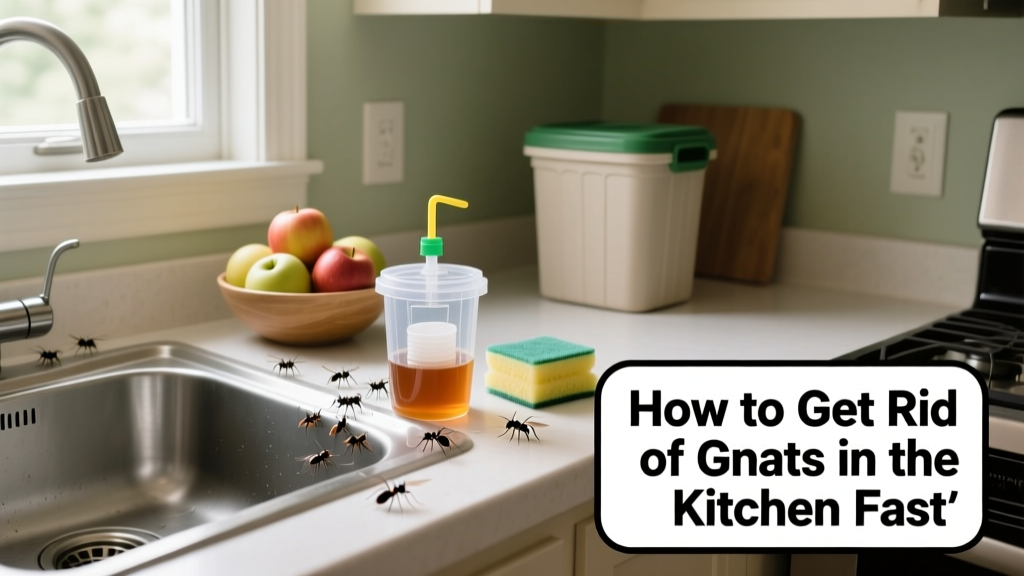
Gnats in the kitchen aren’t just annoying—they’re a red flag for moisture buildup, rotting organic matter, or plumbing issues. Most are either fruit flies (Drosophila melanogaster) breeding in overripe produce or drain flies (Psychoda spp.) thriving in gelatinous biofilm inside sink and garbage disposal pipes. Left unchecked, populations explode in 8–10 days, with females laying up to 500 eggs in decaying material.
Identification
Fruit flies are tan-to-brown with bright red eyes, about 1/8 inch long, and hover near bananas, onions, or recycling bins. Drain flies are fuzzy, moth-like, dark gray, and crawl more than fly—they’re often spotted on walls near sinks or dishwashers. Fungus gnats (common in potted herbs on windowsills) are black, slender, and weak fliers that emerge from damp potting soil.
| Species | Size & Color | Flight Pattern | Primary Breeding Site |
|---|---|---|---|
| Fruit fly | 1/8"; tan body, red eyes | Quick, darting flight | Rotten fruit, wine spills, empty soda cans |
| Drain fly | 1/16"–1/8"; gray/black, fuzzy wings | Short hops, clumsy flight | Slime layer in drains, garbage disposals, wet mops |
| Fungus gnat | 1/16"; black, long legs | Weak, erratic flutter | Overwatered herb pots, compost buckets, damp sponges |
What Attracts Them
Kitchen gnats need three things: moisture, organic debris, and warmth. Fruit flies detect ethanol from fermentation at distances up to 2 miles—so a single overripe avocado or forgotten smoothie cup is enough to trigger an infestation. Drain flies feed on bacteria and fungi in stagnant water films that build up in P-traps, especially during humid summer months or after weeks of low sink use.
- Uncleaned coffee grounds in the filter basket
- Food scraps trapped under refrigerator drip pans
- Cracked caulk around sink basins holding standing moisture
- Pet food bowls left out overnight
Treatment Methods
Natural Solutions
Vinegar traps work best for fruit flies: fill a small jar with ½ cup apple cider vinegar + 1 tsp dish soap. The scent lures them in; the soap breaks surface tension so they drown. Replace every 48 hours. For drain flies, pour ½ cup baking soda followed by ½ cup white vinegar down the drain, wait 15 minutes, then flush with boiling water. Repeat for 3 nights.
Chemical Options
Use enzyme-based drain cleaners like Green Gobbler Liquid Drain Cleaner (EPA-registered, non-corrosive) to digest organic sludge without damaging pipes. Avoid chlorine bleach—it kills surface bacteria but leaves biofilm intact. For persistent fruit fly outbreaks, pyrethrin aerosols (e.g., CB 80) can knock down adults on contact—but never spray near food prep surfaces or while cooking.
Prevention
Break the breeding cycle by eliminating larval habitats. Store ripe fruit in the fridge—not on countertops. Rinse all recyclables (especially juice bottles and beer cans) before bagging. Wipe down countertops and stovetops nightly with a vinegar-water solution (1:1 ratio). Replace sponge every 2 weeks—and microwave damp sponges for 60 seconds weekly to kill eggs.
"A single fruit fly infestation traced to a cracked seal under a dishwasher revealed 17 breeding sites—including behind the toe kick and inside the air gap vent. Inspect *behind* appliances, not just visible surfaces." — Rodent & Insect Control Association Field Manual, 2022
- Caulk gaps around sink edges and garbage disposal mounts
- Install fine-mesh drain covers (1mm openings) on all kitchen sinks
- Run hot water for 60 seconds after each dishwashing session
- Empty trash daily—even if it’s not full—if it contains food waste
When to Call an Exterminator
Call a licensed pest professional if gnats persist for more than 10 days despite consistent cleaning and trapping—or if you spot them emerging from walls, baseboards, or HVAC vents. That often signals hidden moisture damage or a leak behind cabinets. According to the National Pest Management Association’s 2023 Infestation Response Report, 68% of recurring kitchen gnat cases involved undetected plumbing leaks or failed wax rings beneath toilets adjacent to kitchens.
Why do gnats appear suddenly after I clean?
Cleaning stirs up dormant eggs and larvae embedded in grout lines or under appliance seals. You’re not causing the problem—you’re revealing it. Focus on moisture control *after* cleaning: dry cabinet interiors with towels, run exhaust fans for 20 minutes post-dishwashing, and leave cabinet doors open overnight to air out.
Can gnats lay eggs in my pantry?
Yes—but only if grains, flour, or dried beans are contaminated with moisture or mold spores. Check for webbing, clumping, or musty odors. Discard any opened packages stored >3 months. Transfer dry goods to sealed glass or hard plastic containers with gasket lids—like these tested airtight jars.
Do gnats bite humans in the kitchen?
Fruit flies and drain flies don’t bite. But fungus gnats *can* nibble exposed skin when populations exceed 200 per room—though bites are painless and cause no welts. If you feel biting, suspect phorid flies (coffin flies), which breed in sewer line cracks and require immediate pipe inspection. Learn more in our guide to sewer-related flies.
Is it safe to use essential oils near food prep areas?
Eucalyptus and peppermint oils repel adult gnats but evaporate quickly and offer no larval control. Never apply undiluted oils to countertops—residue can taint food. A safer option: add 3 drops of food-grade peppermint oil to your final rinse water when mopping floors. It masks attractants without leaving residue.
Can houseplants on my kitchen counter bring in gnats?
Absolutely. Overwatered basil, mint, or parsley pots are prime fungus gnat nurseries. Let top 1.5 inches of soil dry between waterings. Apply a ¼-inch layer of horticultural sand to the soil surface—it drowns emerging adults. For severe cases, drench soil with diluted neem oil solution (1 tsp per quart water) once weekly for 3 weeks.
Will turning up the AC stop gnats?
Cooler temps slow gnat metabolism but won’t eliminate them. Fruit flies develop fastest at 77°F (25°C)—but still reproduce at 60°F. Lowering temps below 55°F halts development, yet most kitchens don’t reach that range. Better to pair AC use with dehumidification: keep relative humidity below 50% using a compact kitchen dehumidifier.
Consistent gnat control isn’t about killing adults—it’s about starving larvae. Wipe, dry, seal, and inspect weekly. Most infestations vanish within 7–10 days once breeding sites are removed. If you see one gnat today, assume there are 200 eggs nearby—and act before they hatch.