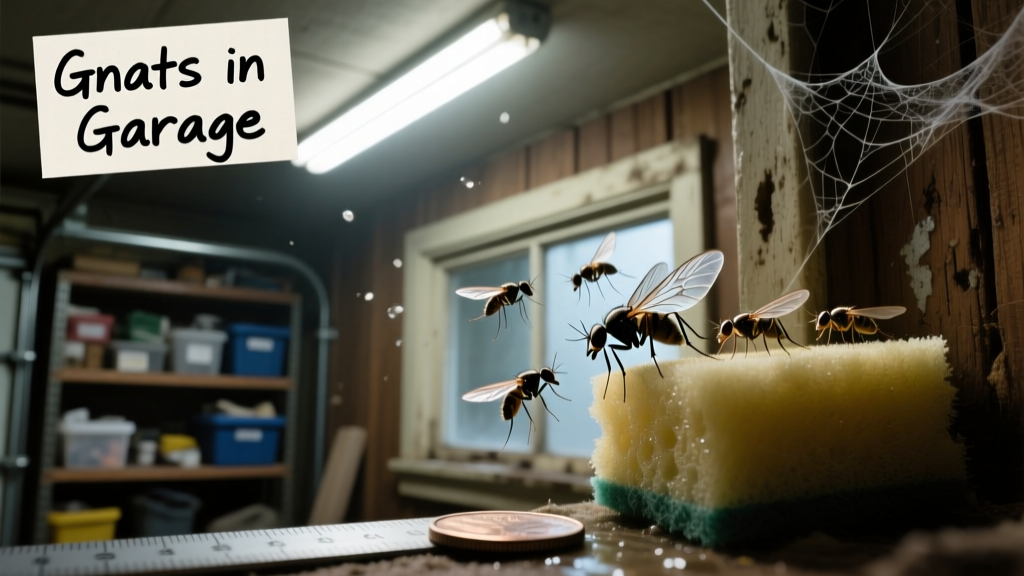
Gnats in the garage aren’t just a nuisance—they’re a red flag. These tiny flying insects (often fungus gnats or drain flies) thrive where moisture, organic debris, and poor ventilation converge. Left unchecked, they multiply rapidly and can signal underlying issues like leaky pipes, rotting wood, or neglected trash—problems that escalate beyond pest control into structural or sanitation concerns.
Identification
Fungus gnats (Bradysia spp.) are the most common garage gnat. Adults are 1–3 mm long, slender, black or gray, with long legs and delicate, mosquito-like wings. They don’t bite but hover near damp floors, potted plants left in the garage, or near floor drains. Drain flies (Psychoda spp.) are slightly larger (2 mm), fuzzy, moth-like, and crawl more than fly—they cluster on walls near sinks or utility sinks.
| Feature | Fungus Gnat | Drain Fly | Phorid Fly |
|---|---|---|---|
| Size | 1–3 mm | 1.5–2.5 mm | 0.5–6 mm (highly variable) |
| Wings | Clear, held flat at rest | Fuzzy, held roof-like over body | Held horizontally, often appear humped |
| Primary Breeding Site | Damp soil, mulch, compost bins | Gelatinous biofilm in drains & pipes | Decaying organic matter (e.g., spilled oil + dust, rodent carcasses) |
| Flight Pattern | Erratic, weak fliers | Short, fluttering hops | Quick, darting, often run before flying |
Look for larvae: fungus gnat larvae are translucent with shiny black heads, found in wet soil or under mats of algae on concrete. Drain fly larvae are legless, pale, and wriggle in slimy drain residue. Phorid fly larvae may indicate hidden decay—check behind stored appliances or under floor mats.
What Attracts Them
Gnats follow moisture and food—not light. In garages, key attractants include:
- Standing water in cracked concrete, clogged floor drains, or drip pans under HVAC units
- Overwatered potted plants stored in the garage (especially during winter)
- Organic buildup in utility sink drains, garbage cans, or recycling bins
- Rotten wood framing, wet cardboard boxes, or old mulch bags left against walls
- Spilled motor oil or coolant mixed with dust and debris—this creates ideal breeding sludge for phorid flies
According to the National Pest Management Association’s Pest Control Handbook 2022, 68% of reported gnat infestations in attached garages trace back to plumbing leaks or improperly sealed floor drains—not outdoor entry.
Treatment Methods
Natural Solutions
Start with non-toxic interventions—especially if you store vehicles, tools, or children’s bikes in the space. Vinegar traps work well for adult fungus gnats: fill a jar with ½ cup apple cider vinegar, 2 tbsp sugar, and 1 tsp liquid dish soap. Cover with plastic wrap punctured with toothpick holes. Replace every 3–4 days. For drain flies, pour ½ cup baking soda followed by ½ cup white vinegar down the drain; wait 15 minutes, then flush with boiling water.
- Use yellow sticky cards near suspected breeding zones (e.g., near floor drains or plant storage areas)
- Apply Bacillus thuringiensis israelensis (Bti) granules to damp soil or drain traps—it kills gnat larvae but is harmless to pets and humans
- Vacuum adults daily with a shop vac fitted with a fine filter—dispose of the bag outside immediately
Chemical Options
Reserve chemical treatments for persistent cases after confirming breeding sites. Pyrethrin-based aerosols (like CB-80) provide quick knockdown but require repeated applications. For drain biofilm, enzymatic cleaners (e.g., Green Gobbler Drain Gel) break down organic matter without corroding pipes—unlike bleach, which only masks the problem.
"Drain flies rarely come from sewers—they breed in your garage’s own drain slime. If you see them, assume the biofilm is ½ inch thick and has been there for months." — Dr. Elena Ruiz, Entomologist, NPMA Technical Bulletin #47 (2023)
Prevention
Garage gnats won’t return if you disrupt their life cycle at the source. Seal cracks in concrete with polyurethane caulk to eliminate moisture pockets. Install a dehumidifier if relative humidity consistently exceeds 60%—fungus gnats won’t develop below 55% RH. Store all organic materials (mulch, potting soil, pet food) in sealed plastic bins—not cardboard or burlap sacks.
- Clean floor drains monthly using a stiff bottle brush and enzyme cleaner
- Inspect and replace cracked or missing drain grates—many garage floor drains lack proper P-traps
- Keep garage doors closed during peak gnat activity (dawn and dusk), especially if adjacent to gardens or compost piles
- Remove standing water from drip pans weekly—even ¼ inch supports larval development for up to 7 days
When to Call an Exterminator
Call a licensed pest professional if:
- You’ve treated confirmed breeding sites for 10+ days with no reduction in adult numbers
- You spot larvae inside wall voids, behind baseboards, or under concrete slabs
- Phorid flies are present—these often indicate hidden decay requiring inspection (e.g., dead rodents, leaking AC condensate lines)
- Your garage shares a wall or ductwork with living spaces and gnats are migrating indoors
Licensed technicians can perform thermal imaging to locate hidden moisture and use targeted larvicide foams in inaccessible drain lines—tools not available to homeowners.
Why are gnats only in my garage and not the house?
Garages offer unique conditions: cooler temps, higher humidity near slab floors, undisturbed organic debris, and less air circulation. Most gnats prefer these microclimates over climate-controlled interiors. Also, many enter through gaps under garage doors or utility line penetrations—then never migrate further.
Can gnats damage my car or tools?
Direct damage is rare—but their presence signals moisture problems that can corrode brake lines, rust tool racks, or degrade rubber seals on vehicle doors. More critically, fungus gnat larvae feed on root hairs; if you store potted plants near your car, root rot can spread unnoticed.
Do bug zappers work on garage gnats?
No. Gnats aren’t attracted to UV light—they respond to carbon dioxide, moisture, and fermentation odors. Zappers mostly kill beneficial insects and may even draw more gnats *into* the garage from outside. Skip them entirely.
Is it safe to use foggers in the garage?
Not without preparation. Most ULV foggers contain pyrethrins or synthetic pyrethroids that settle on surfaces—including car paint, tires, and tool handles. Residue can degrade rubber and leave oily films. Always remove vehicles, cover tools, and ventilate for 12+ hours post-application. Better to target breeding sites directly.
How long does it take to get rid of garage gnats?
With consistent treatment of all breeding sources, adult numbers drop within 3–5 days. Complete elimination—including breaking the 10-day egg-to-adult lifecycle—takes 2–3 weeks. Monitor with sticky cards: fewer than 2 captures per card per week indicates success.
Can I use diatomaceous earth in the garage?
Yes—but only food-grade DE, applied as a dry powder in cracks, along baseboards, or under shelves. It works by dehydrating larvae and adults on contact. Avoid using it near HVAC intakes or where vehicles idle—the dust can clog air filters. Reapply after any moisture exposure.
Garage gnats are rarely about “bugs”—they’re about moisture management and sanitation discipline. Fix the leak, clean the drain, seal the crack, and you won’t just clear the gnats—you’ll extend the life of your garage floor, tools, and stored belongings. For related issues, see our guides on drain flies in basement and moisture in garage floor.