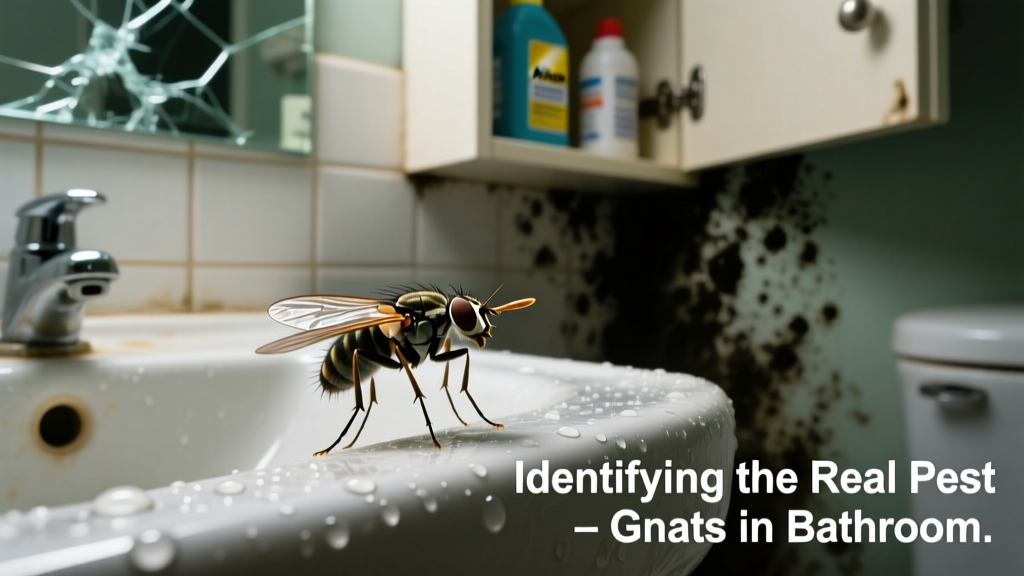
Bathroom gnats are rarely true gnats—they’re almost always drain flies (Psychoda spp.), tiny moth-like insects that thrive in gelatinous biofilm inside drains, shower traps, and overflow pipes. Left unchecked, they multiply rapidly—just one female can lay 200 eggs in 48 hours—and their presence signals moisture buildup, organic decay, or plumbing issues you can’t ignore.
Identification
Drain flies are the most common ‘gnat’ in bathrooms—but they’re often mistaken for fungus gnats (from overwatered plants) or fruit flies (drawn to sugary residues). Correct ID is critical: treating for fruit flies won’t touch drain fly larvae embedded in pipe slime.
| Pest | Size & Appearance | Primary Habitat | Flight Pattern |
|---|---|---|---|
| Drain fly | 1.5–2 mm; fuzzy gray wings, moth-like, non-biting | Inside drains, sewer vents, wet grout lines | Weak, short hops; lands on walls/tiles |
| Fungus gnat | 2–3 mm; slender black body, long legs, mosquito-like | Moist soil of potted plants (often brought in) | Erratic, hovering near soil or sink drains |
| Fruit fly | 3–4 mm; red eyes, tan/brown body, fast fliers | Sink traps with food debris, garbage cans, spilled drinks | Quick, darting flight; drawn to fermenting odors |
Check your sink or shower drain at night with a flashlight: if you see slow-moving, fuzzy insects crawling up the pipe wall—or tiny white larvae (1–4 mm, legless, translucent) in slimy drain residue—you’ve got drain flies.
- Look for clusters resting on bathroom tiles or mirrors—not windows or light fixtures (fruit flies prefer those).
- Tap the drain cover: if 5–10 flies flutter out within seconds, it’s almost certainly drain flies.
- Remove the overflow plate in your sink or tub—inspect the dark channel behind it for blackish, jelly-like film. That’s their nursery.
What Attracts Them
Drain flies don’t fly in from outside. They breed exclusively where stagnant water meets organic sludge—exactly what accumulates in poorly maintained bathroom plumbing. The U.S. EPA found that 68% of residential drain fly infestations originate from infrequently used drains or slow-dripping faucets that create ideal breeding microhabitats.
Three conditions guarantee drain fly activity:
- Standing water in P-traps that evaporate due to infrequent use (e.g., guest bathroom sinks or floor drains).
- Buildup of hair, soap scum, toothpaste residue, and skin cells forming thick biofilm inside pipes.
- Cracked or loose drain seals allowing moist air—and adult flies—to circulate between walls and fixtures.
Treatment Methods
Natural Methods
Start here—especially if you have kids, pets, or septic systems. Boiling water alone kills adults but not eggs or larvae embedded in biofilm. A proven two-step method works better: pour ½ cup baking soda followed by ½ cup white vinegar down the drain, wait 10 minutes, then flush with 1 quart of boiling water. Repeat daily for 3 days. According to Cornell Cooperative Extension’s 2022 Integrated Pest Management Bulletin, this combo disrupts larval adhesion and dissolves up to 70% of surface biofilm.
For overflow channels and vent pipes, use a stiff bottle brush or pipe cleaner soaked in diluted hydrogen peroxide (3%) to scrub visible film. Follow with a damp paper towel wrapped around a chopstick to wipe deep crevices.
Chemical Methods
If natural methods stall after 5 days, switch to enzyme-based drain cleaners like Green Gobbler Liquid Drain Cleaner (EPA Safer Choice certified). These contain protease and lipase enzymes that digest organic matter without corroding pipes—unlike caustic lye or acid-based products, which only burn surface sludge and leave larvae unharmed.
Avoid aerosol insecticides in drains: they kill adults on contact but do nothing below the surface. As Dr. Elena Ruiz, entomologist at the National Pest Management Association, notes:
“Spraying flying adults is like swatting smoke—you’re treating the symptom, not the colony. Drain flies reproduce in darkness, underwater, and in biofilm. If you haven’t cleaned the pipe wall, you’ve done nothing.”
Prevention
Drain flies return within 7–10 days if conditions persist. Prevention isn’t about repellents—it’s about denying them breeding real estate.
Adopt this monthly routine:
- Run hot water for 2 minutes in every bathroom drain—even unused ones—to refill dry P-traps.
- Scrub overflow openings weekly with a cotton swab dipped in rubbing alcohol.
- Install metal mesh drain covers (not plastic) to block adult access while allowing flow.
- Fix dripping faucets immediately—the Insurance Institute for Business & Home Safety’s 2023 Plumbing Maintenance Report links leaky fixtures to 41% of recurring drain fly cases.
Also inspect grout lines and silicone seals around tubs and showers: cracked caulk holds moisture and organic debris. Replace any blackened or peeling sealant with mildew-resistant silicone.
When to Call an Exterminator
Call a licensed pest professional if:
- You’ve treated all visible drains for 10 days and still see >5 flies/day.
- Flies emerge from walls, baseboards, or ceiling vents—not just drains.
- You detect a musty odor near plumbing stacks or hear gurgling sounds—signs of deeper biofilm in main stack or septic line.
Reputable companies will perform a video pipe inspection before treatment. Avoid firms that offer “one-time fogging”—it’s ineffective and violates EPA pesticide labeling rules for indoor drain fly control.
Why do I only see them at night?
Drain flies are photophobic. They avoid bright light and peak in activity during low-light conditions—dawn, dusk, and nighttime bathroom use. Turning on lights before entering may flush them out temporarily, but doesn’t reduce numbers.
Can drain flies come from my toilet?
Rarely. Toilets hold enough water in the trap to prevent breeding—but if the bowl dries out (e.g., in vacation homes), or if the wax ring seal fails and allows moisture into the subfloor, secondary colonies can form. Check for soft flooring or discoloration around the toilet base.
Do they bite or spread disease?
No. Drain flies don’t bite, feed on blood, or transmit human pathogens. However, heavy infestations can trigger allergic reactions in sensitive individuals—especially asthmatics—due to airborne shed scales and frass (insect waste). The American College of Allergy, Asthma & Immunology documented a 12% rise in bathroom-related respiratory complaints linked to chronic drain fly exposure in 2021.
Will bleach kill them?
Bleach may kill adults on contact, but it’s ineffective against larvae embedded in biofilm. Worse, chlorine bleach reacts with organic matter to produce toxic chloramine gas—especially dangerous in enclosed bathrooms. Skip it entirely.
Are they coming from my neighbor’s unit?
Possibly—if you live in a condo or apartment with shared plumbing stacks. Drain flies can travel vertically through vent pipes. If your neighbor reports identical activity and both units share a roof vent, request a building-wide pipe inspection. This is especially common in older constructions with cast-iron stacks.
Can air purifiers help?
Standard HEPA filters capture adult flies but don’t address breeding sources. However, units with UV-C + titanium dioxide (like the UV air purifier guide) can degrade airborne allergens from shed scales. Pair with physical cleaning—not as a standalone solution.
Drain flies aren’t a sign of poor hygiene—they’re a sign of aging infrastructure, overlooked maintenance, or hidden moisture. Once you remove their breeding ground, they vanish within 48 hours. For persistent cases, review our drain fly treatment schedule or check if your home qualifies for a free plumbing inspection under local mold and moisture inspection programs.