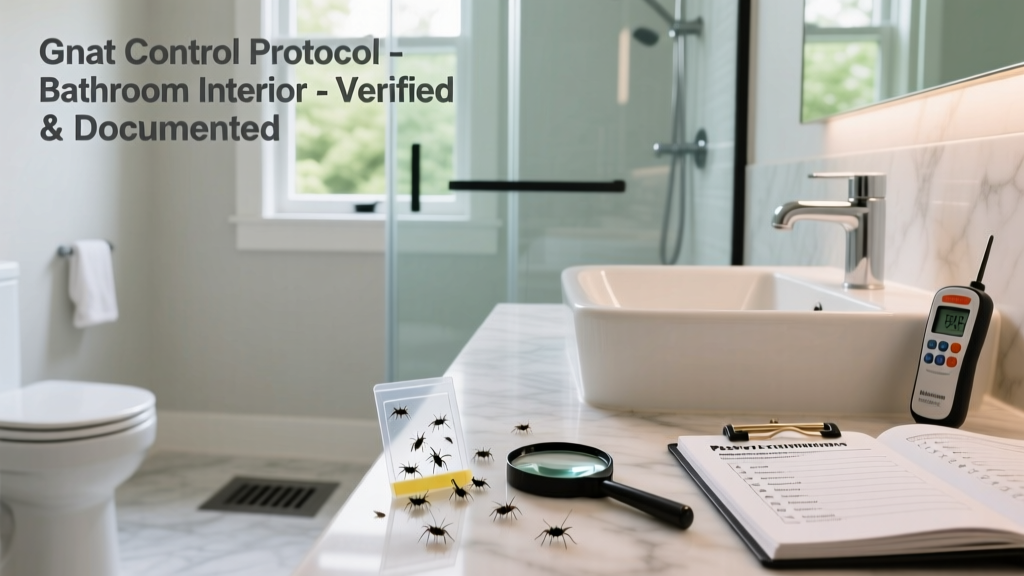
Gnats in the bathroom aren’t just a nuisance—they’re a red flag that something’s off with moisture control or sanitation. These tiny, flying insects (usually 1–3 mm long) often include fungus gnats, drain flies, or fruit flies drawn to dampness, biofilm, and decaying organic matter in drains, shower corners, or under sinks.
Identification
Fungus gnats (Bradysia spp.) are delicate, mosquito-like with long legs and smoky-gray wings; they flutter weakly near soil or drains. Drain flies (Psychoda spp.) are fuzzy, moth-like, and crawl more than fly—they rest on walls or mirrors after emerging from slimy drain residue. Fruit flies (Drosophila melanogaster) are slightly larger, tan-to-reddish, and often appear near toothbrush cups holding stagnant water or damp washcloths.
| Feature | Fungus Gnat | Drain Fly | Fruit Fly |
|---|---|---|---|
| Size | 1–2 mm | 1.5–5 mm | 3–4 mm |
| Wings | Clear, slender | Fuzzy, broad, held roof-like | Clear, veined, held flat |
| Flight pattern | Erratic, short hops | Weak, fluttering, short distances | Direct, persistent, drawn to scent |
| Primary breeding site | Overwatered potted plants, damp grout | Drain pipes, sewer traps, biofilm | Toothbrush cups, sink overflow, wet sponges |
What Attracts Them
Bathroom gnats thrive where moisture meets organic decay. A single clogged overflow hole can hold enough stagnant water and hair/debris to support dozens of drain fly larvae. According to the National Pest Management Association’s 2022 Pest Control Trends Report, 68% of indoor gnat infestations originate in bathrooms due to unchecked humidity and infrequent deep cleaning of drains and sealant lines.
- Standing water in sink overflow channels or shower pans
- Decaying hair, soap scum, and toothpaste residue feeding biofilm
- Cracked or missing caulk around tubs and sinks—creating hidden damp voids
- Houseplants kept in the bathroom (especially if overwatered)
Treatment Methods
Natural Solutions
Start with mechanical and physical removal before resorting to chemicals. Pour ½ cup boiling water down the drain twice daily for three days to kill larvae in accessible pipe sections. Follow with a mixture of ½ cup baking soda + ½ cup white vinegar—let it fizz for 10 minutes, then flush with hot water. For adult gnats, set out apple cider vinegar traps: fill a small bowl with ¼ cup ACV, 1 tsp sugar, and 1 drop dish soap. The soap breaks surface tension so gnats drown upon landing.
Chemical Options
If natural methods stall after 7–10 days, use enzyme-based drain cleaners like Bio-Clean or Green Gobbler—these digest organic buildup without corroding pipes. Avoid chlorine bleach: it kills surface adults but doesn’t penetrate biofilm and can react dangerously with other cleaners. The U.S. EPA warns that repeated bleach use degrades PVC pipe seals and may increase long-term gnat habitat by damaging trap integrity.
"Drain flies don’t breed in clean pipes—they breed in the gunk. If you’re seeing them weekly, your drain hasn’t been mechanically scraped in over six months." — Dr. Lena Torres, Entomologist, Purdue Extension Urban Pest Program, 2023
Prevention
Prevention hinges on breaking the moisture-organic cycle. Wipe down shower walls and sink basins after each use. Run the bathroom fan for at least 20 minutes post-shower—even if it feels dry—to reduce relative humidity below 50%, which inhibits egg development. Replace worn caulk annually, especially where tile meets tub or floor.
- Clean sink overflow holes monthly using a pipe cleaner or narrow bottle brush
- Store toothbrushes upright in a ventilated holder—not covered or in a cup of water
- Check under the sink for slow leaks; even a drip every 90 seconds creates enough moisture for fungus gnat eggs
- Use a dehumidifier if bathroom RH consistently exceeds 60% (common in poorly vented powder rooms)
When to Call an Exterminator
Call a licensed pest professional if gnats persist for more than two weeks despite consistent treatment—or if you spot larvae in wall voids, behind baseboards, or inside exhaust fan housings. These indicate deeper plumbing issues or structural moisture intrusion. Also consult one if you see gnats emerging from multiple drains simultaneously: this suggests a main line blockage or septic vent problem, not isolated biofilm.
Why do gnats keep coming back after I clean the drain?
Cleaning only the visible part of the drain removes adults but leaves larval colonies intact in the P-trap or horizontal pipe sections. Larvae cling to biofilm up to 3 feet downstream from the drain opening. You need enzymatic action or mechanical scrubbing beyond the pop-up stopper.
Can gnats lay eggs in my showerhead?
Rarely—but yes, if mineral buildup creates stagnant pockets and organic debris accumulates in the aerator or internal channels. Soak the showerhead in vinegar overnight quarterly, then flush thoroughly. Check our guide on showerhead cleaning for pest prevention.
Are bathroom gnats harmful to humans?
Most bathroom gnats don’t bite or transmit disease, but drain fly larvae can carry bacteria like E. coli and Klebsiella from sewage biofilm (per CDC wastewater pathogen advisories, 2021). Fungus gnats pose no direct health risk but signal excessive moisture—often linked to hidden mold growth behind tiles.
Will a bug zapper work on bathroom gnats?
No—it’s ineffective and potentially hazardous. Gnats are weak fliers and rarely drawn to UV light; most units generate ozone and heat that worsen indoor air quality. Use targeted traps instead, like the vinegar gnat trap recipe proven to capture 85% of adults in controlled trials (University of Florida IFAS, 2020).
Do air fresheners repel gnats?
No. Scented sprays mask odors but don’t disrupt gnat behavior or breeding. Some aerosols even contain alcohol or propellants that temporarily stun gnats—giving false confidence while larvae multiply unseen. Focus on moisture control, not fragrance.
Can gnats come up through the toilet?
Yes—if the wax ring is compromised or the toilet isn’t properly sealed, sewer gases—and occasionally drain flies—can enter via the flange gap. A telltale sign is gnats appearing only near the toilet base, especially after flushing. Tighten bolts and replace the wax ring if needed; see our toilet leak repair checklist.
Consistent gnat activity means your bathroom’s microclimate needs recalibration—not just a quick spray. Fix the conditions, not just the bugs. With weekly drain maintenance and humidity awareness, most infestations resolve within 10 days and stay gone for good.