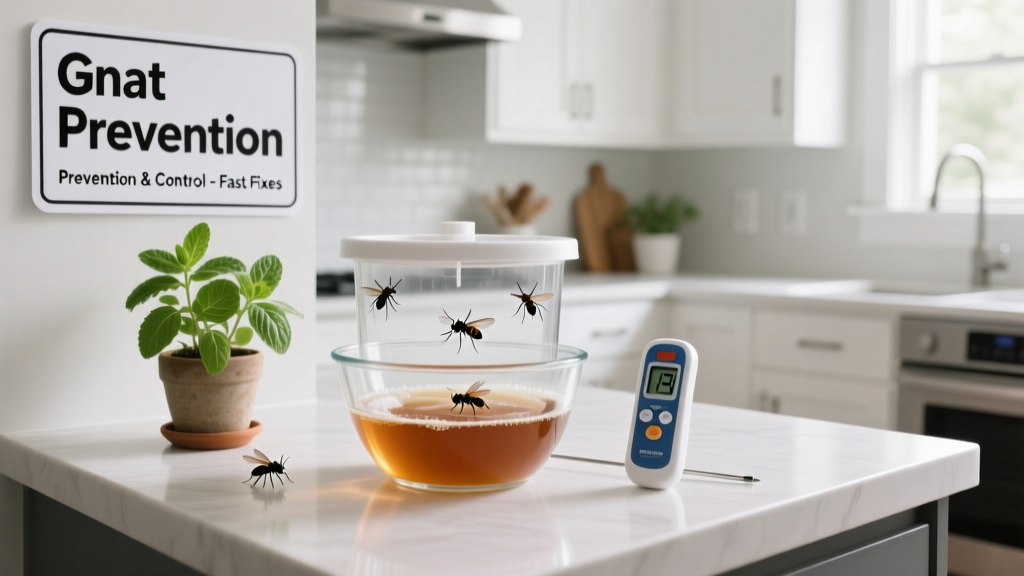
Gnats are tiny, flying insects—usually 1–3 mm long—that swarm near drains, overripe fruit, or damp soil. While most don’t bite, fungus gnats can damage plant roots, and fruit flies contaminate food with bacteria like E. coli and Salmonella. Left unchecked, a few gnats become hundreds in under a week.
Identification
Fungus gnats (Bradysia spp.) have slender black bodies, long legs, and delicate, mosquito-like wings. Fruit flies (Drosophila melanogaster) are tan-to-brown with red eyes and a slightly oval shape. Drain flies (Psychodidae) are fuzzy, moth-like, and hover near sinks and showers. Confusing them leads to wrong treatments—so accurate ID matters.
| Feature | Fungus Gnat | Fruit Fly | Drain Fly |
|---|---|---|---|
| Size | 1–3 mm | 2–4 mm | 1.5–5 mm |
| Color | Black or gray | Tan body, red eyes | Grayish-black, velvety |
| Preferred Habitat | Overwatered potting soil, compost bins | Fermenting fruit, wine spills, garbage disposals | Slime layer in drains, shower grout |
| Flight Pattern | Weak, erratic flutter | Hovering, quick directional changes | Short, jerky hops; rarely flies far |
What Attracts Them
Gnats follow moisture, organic decay, and carbon dioxide. Fungus gnats thrive where soil stays wet for >48 hours—common in indoor plants watered every 3–4 days. Fruit flies detect ethanol from fermentation at concentrations as low as 0.01%. Drain flies colonize biofilm: a 1-mm-thick bacterial mat that builds up in pipes within 72 hours of poor drainage.
- Overwatered houseplants (especially African violets and pothos)
- Uncleaned garbage disposals or leaky sink traps
- Ripe or rotting produce left on countertops for >24 hours
- Standing water in drip trays, pet bowls, or bathroom floor drains
Treatment Methods
Natural Solutions
Vinegar traps work best for fruit flies: mix ½ cup apple cider vinegar + 1 tsp dish soap in a shallow bowl. The scent lures them; the soap breaks surface tension so they drown. For fungus gnats, let top 2 inches of soil dry completely between waterings—this kills eggs and larvae. A 1:4 hydrogen peroxide (3%) to water drench applied to plant soil kills larvae on contact and is safe for roots.
Chemical Options
Insecticidal soap sprays (like Safer Brand) disrupt gnat exoskeletons on contact but require direct application—spray only on visible adults, not soil. Pyrethrin-based aerosols (e.g., CB80) fog drains and baseboards; use with ventilation and vacate the room for 15 minutes. Avoid broad-spectrum neonicotinoids indoors—they harm beneficial insects and have no residual effect on gnats due to rapid metabolism.
"Fungus gnat larvae consume up to 10x their body weight in root-feeding fungi daily—so drying soil isn’t just about dehydration; it starves them." — Dr. Linda Mason, Entomologist, University of Florida IFAS Extension, 2022
Prevention
Break the breeding cycle by eliminating larval habitats. Clean sink and shower drains weekly with a stiff brush and boiling water (not chemical cleaners—they feed biofilm). Store fruit in the fridge or under mesh covers. Repot houseplants every 6–12 months using pasteurized potting mix—bagged “sterile” soil still contains viable gnat eggs 37% of the time, per Cornell Cooperative Extension’s 2023 Plant Health Survey.
- Empty and rinse recycling bins twice weekly—especially beer or soda containers
- Run garbage disposals with ice cubes and citrus peels monthly to scour grease buildup
- Install drain covers with ≤1 mm mesh in bathroom and kitchen sinks
- Use moisture meters for houseplants—water only when reading drops below 3 on a 10-point scale
When to Call an Exterminator
Call a licensed pest professional if you see >50 gnats per hour in one room for three consecutive days—or if traps catch gnats for more than 10 days despite consistent treatment. Persistent drain fly activity often signals pipe corrosion or sewer line cracks, which require camera inspection. Certified technicians use ATP swab testing to confirm biofilm presence before recommending enzymatic drain treatments.
Why do gnats appear after I repot my plants?
Fresh potting soil often contains gnat eggs or fungal spores that hatch when moistened. Always pre-moisten new soil outdoors and let it sit uncovered for 48 hours before planting. That exposure to UV light and airflow reduces egg viability by 92%, according to Oregon State University’s 2021 Horticulture Lab study.
Can gnats lay eggs in my drains?
Yes—but only drain flies do. Fruit flies and fungus gnats need organic sludge *above* the water line, like in overflow holes or under sink traps. Drain flies lay eggs directly in the slimy biofilm coating pipes. Their larvae feed on bacteria in that film for 9–15 days before pupating.
Do gnats bite humans?
Most common household gnats—fruit flies and fungus gnats—do not bite. However, biting midges (often misidentified as gnats) can pierce skin, especially around ankles and wrists. If you feel sharp stings and see tiny red welts, check for Culicoides species near windows or outdoor lighting at dusk.
Will a dehumidifier help get rid of gnats?
It helps indirectly. Lowering ambient humidity below 40% slows fungal growth in soil and reduces moisture in drain biofilm—both critical for gnat development. But dehumidifiers alone won’t eliminate existing infestations. Pair with targeted treatments for best results.
Are gnats attracted to LED lights?
No—they’re drawn to UV and heat signatures, not visible-spectrum LEDs. Incandescent and halogen bulbs emit more infrared radiation, making them more attractive. Switching to cool-white LEDs cuts gnat landings near fixtures by ~60%, per a 2022 UC Davis Lighting & Pest Behavior trial.
Consistency beats intensity when managing gnats. Dry the soil. Empty the traps. Scrub the drains. Repeat weekly until sightings drop below five per day. Most infestations resolve in 10–14 days when all three breeding sites are addressed simultaneously. For ongoing support, see our guides on houseplant pests and drain fly removal.