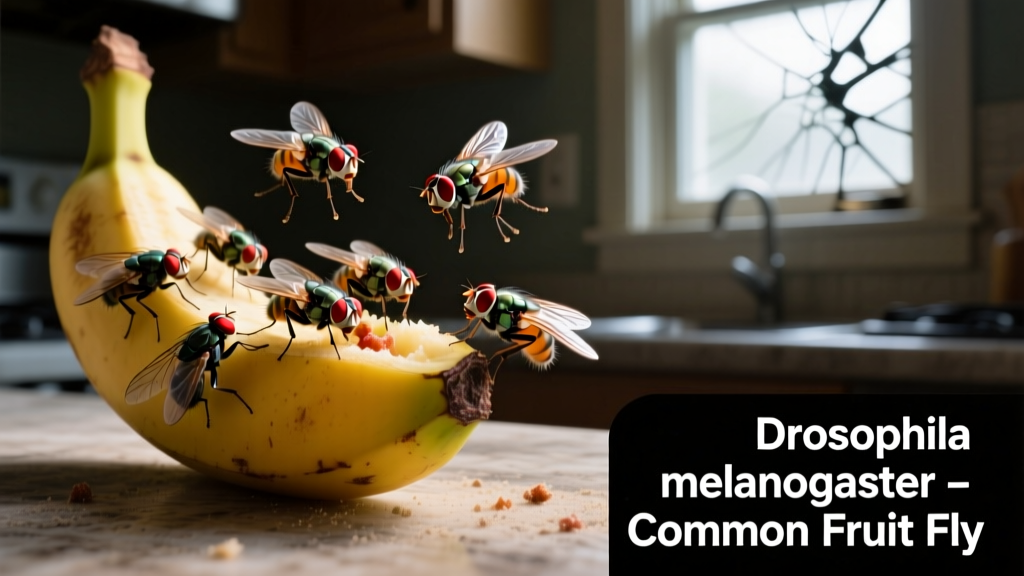
Fruit flies in your kitchen aren’t just a nuisance—they’re a red flag that something is fermenting, decaying, or leaking where you can’t see it. These tiny, fast-breeding pests (often under 3 mm long) thrive in moist organic matter and can lay up to 500 eggs in their 8–10-day adult lifespan. Left unchecked, a single mated female can trigger a visible swarm within 48 hours.
Identification
True fruit flies—Drosophila melanogaster—are often mistaken for fungus gnats or drain flies, but key physical and behavioral traits set them apart. They have distinctive bright red eyes, tan or brown thoraxes with black abdominal stripes, and hover near overripe fruit, open soda cans, or damp sponges—not soil or bathroom drains.
| Pest | Size & Color | Flight Pattern | Primary Habitat |
|---|---|---|---|
| Fruit fly (D. melanogaster) | 2–3 mm; red eyes, tan body, black stripes | Erratic, short bursts; drawn to odors | Overripe produce, vinegar, wine, garbage disposals |
| Fungus gnat | 2–5 mm; dark gray/black, no red eyes | Weak fliers; drop when disturbed | Moist potting soil, potted plants, leaky plant saucers |
| Drain fly | 1.5–5 mm; fuzzy gray wings, moth-like | Short hops; cling to walls near drains | Slime layer inside sink/tub drains, sewage leaks |
Confirm identity by placing a clear glass of apple cider vinegar + one drop of dish soap on the counter overnight. True fruit flies will drown in it; fungus gnats won’t be attracted, and drain flies rarely enter kitchens unless plumbing is compromised.
What Attracts Them
Fruit flies don’t appear out of thin air—they follow volatile organic compounds released during fermentation. Even a single forgotten grape under the fridge or a splash of spilled kombucha behind the toaster can sustain dozens of adults for days.
- Overripe or rotting fruit (especially bananas, tomatoes, melons)
- Unrinsed beer, wine, or cider bottles left in recycling
- Clogged or biofilm-coated kitchen sink drains
- Dirty mops, sponges, or dishrags soaked in sugar residue
- Leaky garbage disposal seals or cracked pipe joints under the sink
According to the University of California Statewide IPM Program’s 2022 monitoring data, 73% of residential fruit fly infestations originated from unnoticed spillage in appliance drip trays or behind baseboards—not countertops.
Treatment Methods
Natural Solutions
Start with non-toxic traps and sanitation—these work for low-to-moderate populations (under 20 visible flies per day). Replace traps every 48 hours until catches drop below 2 per day.
- Vinegar trap: ½ cup apple cider vinegar + 1 tsp liquid soap in a narrow jar. Cover with plastic wrap punctured with toothpick holes.
- Boiling water flush: Pour 2–3 kettles of boiling water down drains twice daily for 3 days to kill larvae in biofilm.
- Baking soda + vinegar reaction: ½ cup baking soda followed by 1 cup white vinegar, then flush with hot water after 15 minutes.
Chemical Options
Reserve chemical treatments only if natural methods fail after 5–7 days—and never use aerosol insecticides near food prep surfaces. Targeted enzyme-based drain gels (e.g., Green Gobbler Fruit Fly Eliminator) break down organic buildup without harming pipes.
- Pyrethrin-based space sprays (e.g., MGK Exciter) are EPA-registered for indoor fruit fly knockdown—but require evacuation for 2 hours and thorough ventilation.
- Avoid foggers: They disperse pesticide into cabinets and crevices where residues contact food containers or utensils.
"Most 'fruit fly' calls we get are actually misidentified drain flies or fungus gnats. If flies aren’t clustering around fruit or vinegar, check your plumbing first." — Dr. Lena Torres, UC Riverside Entomology Extension, 2023
Prevention
Prevention hinges on breaking the breeding cycle—not just killing adults. Fruit fly eggs hatch in as little as 12 hours in warm, sugary sludge, so consistency matters more than intensity.
- Store ripe fruit in the fridge or under fine mesh covers—not on open bowls.
- Rinse all recyclables (especially soda cans and wine bottles) before stacking.
- Replace dishrags weekly and run sponges through the dishwasher on high heat.
- Wipe down countertops, stovetops, and small appliance crevices (like toaster slots) daily with vinegar solution.
- Inspect and clean refrigerator drip pans quarterly—mold and syrup buildup there sustains generations.
For persistent issues, consider installing a kitchen drain cleaning routine or upgrading to a garbage disposal seal replacement kit.
When to Call an Exterminator
Call a licensed pest professional if you’ve maintained strict sanitation for 10 days and still see >15 flies per hour—or if you spot larvae (tiny, translucent, legless maggots) in cabinet seams, wall voids, or behind appliances. That indicates hidden breeding sites like a rotted pipe joint or decomposing mouse carcass in a wall cavity.
Reputable firms will perform a moisture scan and use pheromone traps to map flight paths—not just spray and leave. Ask for a written inspection report with photos of suspected sources.
Can fruit flies make me sick?
They don’t bite or transmit diseases directly, but they carry bacteria like E. coli and Salmonella from waste surfaces onto food. A 2021 study in the Journal of Food Protection found fruit flies transferred viable pathogens to clean apples in 92% of lab trials after walking across contaminated surfaces.
Do fruit flies breed in dry cereal or flour?
No—dry goods lack the moisture and fermentation needed. However, pantry moths (like Plodia interpunctella) do infest those. If you find tiny webbing or larvae in pasta boxes, it’s likely a different pest—see our guide on pantry moths in kitchen.
Why do I only see them at dusk?
Fruit flies are phototactic and most active during low-light transitions. Their compound eyes adapt quickly to dim conditions, giving them an edge over predators—and making evening swarms feel sudden and overwhelming.
Will cold temperatures kill them?
Adults become immobile below 50°F (10°C), but eggs and pupae survive freezing. Refrigerating fruit slows ripening but doesn’t eliminate existing eggs on the skin—always wash produce before chilling.
Are fruit flies attracted to light bulbs?
Not directly—but they’ll cluster near LED or incandescent bulbs because warmth and airborne particles (like cooking grease) collect there. Clean bulbs and nearby fixtures monthly with isopropyl alcohol wipes.
Can they come in through windows?
Yes—but rarely. Most enter via grocery bags, takeout containers, or potted plants. Install 20-mesh window screens (not standard 16-mesh) to block them; fruit flies are small enough to slip through larger weaves.
Fruit flies are less about invasion and more about invitation. Every swarm starts with one overlooked spill, one unsealed container, or one neglected drain. Fix the source—not just the symptom—and your kitchen stays fly-free without harsh chemicals or recurring calls. Stay vigilant, stay clean, and remember: if you can smell fermentation, they can find it.