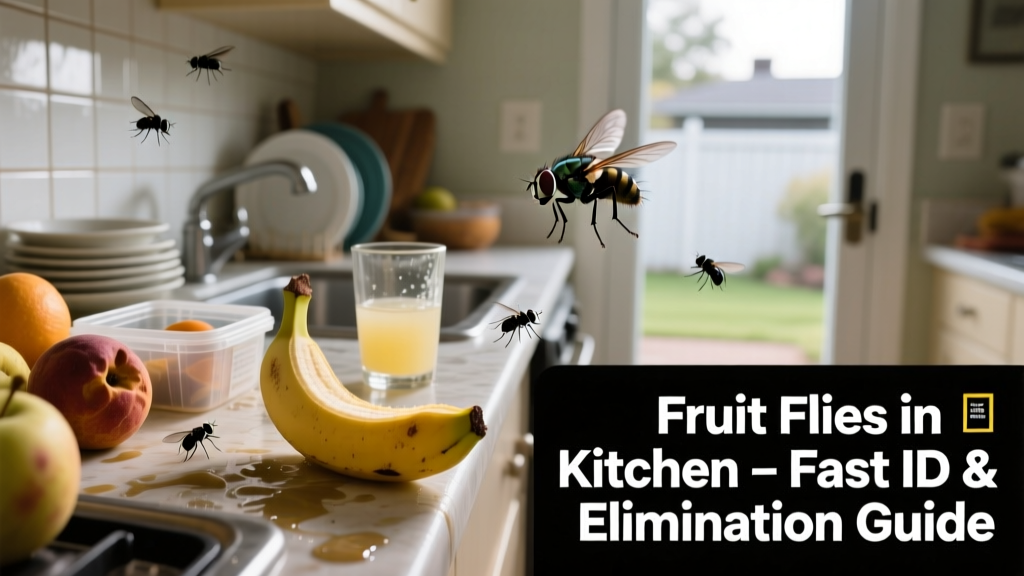
Fruit flies (Drosophila melanogaster) are tiny, reddish-eyed pests that swarm near overripe fruit, drains, and damp sponges. They reproduce fast—up to 500 eggs per female in 10 days—and contaminate food with bacteria from garbage, compost, and sewage residue.
Identification
Fruit flies are about 1/8 inch long, tan to brown bodies with distinctive red eyes. Their wings are clear and held flat at rest. Unlike fungus gnats (which hover near houseplants) or drain flies (which look fuzzy and moth-like), fruit flies fly in erratic bursts and cluster around fermenting odors—not soil or bathroom tiles.
| Pest | Size | Key Features | Typical Location |
|---|---|---|---|
| Fruit fly | 1/8 inch | Red eyes, smooth body, fast erratic flight | Kitchen counters, drains, recycling bins |
| Fungus gnat | 1/16–1/8 inch | Dark gray/black, long legs, weak fliers | Houseplant soil, windowsills |
| Drain fly | 1/16 inch | Fuzzy wings, moth-like, slow flutter | Bathroom/kitchen drains, sewer traps |
What Attracts Them
Fruit flies don’t appear out of thin air—they’re drawn to microbial fermentation. A single drop of spilled wine, a forgotten coffee filter, or a cracked tomato in the crisper can trigger a full-blown infestation within 48 hours. According to the University of Florida IFAS Extension’s 2022 pest bulletin, 73% of kitchen fruit fly outbreaks originate from uncleaned drip trays under refrigerators or neglected garbage disposal seals.
- Ripe or rotting fruit left on countertops
- Uncleaned blender gaskets and juicer parts
- Wet mops, sponges, and dishrags stored in closed buckets
- Recycling bins holding juice boxes or beer bottles with residual sugar
- Cracked silicone around sinks and dishwashers harboring biofilm
Treatment Methods
Natural Traps and Cleanouts
Start with non-toxic, proven methods. Apple cider vinegar + a drop of dish soap in a narrow-mouthed jar works because the vinegar mimics fermentation scent while the soap breaks surface tension—flies drown on contact. Replace daily for best results. Also scrub drains with boiling water mixed with ¼ cup baking soda and ½ cup white vinegar; let fizz for 10 minutes before flushing.
Chemical Options
Only use EPA-registered insecticides as a last resort—and never near food prep surfaces. Pyrethrin-based aerosols (like CB80) can knock down adult swarms but won’t kill eggs or larvae hiding in drains or cracks. The U.S. EPA warns that repeated use may lead to resistance in Drosophila populations by 2025, per its Pesticide Resistance Monitoring Report (2023).
"Most fruit fly problems aren’t solved with sprays—they’re solved with a 15-minute deep clean of one overlooked spot: the rubber seal under your refrigerator’s vegetable drawer." — Dr. Lena Cho, Urban Entomology Lab, Rutgers University, 2023
Prevention
Prevent recurrence by disrupting their breeding cycle. Store all produce in sealed containers or the fridge—even bananas and onions. Wash recyclables before stacking, especially soda cans and sauce jars. Replace sponge every 3 days, and run dishrags through the hot cycle of your washing machine weekly.
- Empty and wipe trash cans daily—especially if holding fruit peels or coffee grounds
- Clean drip pans under small appliances (toasters, air fryers, coffee makers)
- Inspect and replace cracked caulk around sinks and dishwashers every 6 months
- Use enzyme-based drain cleaners monthly—not bleach—to break down organic film
When to Call an Exterminator
Call a licensed pest control professional if you see more than 20 fruit flies daily after 72 hours of consistent trapping and cleaning—or if you find larvae (tiny, translucent, legless maggots) inside cabinet seams, behind baseboards, or inside wall voids near plumbing. These indicate hidden breeding sites beyond DIY reach.
Why do fruit flies appear overnight?
They don’t ‘appear’—they hatch. Eggs laid on Tuesday become adults by Thursday. One female lays 5–10 eggs per day directly into moist, fermenting material. So what looks like a sudden swarm is actually a 2-day-old generation emerging en masse.
Can fruit flies make you sick?
Yes—but rarely severely. They carry Enterobacter, Staphylococcus, and E. coli on their feet and bodies, picked up from garbage, drains, and pet waste. A 2021 study in Journal of Food Protection found fruit flies transferred pathogens to 92% of surfaces they landed on for >3 seconds.
Do fruit flies bite?
No. Fruit flies lack mouthparts capable of piercing skin. If you feel bites, it’s likely fungus gnats, biting midges, or fleas—check pets and potted plants.
Will cold temperatures kill them?
Cold slows them but doesn’t reliably kill adults or eggs. Refrigeration (35–40°F) halts development, but eggs survive freezing. To sterilize infested fruit, freeze at 0°F for 4 days—then discard.
Are fruit flies attracted to light?
Not primarily. They’re drawn to odor—not light. But many get trapped near windows because they follow airflow toward exits, not brightness. LED bulbs emit less heat and UV, so they’re less attractive than incandescent fixtures.
Can I use vinegar spray to repel them?
No. While apple cider vinegar lures them into traps, spraying it elsewhere just spreads the attractant. Instead, use a 1:1 mix of water and lemon eucalyptus oil on windowsills and cabinet fronts—it disrupts their olfactory receptors without masking food odors.
Consistent sanitation beats any trap. Once you eliminate their breeding sources, fruit flies vanish in 3–5 days—no magic required. For persistent issues, review our drain flies in kitchen guide or explore pantry moths if you spot webbing in dry goods. And if your problem started after moving into a rental, check our rental pest inspection checklist before signing next time.