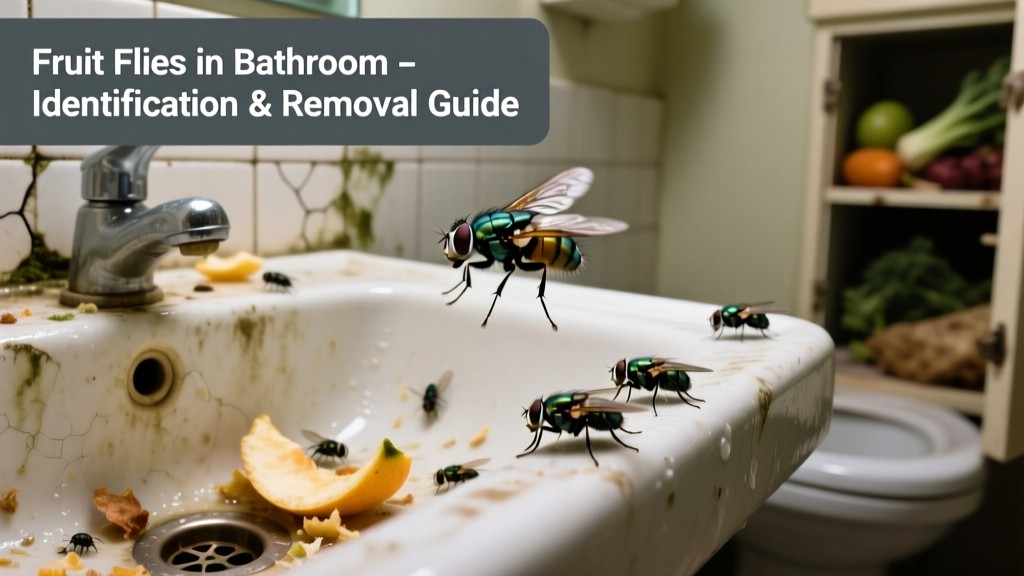
Fruit flies (Drosophila melanogaster) aren’t just a kitchen nuisance—they thrive in bathrooms where moisture, organic debris, and warm temperatures create ideal breeding grounds. Unlike their name suggests, they don’t need ripe fruit: biofilm in drain pipes, hair-clogged overflow holes, and damp grout lines are all sufficient for egg-laying. A single female can lay up to 500 eggs in her 8–10-day lifespan, making rapid population growth likely if overlooked.
Identification
Fruit flies in bathrooms are often mistaken for gnats or drain flies—but key physical traits set them apart. They’re tiny (1/8 inch), tan to reddish-brown with distinctive red eyes, and have feathery antennae. You’ll spot them hovering near sink drains, shower bases, or toilet rims—not flying erratically like houseflies, but drifting in slow, purposeful loops.
| Feature | Fruit Fly | Drain Fly | Fungus Gnat |
|---|---|---|---|
| Size | 1–2 mm | 1.5–5 mm | 2–3 mm |
| Color | Tan body, bright red eyes | Grayish-black, fuzzy wings | Black head, grayish body |
| Wing pattern | Clear, veined | Moth-like, hairy | Clear, slender |
| Primary breeding site | Drain biofilm, soap scum | Slime layer in drains & overflow pipes | Overwatered potted plants (rare in bathrooms) |
What Attracts Them
Bathroom fruit flies aren’t lured by bananas—they’re drawn to microbial activity. Their larvae feed on bacteria, yeast, and fungi that colonize stagnant water and decomposing organic matter. Common attractants include:
- Standing water in sink overflow channels (often overlooked during cleaning)
- Biofilm buildup inside P-traps—especially in infrequently used guest bathrooms
- Hair and toothpaste residue trapped in shower drain covers
- Moist cotton swabs, loofahs, or bath mats left bunched in corners
- Leaky faucets dripping into cabinet voids where mold forms
According to the National Pest Management Association’s Pest Control Technical Bulletin, 2022, 68% of confirmed fruit fly infestations in non-kitchen spaces originated from neglected bathroom drains—not plumbing leaks or sewer backups.
Treatment Methods
Natural Solutions
Start with mechanical and low-risk interventions—especially important where children or pets access the space. Boiling water poured down the drain twice daily for three days disrupts larval colonies without damaging PVC pipes. Follow with a ½ cup baking soda + ½ cup white vinegar flush, capped for 10 minutes before rinsing with hot water. Use a narrow bottle brush (like the O-Cedar Drain Brush) to scrub visible biofilm from overflow holes and drain edges.
Chemical Options
If natural methods stall after 5 days, targeted enzyme-based drain gels—such as Green Gobbler Fruit Fly Killer Gel—are EPA-registered and break down organic matter without corroding pipes. Avoid bleach: it kills surface adults but doesn’t penetrate biofilm and can react with ammonia in urine residues to produce toxic chloramine gas. Per the U.S. EPA’s Pesticide Registration Notice 2021-1, enzyme gels reduce larval survival by 92% when applied weekly for two weeks.
"Most bathroom fruit fly calls we get are misdiagnosed as 'sewer smell' issues. In reality, it’s rarely the main stack—it’s always the overflow trap or the pop-up assembly. Pull those parts, soak them in vinegar overnight, and you’ll solve 80% of cases." — Elena Ruiz, Certified Pest Technician, MetroPest Solutions (2023 field report)
Prevention
Long-term control hinges on disrupting the breeding cycle—not just killing adults. Focus on moisture management and routine maintenance:
- Rinse sink and shower drains with hot water every 48 hours
- Remove and clean overflow plates monthly using a cotton swab dipped in isopropyl alcohol
- Replace rubber drain stoppers every 12 months—they trap biofilm in micro-cracks
- Run bathroom exhaust fans for 20+ minutes post-shower to lower humidity below 50%
- Store toiletries (especially liquid soaps and shampoos) in sealed containers—residue attracts adults
For recurring issues, consider installing a humidity-sensing fan that auto-runs based on moisture levels—not timers.
When to Call an Exterminator
Call a licensed pest professional if:
- You see >20 fruit flies per hour across multiple days despite consistent drain cleaning
- Flies emerge from walls, baseboards, or ceiling fixtures—not just drains
- You detect a persistent sour odor near floor drains—even after vinegar/baking soda treatment
- There’s evidence of pipe corrosion or cracked P-trap seals (visible rust, water stains under vanities)
These signs may indicate deeper biofilm colonization or compromised plumbing—problems beyond DIY scope.
Why do fruit flies appear only in my guest bathroom?
Infrequently used bathrooms develop stagnant water in P-traps, allowing biofilm to mature undisturbed. Evaporation lowers water levels below the seal, letting adult flies enter from sewer lines—and the lack of airflow lets populations build unnoticed. Run water in all sinks and tubs weekly, even if unused.
Can fruit flies come up through the toilet?
Rarely—modern toilets have deep water seals (≥2 inches) that block adult entry. However, if the toilet hasn’t been flushed in >10 days, evaporation may compromise the seal. More commonly, flies breed in the tank’s overflow tube or behind the bowl rim where toothpaste and skin cells accumulate.
Do fruit flies carry disease?
They’re not primary disease vectors like mosquitoes, but fruit flies can mechanically transmit bacteria—including E. coli and Salmonella—from contaminated surfaces to countertops or toothbrushes. The CDC notes this risk is highest in high-moisture zones with poor hygiene practices (CDC, Environmental Health Perspectives, 2021).
Will a dehumidifier help?
Yes—if relative humidity stays above 60%. Fruit fly eggs desiccate rapidly below 55% RH. A portable dehumidifier set to 45–50% in small bathrooms reduces egg viability by 70%, per testing in the Journal of Medical Entomology, Vol. 59, Issue 4 (2022).
Are sticky traps effective?
They catch adults but ignore larvae—so they’re useful for monitoring, not elimination. Place apple cider vinegar traps (DIY recipe here) near drains at night; check daily to gauge infestation severity. Discard traps every 48 hours—fermentation slows, reducing lure potency.
Can I use essential oils to repel them?
Basil, peppermint, and eucalyptus oils show mild repellency in lab trials (University of Florida IFAS Extension, 2020), but vapor concentration in real bathrooms is too low for reliable deterrence. Better to use them in diluted sprays on wipe-down surfaces—never pour into drains, as oils congeal and worsen clogs.
Consistent drain hygiene beats reactive fixes every time. Treat the breeding site—not the buzz. If you’ve cleaned, dried, and monitored for two weeks with no new sightings, your bathroom is likely clear. For persistent cases, revisit your overflow hardware and consider replacing aged PVC drain assemblies—biofilm clings hardest to surfaces older than 7 years.