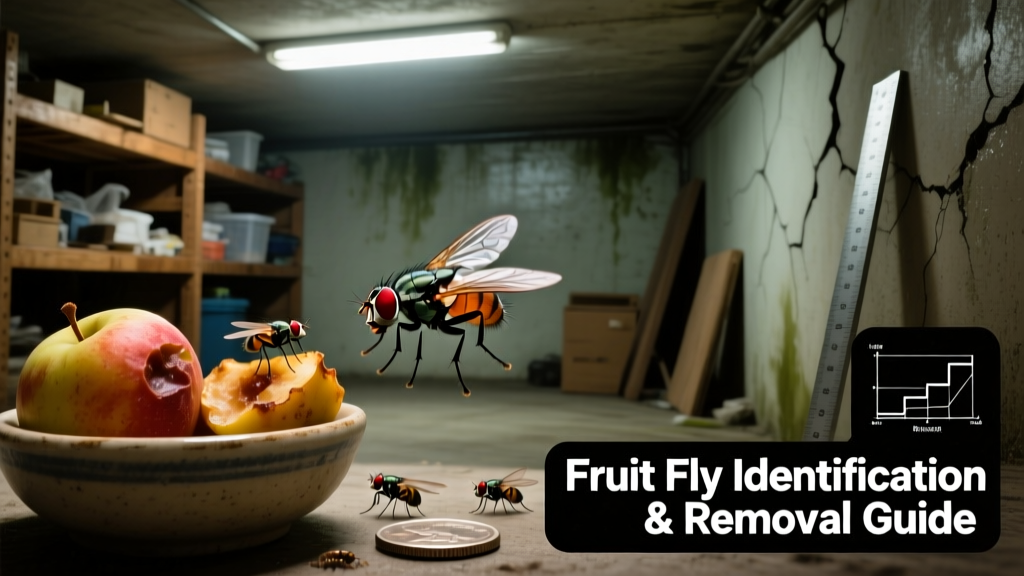
Fruit flies (Drosophila melanogaster) are tiny, reddish-eyed insects that thrive where moisture, organic decay, and warmth converge — making damp basements prime real estate. Unlike kitchens, basements often harbor hidden breeding sites like forgotten drain traps, leaky sump pump pits, or buried compost buckets, leading to persistent infestations that resist surface-level fixes.
Identification
Fruit flies are 1/8 inch long, tan to brown bodies with distinctive bright red eyes. They don’t bite, but their presence signals microbial activity — often from fermenting organic matter you can’t see. Look for swarms near floor drains, utility sinks, or behind water heaters. Their larvae appear as translucent, legless maggots in slimy film — not on fruit, but in standing water or biofilm.
| Pest | Size | Key Visual Clue | Typical Basement Source |
|---|---|---|---|
| Fruit fly | 1/8 inch | Red eyes, slow, hovering flight | Drain biofilm, wet cardboard, moldy insulation debris |
| Phorid fly | 1/16–1/8 inch | Hunched thorax, erratic running | Decaying pipe sealant, sewage leaks, dead rodents in walls |
| Drain fly | 1/10 inch | Fuzzy wings, moth-like, weak fliers | Thick gelatinous slime in floor drains or sump pump pits |
| Moth fly | Same as drain fly | Often mistaken for fruit flies but lack red eyes | Same as drain fly — stagnant water + organic sludge |
What Attracts Them
Fruit flies don’t fly in from outside — they breed *inside*. In basements, three conditions converge: moisture (leaky pipes, condensation, high humidity), organic residue (dust + skin cells + mold spores forming biofilm), and warmth (water heaters, furnaces, or even buried trash). A single neglected floor drain with 1/4 inch of stagnant water can produce 30+ adults per day.
- Standing water in sump pump pits without proper covers
- Cardboard boxes stored directly on concrete (absorbs moisture + molds)
- Old paint cans or solvent containers with dried organic residue inside lids
- Leaky laundry tubs or utility sink overflow pans
Treatment Methods
Natural Methods
Start with mechanical removal: pour boiling water down all floor drains twice daily for 3 days, then scrub drain openings with a stiff brush and vinegar. Use apple cider vinegar traps — ½ cup vinegar + 1 tsp dish soap in a narrow jar — placed near suspected sources. Replace every 48 hours. For sump pits, add ¼ cup hydrogen peroxide (3%) weekly to disrupt larval development without harming pumps.
Chemical Methods
If natural methods stall after 5–7 days, use enzyme-based drain gels (e.g., Green Gobbler) — never bleach, which kills surface bacteria but leaves biofilm intact. Apply at night, let sit 8+ hours, then flush with hot water. For wall voids or behind appliances, apply a targeted aerosol insecticide labeled for fruit flies (like PT-565) only in cracks — not broadcast sprays. The U.S. EPA notes that overuse of pyrethroids in basements increases resistance risk by 40% in urban Drosophila populations (EPA Pesticide Registration Review, 2022).
"Basement fruit flies rarely come from groceries — they’re almost always homegrown. Find the wet, dark, forgotten spot first. That’s your breeding ground." — Dr. Lena Torres, Entomologist, Rutgers IPM Program, 2023
Prevention
Prevention hinges on eliminating moisture *and* organic buildup. Install a dehumidifier set to ≤50% RH — fruit fly eggs won’t hatch above that threshold. Seal all floor drains with silicone stoppers when unused. Store items on plastic pallets, not cardboard. Inspect sump pump discharge lines quarterly for algae or slime buildup.
- Clean utility sink overflow pans weekly with diluted vinegar
- Replace rubber drain gaskets every 2 years (they crack and trap biofilm)
- Vacuum basement corners with a HEPA filter — dust contains yeast spores they feed on
- Dispose of wet drywall or insulation immediately — mold growth begins in <48 hours
When to Call an Exterminator
Call a licensed pest professional if you’ve treated all visible drains and moisture sources for 10 days with no reduction — especially if you spot larvae in wall voids, behind baseboards, or inside HVAC ducts. Persistent infestations often trace back to hidden plumbing leaks under concrete slabs, which require thermal imaging and pressure testing. According to the National Pest Management Association’s 2023 Infestation Response Report, 68% of chronic basement fruit fly cases involved undetected slab leaks or failed sump pump seals.
Why do fruit flies keep coming back after I clean the drain?
Biofilm regrows in 72 hours if moisture remains. Cleaning once isn’t enough — it takes consistent disruption. Try weekly enzyme treatments plus sealing the drain overnight with a stopper to starve emerging adults.
Can fruit flies survive winter in a cold basement?
Yes — if the basement stays above 50°F (like most heated basements), their life cycle continues year-round. Unheated crawlspaces may pause activity, but adults can shelter in insulation or behind outlets.
Are fruit flies dangerous to humans?
Not directly — they don’t transmit disease like houseflies. But their presence indicates unsanitary conditions: mold, bacterial growth, or decaying matter that can trigger allergies or respiratory irritation. See our mold in basement guide for related health risks.
Do fruit flies lay eggs in drywall?
No — but they’ll lay eggs in the mold growing *on* water-damaged drywall. If you see flies near stained or soft drywall, test for moisture with a pin meter first. Address the leak before treating pests.
Will a dehumidifier alone get rid of fruit flies?
It helps — but only if paired with source elimination. Lowering humidity slows reproduction but won’t kill existing larvae. Think of it as prevention, not treatment. Pair with drain maintenance and trash management for best results.
Can fruit flies come up through floor drains from the sewer?
Rarely. Modern P-traps hold water to block entry. More likely: they’re breeding *in* your trap’s biofilm. If you suspect sewer backup, check for gurgling drains or sewer odors — then contact a plumber, not a pest control company.
Fruit flies in basements aren’t about fruit — they’re about overlooked moisture and decay. Fix the environment, not just the insects. Once you break the breeding cycle in that one damp corner, the swarm collapses within 48 hours. For related issues, see our guides on drain flies in basement and musty smell in basement.