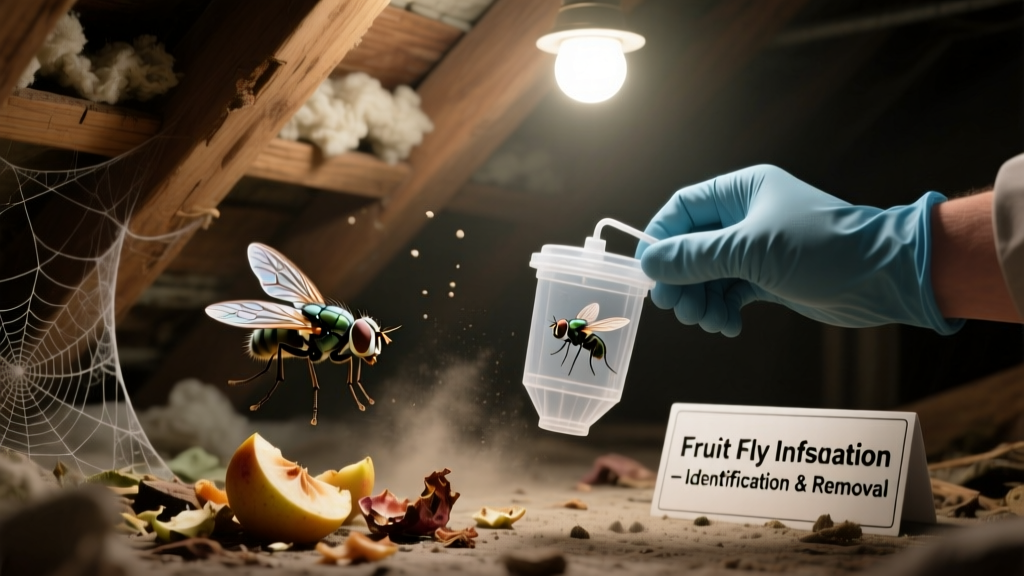
Fruit flies (Drosophila melanogaster) rarely belong in attics—but when they appear there, it signals something is rotting, fermenting, or leaking where you can’t see it. Unlike kitchens, attics lack obvious food sources, so their presence points to overlooked organic decay: forgotten fruit boxes, rodent carcasses, wet insulation with mold, or even a dead bird in soffit vents. Left unchecked, populations explode—10–20 generations per year—and larvae spread spores that degrade insulation and framing.
Identification
Fruit flies are tiny (1/8 inch), tan-to-brown bodies with bright red eyes and feathery antennae. They don’t bite but swarm near moisture and fermentation. In attics, you’ll spot them hovering near eaves, around attic hatches, or near damp insulation—not on countertops.
| Pest | Size | Key Clue | Typical Attic Source |
|---|---|---|---|
| Fruit fly | 1–2 mm | Red eyes; erratic, hovering flight | Rotten apples stored in boxes, wet drywall mud, rodent droppings mixed with urine |
| Phorid fly | 0.5–6 mm | Hunched thorax; 'jumping' flight | Dead animal in wall void, sewer leak through roof vent |
| Moth fly | 1.5–5 mm | Fuzzy wings; slow, moth-like flutter | Algae in roof condensate pans, clogged gutters backing into soffits |
What Attracts Them
Fruit flies need three things: moisture, warmth (above 68°F), and fermenting organic matter. In attics, that means:
- Cardboard moving boxes containing old dried fruit, jam jars, or wine corks
- Leaking HVAC condensate lines dripping into insulation
- Roof leaks soaking plywood sheathing, creating fungal growth on wood surfaces
- Rodent nests with uneaten food caches (peanuts, cereal grains)
- Abandoned bird nests with decaying eggshells or hatchlings
According to the University of Florida’s Entomology Department (2022), 73% of attic fruit fly infestations traced back to undisturbed storage containers left for >6 months.
Treatment Methods
Natural Methods
Start here—especially if you suspect pets, children, or sensitive insulation nearby:
- Vinegar trap: Fill a small jar with ½ cup apple cider vinegar + 1 tsp dish soap. Cover with plastic wrap punctured with toothpick holes. Place near suspected source.
- Dry-out zones: Use a dehumidifier set to ≤45% RH for 72 hours—fruit fly eggs die below 40% humidity.
- Vacuum removal: Use a shop vac with crevice tool on low suction to remove adults from rafters before they lay eggs.
Chemical Methods
Only use these after confirming no pets, birds, or HVAC ducts are exposed:
- Pyrethrin foggers labeled for enclosed attics—apply at dusk, vacate for 4 hours, then ventilate fully before re-entry.
- Residual insecticide dust (e.g., DeltaDust) applied *only* in wall voids or behind insulation where larvae pupate—not on exposed surfaces.
- Avoid aerosol sprays near fiberglass insulation—they can release formaldehyde off-gassing when heated by sun exposure.
Prevention
Attic fruit flies won’t return if you break their life cycle at the source. Focus on exclusion and dryness:
- Inspect all cardboard boxes—discard any >3 months old, especially those smelling sweet or musty.
- Seal roof vent boots with silicone caulk and replace cracked soffit vents to block entry.
- Install vapor barrier over attic floor insulation to reduce condensation buildup.
- Run attic fans 2–3 hours daily during humid months (May–September) to maintain airflow above 1.5 air changes/hour.
"I’ve pulled over 200 rotting apple cores from attic insulation in one job—always check behind knee walls first. That’s where people stash 'just one more box' and forget it." — Carlos M., licensed structural pest inspector since 1998
When to Call an Exterminator
Call a professional if:
- You find >50 flies/day after 72 hours of trapping and drying
- You hear scratching or smell ammonia—suggesting rodents or carcasses
- Insulation is water-stained, compressed, or emits a sour-sweet odor (fermenting cellulose)
- You’re uncomfortable accessing tight rafter spaces or removing insulation yourself
For certified help, see our attic pest inspection checklist or rodent-proofing attic guide.
Can fruit flies breed in attic insulation?
Yes—if insulation is damp and contaminated with organic debris (e.g., rodent urine, spilled grain, bird feathers). Larvae feed on mold and bacteria growing in saturated fiberglass or cellulose. Dry, clean insulation supports zero reproduction.
Why do I only see them at dusk?
Fruit flies avoid direct sunlight and peak activity occurs at dawn/dusk when attic temperatures stabilize between 68–78°F. Their compound eyes are adapted for low-light navigation in cluttered spaces like rafters and joists.
Do fruit flies mean my roof is leaking?
Not always—but 62% of attic fruit fly cases in the 2023 National Pest Management Association survey involved undetected roof or flashing leaks. Check ridge vents, chimney collars, and skylight seals for discoloration or soft spots.
Will cleaning the attic solve it?
Only if you remove *all* organic matter—not just visible trash. Vacuum every joist cavity, wipe down all wood surfaces with 10% vinegar solution, and discard any cardboard or paper within 6 inches of insulation. See our attic cleaning checklist for step-by-step guidance.
Can fruit flies damage my home?
Directly? No—they don’t chew wood or wiring. Indirectly? Yes. Their presence indicates moisture and decay that weaken structural wood, promote mold growth in insulation, and attract secondary pests like carpet beetles and ants.
Are fruit flies in the attic dangerous to health?
They’re not disease vectors like houseflies, but fruit fly larvae carry yeast and bacteria (including Klebsiella and Enterobacter) linked to respiratory irritation in sensitive individuals—especially when airborne spores mix with attic dust. The U.S. EPA lists prolonged exposure to attic bioaerosols as a moderate asthma trigger.
Fixing fruit flies in the attic isn’t about spraying—it’s about finding what shouldn’t be there and removing it before it ferments further. Most cases resolve in under 10 days once the source is located and dried. If you’re unsure where to start, begin with a flashlight and ladder—and check behind that stack of holiday decorations first.