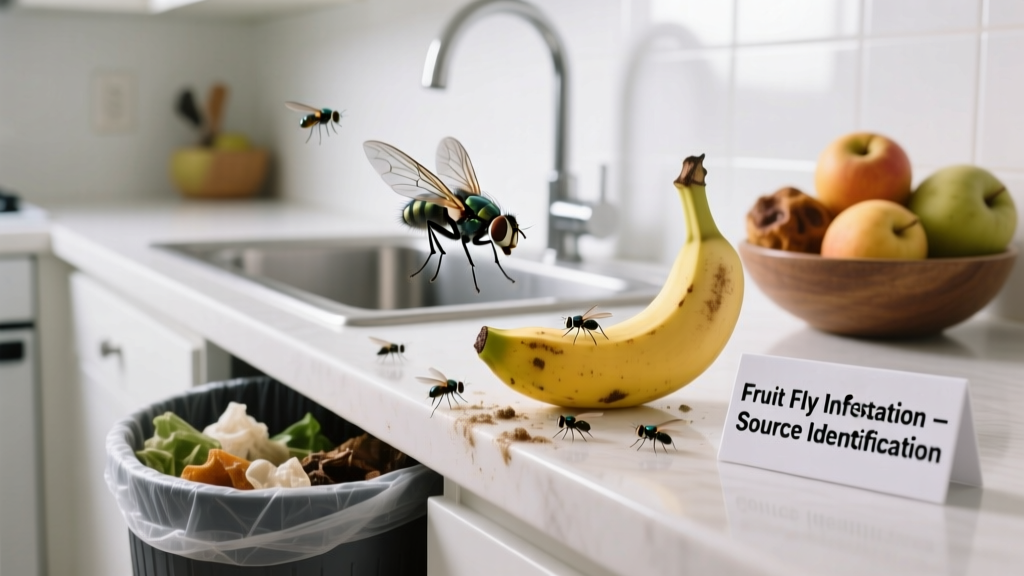
Fruit flies (Drosophila melanogaster) are tiny, reddish-eyed insects that swarm near overripe fruit, drains, and garbage—often appearing overnight in summer or after a missed trash day. They reproduce fast: a single female lays up to 500 eggs in her 8–10-day lifespan, making infestations explode in under a week if unchecked.
Identification
Fruit flies are about 1/8 inch long with tan bodies, dark bands on their abdomen, and distinctive bright red eyes. Unlike gnats or drain flies, they don’t bite—but their presence signals fermenting organic matter nearby. You’ll spot them hovering near countertops, sinks, recycling bins, or wine bottles—not flying erratically like houseflies.
| Feature | Fruit Fly | Drain Fly | Fungus Gnat |
|---|---|---|---|
| Size | 1/8 inch | 1/16–1/8 inch | 1/16 inch |
| Color & Markings | Tan body, red eyes, no stripes | Grayish-black, fuzzy wings, moth-like | Black head, slender black body, long legs |
| Typical Habitat | Fermenting produce, vinegar, wine | Drain biofilm, sewer pipes | Overwatered potting soil, indoor plants |
| Flight Pattern | Hovering, short bursts | Weak, fluttery flight | Erratic, often near windows or plants |
What Attracts Them
Fruit flies aren’t drawn to cleanliness alone—they’re lured by fermentation. Yeast and bacteria breaking down sugars emit ethanol and acetic acid, which fruit flies detect from up to 10 feet away (Cornell University Entomology, 2022). Key attractants include:
- Ripe or rotting fruit left on counters (especially bananas, tomatoes, melons)
- Empty beer, wine, or cider bottles with residue
- Clogged or slimy kitchen sink drains
- Dirty mops, sponges, or damp dishrags harboring yeast
- Recycling bins holding sticky soda cans or juice boxes
Treatment Methods
Natural Traps and Removal
Start with non-toxic traps—you’ll need only apple cider vinegar, dish soap, and a jar. The vinegar mimics fermentation; the soap breaks surface tension so flies drown. Place traps near problem areas and replace every 48 hours until activity drops. Also, flush drains with boiling water + ½ cup baking soda + ½ cup white vinegar—wait 15 minutes, then rinse. Repeat for three nights.
- Vinegar trap: ¼ cup apple cider vinegar + 3 drops dish soap in a narrow-mouthed jar
- Red wine trap: Pour leftover red wine into a shallow bowl; cover with plastic wrap and poke 5–6 small holes
- Yeast trap: 1 tsp active dry yeast + 2 tsp sugar + 2 tbsp warm water in a bottle with a paper funnel taped in
Chemical Options
Reserve chemical treatments for persistent infestations where breeding sites remain hidden. Pyrethrin-based aerosols (e.g., CB-80) can knock down adult flies on contact—but they don’t kill eggs or larvae. Never spray near food prep surfaces without thorough cleaning afterward. According to the U.S. EPA’s 2023 Pesticide Registration Manual, pyrethrins break down quickly indoors but require repeated application every 2–3 days for full control.
"Fruit fly infestations rarely require insecticides—if you find the source and eliminate it within 48 hours, the population collapses naturally." — Dr. Elena Torres, Urban Entomologist, UC Davis Extension (2023)
Prevention
Prevention hinges on disrupting their life cycle: no exposed fermenting material, no moist breeding grounds. Store ripe fruit in the fridge—not on the counter—even for one night. Rinse recyclables before tossing; empty trash daily if you compost or store food scraps. Clean refrigerator drip pans quarterly—those hidden pools of condensation and spilled juice are prime nursery sites.
- Wipe down countertops and stovetops after cooking, especially after handling tomatoes, onions, or citrus
- Run hot water down drains for 60 seconds after each use; monthly, treat with enzymatic drain cleaner (not bleach)
- Keep indoor plants on a strict watering schedule—fungus gnats and fruit flies both thrive in soggy soil
- Inspect grocery bags before bringing them inside—eggs can hitchhike on grape stems or berry packaging
When to Call an Exterminator
Call a licensed pest professional if fruit flies persist for more than 10 days despite consistent trapping, sanitation, and drain cleaning—or if you find clusters behind appliances, inside wall voids, or inside HVAC drip pans. These indicate hidden breeding sources beyond DIY reach. Most reputable companies offer free inspections; ask whether they use drain camera diagnostics to locate biofilm buildup.
Why do fruit flies appear even in clean kitchens?
They don’t need visible mess—they detect trace ethanol from yeast metabolism in damp sponges, coffee grounds left overnight, or the rim of a reused smoothie cup. A 2021 study in the Journal of Economic Entomology found 68% of residential fruit fly infestations originated from unnoticed moisture in garbage disposal flanges or under refrigerator kickplates.
Can fruit flies lay eggs in sealed containers?
No—they can’t penetrate intact plastic, glass, or metal seals. But they’ll crawl under loosely fitted lids, through vent holes in fruit bowls, or into gaps around mason jar rings. Always check seals on jars of jam, olives, or pickles before storing.
Do fruit flies carry disease?
Not directly harmful like mosquitoes or cockroaches, but they transport bacteria—including E. coli and Salmonella—from waste to food surfaces. A University of Florida lab test (2022) showed fruit flies picked up measurable pathogen loads after just 20 minutes on contaminated drain slime.
How long does it take to get rid of fruit flies?
With full source removal and daily trapping, most infestations drop by 90% in 3–4 days. Adults die off naturally within 7–10 days, but new ones will emerge if larvae remain. That’s why simultaneous sanitation + trapping is critical—you’re breaking the cycle, not just catching adults.
Will cold weather kill fruit flies?
Not reliably. Indoors, they thrive year-round at 70–80°F. Even in winter, your kitchen provides ideal conditions. Outdoor populations crash below 53°F, but eggs laid in late fall can survive in compost bins or garage fruit crates until spring warmth triggers hatching.
Are fruit flies the same as vinegar flies?
Yes—Drosophila melanogaster is commonly called both. “Vinegar fly” reflects their attraction to acetic acid, while “fruit fly” refers to their preferred egg-laying sites. Don’t confuse them with Zaprionus indianus, the invasive spotted wing drosophila, which attacks intact fruit and is rare in homes but common in orchards.
Consistency beats intensity when dealing with fruit flies. One missed banana peel or un-rinsed kombucha bottle can restart the cycle. Pair immediate trapping with weekly drain maintenance and seasonal deep-cleans behind appliances—and you’ll keep your kitchen fly-free without foggers or harsh sprays. For related help, see our guides on drain flies and indoor gnats.