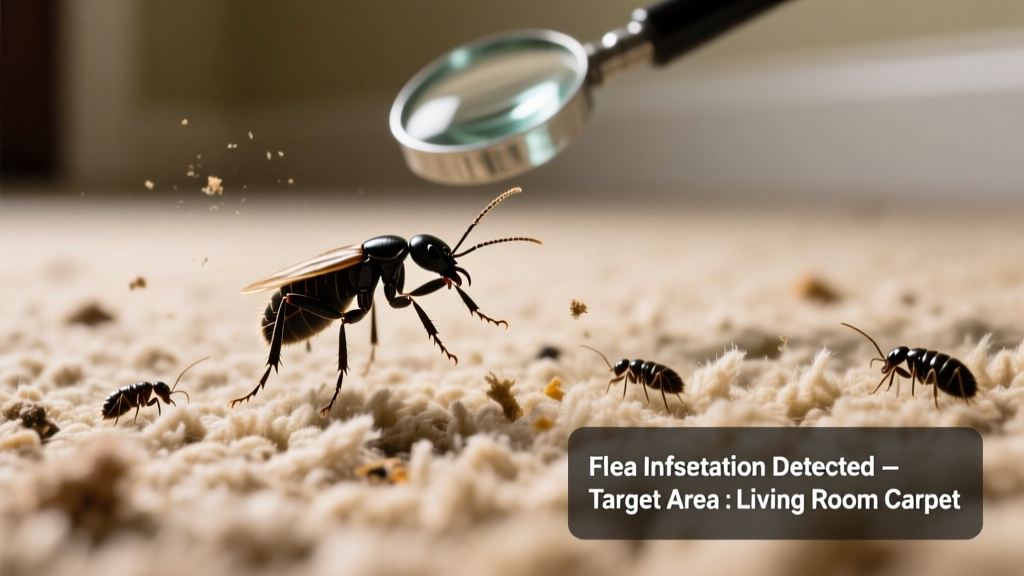
Fleas in carpet aren’t just a nuisance—they’re a sign of an active infestation that can spread rapidly across pets, furniture, and bedding. These tiny, wingless insects feed on blood, reproduce fast (a single female lays up to 50 eggs daily), and their larvae thrive in the dark, fibrous environment of carpet padding and seams.
Identification
Flea adults are reddish-brown, 1–3 mm long, flattened side-to-side for moving through fur, and jump up to 7 inches vertically. You won’t see them crawling slowly—they’ll vanish when disturbed. Look for ‘flea dirt’ (tiny black specks that turn rust-red when wet) near baseboards or under furniture. Pet scratching, biting, or hair loss—especially around the tail base or hindquarters—is often the first household clue.
| Pest | Size & Color | Movement | Signs in Carpet |
|---|---|---|---|
| Flea adult | 1–3 mm, reddish-brown | Jumping; rarely crawl visibly | Flea dirt, pet agitation, small red bites on ankles |
| Carpet beetle | 2–3 mm, oval, mottled brown/black | Slow, deliberate crawl | Bare patches in wool rugs, shed larval skins, no bites |
| Springtail | 1–2 mm, gray/white, elongated | Jump via spring-like appendage (not legs) | Damp areas only; no blood-feeding; harmless |
| Booklice | 1 mm, pale, soft-bodied | Crawl slowly in clusters | Musty-smelling damp corners; feed on mold, not blood |
What Attracts Them
Fleas don’t originate in carpet—they’re brought in by hosts. Pets (especially dogs and cats without consistent flea prevention) are the most common vectors. But wild animals like raccoons, opossums, or rodents nesting in attics or crawlspaces can also deposit fleas indoors. Once inside, carpet provides ideal breeding conditions: fibers trap warmth, humidity, and organic debris (dander, skin flakes) that flea larvae eat.
- High-pile or older carpets with compacted padding hold more moisture and debris
- Rooms with poor ventilation and frequent pet napping (e.g., living room rug, bedroom carpet near pet beds)
- Seasonal peaks: Warm, humid months (June–September) accelerate flea development cycles
Treatment Methods
Natural Options
Start here if pets are young, pregnant, or sensitive—or if you prefer low-toxicity approaches. Diatomaceous earth (food-grade) dehydrates adult fleas and larvae on contact. Sprinkle lightly into carpet pile, leave 24–48 hours, then vacuum thoroughly. Repeat weekly for three weeks minimum. Salt works similarly but is less effective on larvae and can corrode vacuum parts over time.
Chemical Treatments
For confirmed, persistent infestations, insect growth regulators (IGRs) like methoprene or pyriproxyfen disrupt flea development without harming mammals. Applied as sprays or foggers, they must cover all carpeted surfaces—including under furniture and along baseboards. The U.S. EPA notes that IGR-only products have a 92% success rate when applied correctly and paired with thorough vacuuming (EPA Pesticide Registration Review, 2022). Avoid carbamate or organophosphate sprays indoors unless prescribed by a licensed technician—they pose higher inhalation risks in enclosed spaces.
"Vacuuming isn’t just cleanup—it’s a critical treatment step. A study in the Journal of Medical Entomology (2021) found that vacuuming removes 50–90% of flea eggs, 60% of larvae, and triggers adult emergence from cocoons, making them vulnerable to follow-up treatments."
Prevention
Break the cycle before it restarts. Treat all pets year-round—even indoor-only cats—with vet-approved topical or oral preventatives (e.g., spinosad, fluralaner). Wash pet bedding weekly in hot water (>130°F) and dry on high heat. Replace carpet padding every 5–7 years if infestations recur; consider low-pile synthetic carpet or hard flooring in high-traffic pet zones.
- Steam clean carpets at >120°F every 3–6 months in flea-prone homes
- Seal gaps around doors/windows to block wildlife access
- Trim shrubbery within 18 inches of your home’s foundation to reduce rodent nesting
When to Call an Exterminator
Call a licensed pest professional if: (1) You’ve treated consistently for 3+ weeks and still find live fleas or flea dirt; (2) You suspect wildlife nests in walls or crawlspaces; or (3) Multiple households in your building report simultaneous infestations—a sign of shared structural entry points. According to the National Pest Management Association’s 2023 industry survey, 68% of flea jobs requiring two or more service visits involved untreated pets or unsealed exterior access points.
Can fleas live in carpet without pets?
Yes—but only temporarily. Adult fleas need blood meals every 12–24 hours. Without a host, they die in about 4 days. However, pupae can remain dormant in carpet for up to 5 months, waiting for vibrations, CO₂, or warmth to trigger emergence. That’s why empty homes with prior pet occupancy can still ‘bloom’ with fleas when new residents move in.
Do carpet cleaners kill fleas?
Standard shampooing does not. Most rental machines use cool or lukewarm water and detergents that don’t affect flea life stages. Steam cleaning at sustained temperatures above 120°F for at least 10 seconds per area does kill eggs, larvae, and adults—but only on surface fibers. It won’t reach deep into padding where 70% of pupae reside (see steam cleaning best practices).
Why do I keep finding fleas after vacuuming?
Vacuuming stimulates pupae to hatch—so you may see *more* adults for 2–3 days post-vacuum. That’s normal and expected. Always dispose of the vacuum bag or contents immediately in an outdoor trash bin. If you’re using a bagless unit, soak the canister in soapy water for 15 minutes before rinsing to kill any survivors.
Are flea bombs effective on carpet?
Rarely. Foggers disperse insecticide mist that settles mostly on flat surfaces—not deep into carpet pile where larvae and pupae hide. The CDC warns that foggers pose fire and respiratory hazards if misused, and they fail to address the source: untreated pets or wildlife entry points (compare fogger vs. targeted spray efficacy).
Can fleas lay eggs in human hair?
No. Human scalp isn’t suitable for flea reproduction. While cat or dog fleas may bite humans—typically on ankles and lower legs—they won’t nest or lay eggs there. Persistent bites in unusual locations (scalp, waistband) suggest other pests like bed bugs or chiggers, not fleas.
Does washing clothes kill fleas?
Yes—if washed in hot water (≥130°F) and dried on high heat for ≥20 minutes. Cold-water washes or air-drying won’t reliably kill eggs or pupae. Focus on pet bedding, throw blankets, and rugs first; launder human clothing worn during heavy infestation periods as a precaution.
Consistent identification and layered control—pets, environment, and prevention—are what finally break the flea cycle. Skip the guesswork: confirm it’s fleas, not beetles or mites, then act decisively. For related help, see our guides on bed bugs in carpet and carpet beetle identification.