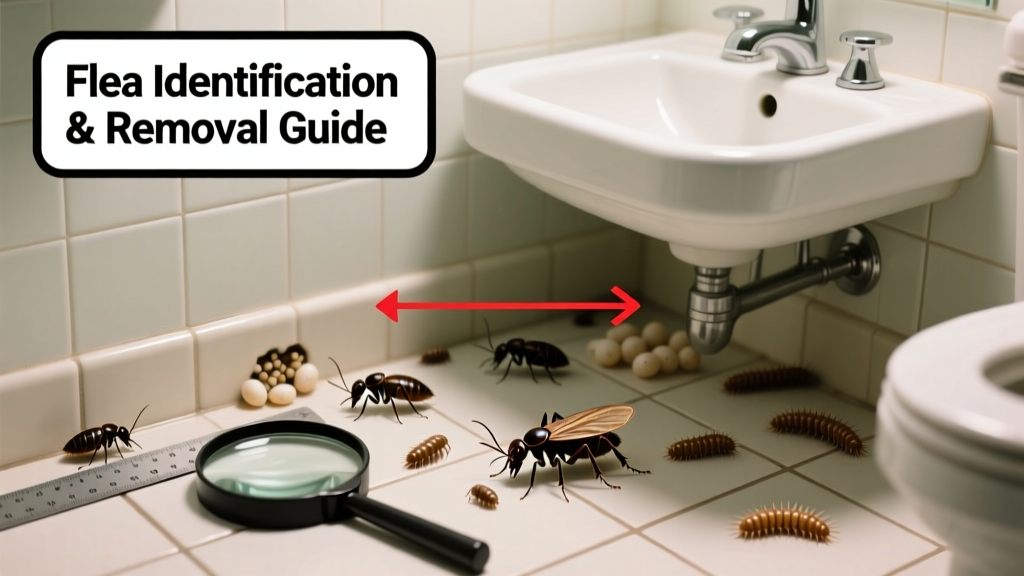
Fleas don’t nest in bathrooms—but they absolutely show up there. These tiny, wingless, blood-feeding insects (1–3 mm long) often hitch rides on pets, damp bath mats, or laundry baskets left on the floor. A single female can lay 40–50 eggs per day, and humidity above 70% helps larvae survive longer—even in tiled, seemingly inhospitable spaces.
Identification
Flea presence in the bathroom is almost always accidental, not habitual—but spotting them early prevents infestation spread. Adult fleas jump (not fly), appear reddish-brown, and leave behind black “flea dirt” (digested blood) that turns rust-red when moistened.
| Pest | Size & Color | Behavior | Clue in Bathroom |
|---|---|---|---|
| Flea | 1–3 mm, reddish-brown | Jumps erratically; avoids light | Flea dirt on damp towel or pet’s grooming brush near sink |
| Springtail | 1–2 mm, gray/white | “Springs” when disturbed; no bite | Clusters near leaky faucets or shower grout |
| Booklouse | 1 mm, pale brown | Crawls slowly; feeds on mold | Found near mildewy caulk or under humid vanity |
What Attracts Them
Fleas aren’t drawn to bathrooms for breeding—but several conditions make them linger or get trapped there:
- Damp towels or bathmats left bunched on the floor (providing temporary shelter and humidity)
- Pets bathing, drying, or shaking off water—dislodging fleas into drains or onto rugs
- Laundry hampers storing used clothes or pet bedding near the tub or toilet
- Cracks in tile grout or gaps around baseboards where flea eggs or pupae may lodge
According to the National Pest Management Association’s 2022 Residential Pest Report, 68% of reported indoor flea sightings occurred within 3 feet of pet-access points—including bathroom doorways and shower stalls.
Treatment Methods
Natural Remedies
Start here if you’ve caught fleas early and have no pets—or only occasional exposure:
- Wash all bath linens, pet towels, and shower curtains in hot water (140°F+) and dry on high heat for 20+ minutes
- Vacuum bathroom floors, baseboards, and under the vanity with a crevice tool—immediately seal and discard the bag or empty the canister outside
- Apply food-grade diatomaceous earth (DE) along baseboards and behind the toilet—reapply after cleaning or if damp
- Use a flea comb on pets *before* they enter the bathroom—and wipe comb on a damp paper towel to check for flea dirt
Chemical Options
Only use labeled insecticides if fleas persist beyond 7–10 days or you confirm an active infestation elsewhere in the home:
- Pyrethrin-based sprays (e.g., Wondercide Flea & Tick Spray) are EPA-approved for indoor use and break down within 24 hours
- Insect growth regulators (IGRs) like methoprene disrupt flea development—spray only on non-porous surfaces (tile, vinyl) per label instructions
- Avoid foggers in bathrooms: moisture interferes with dispersion, and aerosols can corrode metal fixtures
"Flea pupae are nearly impervious to chemicals—they’re encased in silk cocoons that repel sprays. That’s why vacuuming isn’t just cleanup—it’s mechanical control." — Dr. Susan Jones, Entomologist, Ohio State University Extension, 2023
Prevention
Stop fleas before they reach the bathroom:
- Keep bath mats and towels hung or folded—not piled—after each use
- Wipe down wet surfaces daily; fix leaks under sinks or around tubs within 48 hours
- Store pet brushes, collars, and leashes in sealed containers—not on bathroom counters or hooks
- Install door sweeps on bathroom entryways if pets frequently pass through
Pair this with regular flea control for dogs and cat flea treatment, since 95% of a flea’s lifecycle happens off the host—not on it.
When to Call an Exterminator
Contact a licensed pest professional if:
- You find flea dirt or live fleas in 3+ rooms over 5 days
- Your pet has persistent scratching, hair loss, or tapeworm segments
- There’s visible flea activity despite 2 weeks of consistent treatment
- You rent and can’t access wall voids or subfloor areas where pupae may be sheltering
Most reputable firms offer free inspections—and many include follow-up visits at no extra cost for flea jobs, per the National Pest Management Association’s 2023 Service Standards.
Can fleas breed in bathroom drains?
No. Fleas require organic debris (like pet dander or skin flakes) and humidity—not standing water—to develop. While larvae might temporarily hide in damp drain traps, they won’t mature there. Drain flies, however, do thrive in biofilm—and look similar at first glance. If you see tiny, moth-like insects near drains, it’s likely drain flies, not fleas.
Why do I only see fleas in the bathroom after my dog’s bath?
Bathing dislodges adult fleas clinging to fur—and warm, steamy air makes them more active. They jump off during drying or shake-off, then land on towels, rugs, or tile. This isn’t attraction—it’s displacement. Always bathe pets outdoors or in a utility sink if possible.
Will bleach kill fleas in the bathroom?
Bleach kills adult fleas on contact but does nothing to eggs, larvae, or pupae—and it’s unsafe on grout, stone, or metal fixtures. It also degrades caulk and creates toxic fumes when mixed with other cleaners. Stick to hot water, vacuuming, and targeted IGRs instead.
Do fleas hide in shower heads?
Extremely unlikely. Shower heads lack the warmth, organic matter, and shelter fleas need. However, mineral buildup can harbor bacteria—and attract drain flies. Clean shower heads monthly with vinegar, not flea sprays.
Can fleas survive in a clean, dry bathroom?
Temporarily—yes. Adults can live 2–3 days without a blood meal, especially in cool, shaded corners. But they won’t reproduce or thrive. Their presence signals a larger issue elsewhere: untreated pets, infested furniture, or neighboring units in apartments.
Remember: finding fleas in your bathroom is less about the room itself and more about movement patterns—of pets, people, and laundry. Focus on interrupting that cycle at the source, not just sanitizing tile. Consistent vacuuming, prompt laundering, and vet-approved pet prevention cut recurrence by over 90%, according to the Companion Animal Parasite Council’s 2023 Compliance Study.