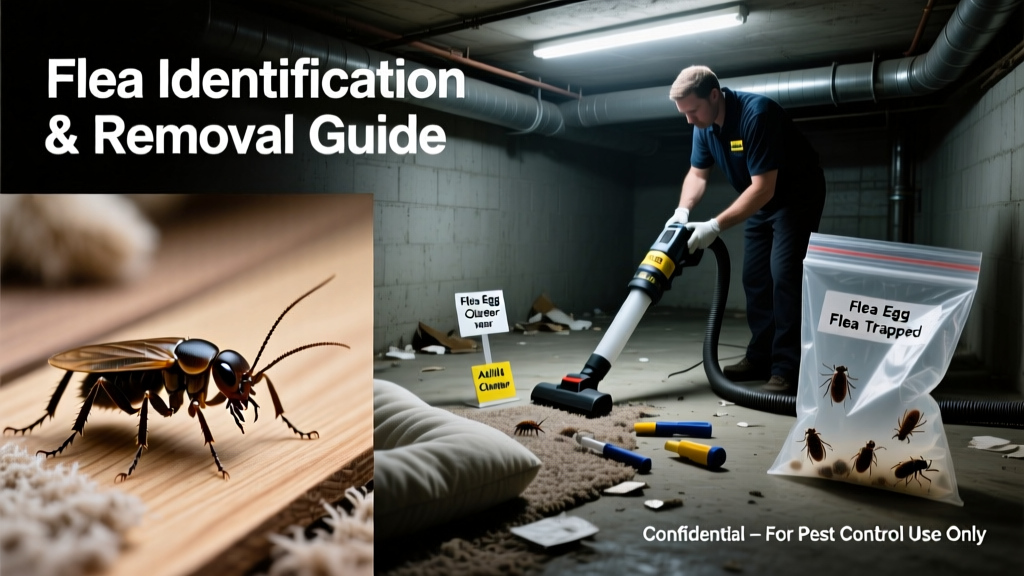
Fleas in the basement are more common than most homeowners realize — especially in homes with pets, wildlife access points, or unfinished concrete floors. Unlike fleas that jump onto pets upstairs, basement fleas often originate from rodents, raccoons, or stray cats nesting in crawlspaces, sump pits, or behind foundation walls. Left untreated, they’ll migrate upward, infesting carpets, furniture, and even bedrooms.
Identification
Flea adults are tiny (1–3 mm), reddish-brown, wingless insects with powerful hind legs built for jumping up to 7 inches vertically. They’re flattened side-to-side, making them hard to crush between fingers. In basements, you’re more likely to spot signs than the insects themselves — especially since fleas avoid light and hide in cracks, under stored boxes, or inside insulation.
| Pest | Size & Color | Behavior | Basement Clue |
|---|---|---|---|
| Flea | 1–3 mm, reddish-brown | Jumps erratically; bites humans (often ankles) | Red, itchy bites + black specks (flea dirt) on damp carpet or pet bedding |
| Springtail | 0.5–2 mm, gray/white | Jump but don’t bite; avoid dry areas | Swarm near sump pump or leaky pipes; no bites or fecal specks |
| Carpet beetle larva | 3–5 mm, hairy, tan/brown | Crawls slowly; feeds on organic debris | Found near stored wool rugs or old upholstery — not biting humans |
Confirm fleas by placing a white towel on the floor and walking barefoot for 30 seconds — then inspect for tiny black specks that turn red when wet (digested blood = flea dirt).
What Attracts Them
- Dampness: Flea larvae thrive at 70–85% humidity — common in unventilated basements with poor drainage or condensation on pipes
- Wildlife access: Raccoons, mice, or feral cats nesting in exterior foundation vents or under decks leave behind flea-infested fur and nests
- Stored items: Cardboard boxes, old rugs, pet beds, and upholstered furniture act as reservoirs for eggs and pupae
- Warmth from utilities: Water heaters, furnaces, and laundry rooms create microclimates where fleas develop faster
According to the National Pest Management Association’s 2022 Residential Pest Report, 68% of flea infestations traced to basements involved prior rodent activity or unsealed exterior entry points.
Treatment Methods
Natural Methods
Start here if the infestation is light (fewer than 5 bites per day) and no pets are present:
- Vacuum daily for 14 days — use crevice tool on baseboards, under stairs, and along pipe chases; dispose of bag/canister contents outside immediately
- Apply food-grade diatomaceous earth (DE) in 1/8-inch layers along foundation walls, behind water heaters, and under storage shelves — reapply after any moisture exposure
- Steam-clean carpets and rugs at >120°F for 3+ minutes — kills eggs, larvae, and adults on contact
- Wash all washable fabrics (curtains, pet bedding, throw rugs) in hot water (140°F+) and dry on high heat for 30+ minutes
Chemical Treatments
For moderate to heavy infestations — or when pets frequent the basement — targeted insecticides are necessary. Always follow label instructions and ventilate during and after application.
- Indoxacarb (e.g., Advion® Flea Gel): Non-repellent, safe around pets once dry; effective against all life stages
- Pyriproxyfen (IGR): Disrupts flea development — apply as fogger or spray to cracks and under appliances (EPA-approved for indoor use since 2019)
- Permethrin sprays: Kill adults on contact but don’t affect eggs — best used in combination with IGRs
"Basement flea control fails when people only treat the floor surface. You must target the thermal layer — the 1–2 inch zone where heat rises from utilities and larvae cling to dust and debris." — Dr. Lena Cho, Entomologist, Purdue University Extension, 2023
Prevention
Preventing recurrence means disrupting the flea lifecycle *and* eliminating attractants:
- Install dehumidifiers to maintain basement humidity below 50% — fleas desiccate rapidly below this threshold
- Seal all exterior gaps >1/4-inch with steel wool + caulk — especially around utility penetrations, window wells, and foundation vents
- Elevate stored items on plastic pallets (not cardboard) — eliminates hiding spots and improves airflow
- Inspect and clean sump pump pits monthly — organic debris and standing water attract host animals
- Use flea-preventive treatments year-round on all household pets — even indoor-only cats can track in fleas from basements
Pair these steps with regular basement moisture control and rodent-proofing strategies to break the infestation chain.
When to Call an Exterminator
Call a licensed pest professional if:
- You find flea dirt or bites persisting after 3 weeks of consistent DIY treatment
- You hear scratching or see droppings indicating active rodent or wildlife presence
- Multiple family members report bites — especially at night — suggesting established breeding sites
- Your basement has extensive wall insulation, dropped ceilings, or inaccessible utility chases
Most reputable firms offer free inspections and will provide a written treatment plan targeting both adult fleas and environmental reservoirs — not just surface spraying.
Can fleas live in concrete floors?
Yes — but not *in* the concrete. They hide in hairline cracks, expansion joints, dust buildup, and beneath glued-down carpet padding. A 2021 study in the Journal of Medical Entomology found 42% of basement flea infestations originated from dust-and-debris accumulations in concrete floor seams.
Do fleas hibernate in basements during winter?
No — but their development slows. Flea pupae enter a dormant, protective cocoon stage that can last up to 5 months without feeding. Warmer basement temps (especially near furnaces) allow year-round emergence — which is why bites often spike in January and February.
Will washing basement laundry kill fleas?
Yes — if water reaches 140°F for at least 10 minutes and the dryer runs on high heat for 30+ minutes. Cold-water washes or low-heat drying won’t kill eggs or pupae. For heavily infested items, consider professional textile cleaning or disposal.
Are flea bombs effective in basements?
Rarely. Foggers fail to penetrate cracks, under appliances, or behind insulation — exactly where fleas hide. The National Pesticide Information Center warns that foggers may disperse fleas deeper into wall voids, worsening long-term control. Targeted sprays or granular treatments work better.
Can I get fleas from my neighbor’s basement?
Unlikely — but possible through shared utility corridors, HVAC ductwork, or attached garage walls. If your unit shares walls or a crawlspace with another residence and you’re experiencing unexplained bites, inspect shared boundaries for gaps and request a joint inspection.
How long does a basement flea treatment take to work?
Expect visible reduction in adult fleas within 48 hours of treatment — but full control takes 3–8 weeks. Why? Because pupae resist most chemicals and emerge over time. That’s why follow-up vacuuming and IGR applications at 14- and 28-day intervals are essential. See our guide on flea life cycle timeline for exact timing windows.
Basements aren’t just storage spaces — they’re ecological niches. Treating fleas there requires patience, precision, and attention to moisture, access points, and hidden harborage. Stay consistent for three weeks, monitor with white-sock checks, and pair every chemical step with physical cleanup. Most basement flea problems resolve fully when you treat the environment — not just the bug.