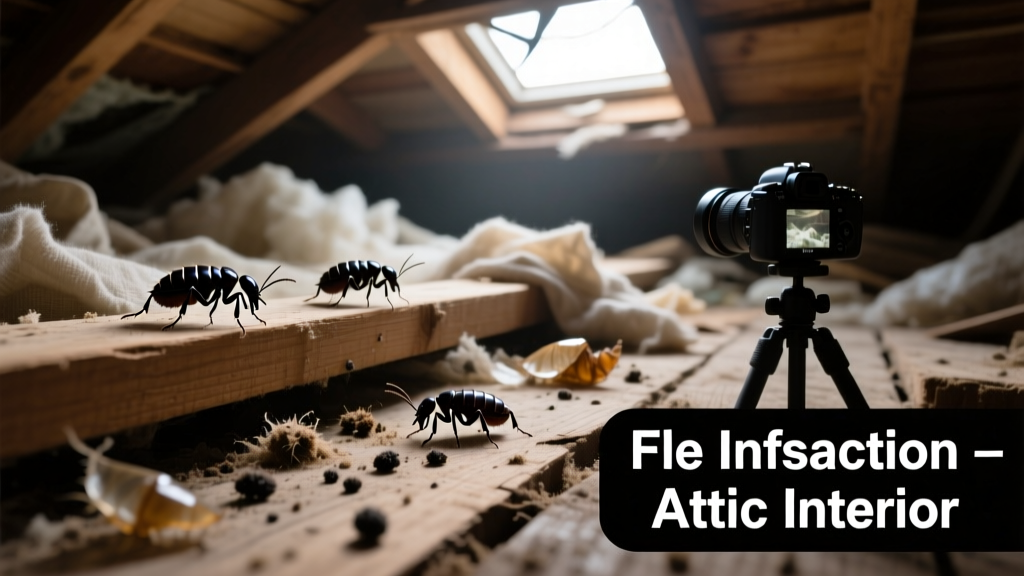
Fleas in the attic are uncommon but serious — they signal a hidden wildlife or pet access point, not just stray pets. Unlike basements or carpets, attics provide dry, undisturbed nesting grounds for flea eggs and pupae, especially if rodents, raccoons, or bats have nested there. Left unchecked, infestations can migrate downward into living spaces within days.
Identification
Flea adults are tiny (1–3 mm), reddish-brown, wingless, and laterally compressed — built to slip through fur. They jump up to 7 inches vertically and 13 inches horizontally. In attics, you won’t see many crawling adults; instead, look for:
- Black pepper-like specks (flea dirt) that turn rust-red on damp paper
- White, oval eggs (0.5 mm) clinging to insulation fibers or wood debris
- Small, silken cocoons camouflaged in dust or insulation batting
- Itchy bites on your scalp or neck after attic work — often misdiagnosed as spider bites
| Pest | Size | Color | Key Distinguisher |
|---|---|---|---|
| Flea | 1–3 mm | Reddish-brown | Jumps; no wings; stays near host nests |
| Carpet beetle larva | 2–5 mm | Tan/brown with bristles | Crawls slowly; feeds on wool/dust, not blood |
| Booklice | 1–1.5 mm | Translucent gray | Wingless but non-jumping; prefers high humidity |
| Springtails | 0.25–2 mm | Gray or black | Jump with furcula (springtail); avoid dry areas like most attics |
What Attracts Them
Fleas don’t live in attics by choice — they hitchhike in on hosts. The attic becomes a breeding ground only when three conditions align: a blood source, shelter, and warmth. According to the National Pest Management Association’s 2022 Wildlife Exclusion Report, 68% of attic flea cases involved prior rodent activity — especially roof rats and squirrels nesting in soffits or eaves.
- Abandoned animal nests (squirrel, raccoon, or bat) with dried blood, fur, and feces
- Insulation contaminated with flea eggs or larvae — especially fiberglass batts near entry points
- Warmth from recessed lighting, HVAC ducts, or solar-heated roof decks
- Unsealed gaps (≥¼ inch) around vents, chimneys, or rooflines that allow host animals inside
Treatment Methods
Natural Methods
Start here if the infestation is light (<5 visible fleas or dirt spots) and no active wildlife is present. Vacuuming alone removes ~50% of eggs and 90% of larvae, per University of Kentucky Entomology’s 2021 Flea Control Bulletin. Use a shop vac with a HEPA filter and discard the bag outside immediately.
- Diatomaceous earth (food-grade): Apply ⅛-inch layer along rafters, joists, and nest sites. Reapply after any moisture exposure.
- Cedar oil spray (0.5% solution): Mist insulation edges and wood surfaces — repels adults and disrupts larval development.
- Steam cleaning (≥120°F): Effective on accessible plywood subfloors and exposed framing; kills all life stages on contact.
Chemical Methods
For moderate-to-heavy infestations — especially where wildlife nests were removed recently — targeted insect growth regulators (IGRs) outperform broad-spectrum sprays. The U.S. EPA notes that pyriproxyfen (Nylar®) remains effective for 90+ days on porous attic surfaces and halts egg hatching without harming mammals.
- Apply IGR dust (e.g., Precor 2000) using a bell duster into insulation voids and wall cavities adjacent to attic access points
- Avoid foggers — they fail to penetrate insulation and disperse ineffectively in open, drafty attics
- Never apply permethrin directly to fiberglass insulation — it degrades binder resins and releases airborne particles
Prevention
Preventing reinfestation means cutting off both the host and the habitat. Seal every opening larger than ¼ inch with copper mesh, steel wool, or expanding foam rated for attic temperatures (e.g., Great Stuff Pest Block). Then, install one-way exclusion doors on active entry points before sealing permanently — this lets resident animals exit but blocks re-entry.
- Trim tree branches ≥6 feet from roofline to eliminate squirrel and raccoon bridges
- Install vent guards with ≤¼-inch mesh on all soffit, gable, and ridge vents
- Replace damaged or compressed insulation — fleas thrive in compacted batts where airflow is low and humidity pools
- Use motion-activated LED lights near access hatches — fleas avoid bright, sudden illumination
When to Call an Exterminator
Call a licensed pest management professional if you find evidence of active wildlife (fresh droppings, nesting sounds at dawn/dusk), more than 10 flea dirt clusters across the attic, or if bites persist after 10 days of treatment. Most general pest control firms lack wildlife certification — verify their license includes WCO (Wildlife Control Operator) credentials through your state’s Department of Natural Resources.
"Attic fleas are almost always a symptom, not the disease. If you’re treating fleas but ignoring the rat nest behind the chimney, you’ll be back in 12 days." — Dave R., WCO-certified technician with 17 years’ attic exclusion experience (Wildlife Pro Network, 2023)
Can fleas survive winter in the attic?
Yes — especially in insulated attics above heated living spaces. Flea pupae enter diapause and can remain dormant for up to 5 months. A 2020 study in Medical and Veterinary Entomology found attic pupae survived sustained 28°F temperatures when shielded by insulation or debris.
Will attic fleas bite humans?
They will — but reluctantly. Human skin isn’t ideal for feeding or reproduction. Bites cluster on ankles, waistbands, or hairlines after attic entry. Unlike bed bugs, flea bites have a central puncture mark and intense itch within 30 minutes.
Do I need to treat my pets if fleas are only in the attic?
Yes — even if pets never go up there. Fleas can drop from clothing, tools, or shoes into living areas. Treat all household pets with vet-approved topical or oral preventatives for at least 3 months post-attic cleanup.
Can fleas damage attic insulation?
Not directly — they don’t eat insulation. But their presence signals moisture from animal urine or decomposing nests, which degrades fiberglass R-value and encourages mold. Wet, soiled insulation should be removed and replaced — see our attic insulation replacement guide for safe disposal protocols.
How long does attic flea treatment take to work?
Expect 2–4 weeks for full lifecycle interruption. Eggs hatch in 2–12 days, larvae mature in 5–11 days, and pupae emerge in 5–14 days. IGRs stop new adults, but existing pupae must complete development. Monitor with white socks taped at the ankle — walk the attic perimeter weekly and check for hitchhikers.
Is attic flea infestation covered by homeowners insurance?
Rarely. Most policies exclude pest-related damage unless tied to a covered peril (e.g., a wind-damaged roof that allowed raccoons in). Document wildlife entry points with dated photos before cleanup — some insurers reimburse exclusion work if linked to storm damage. See our homeowners insurance pest claims breakdown for claim wording tips.
Attic fleas are a red flag — not just for pests, but for structural gaps and wildlife intrusion. Fix the entry, remove the nest, treat the life stages, and monitor with socks and sticky traps for 30 days. If you’ve sealed the attic but still find flea dirt near baseboards downstairs, inspect your basement rim joists next — they’re the second most common hidden route.