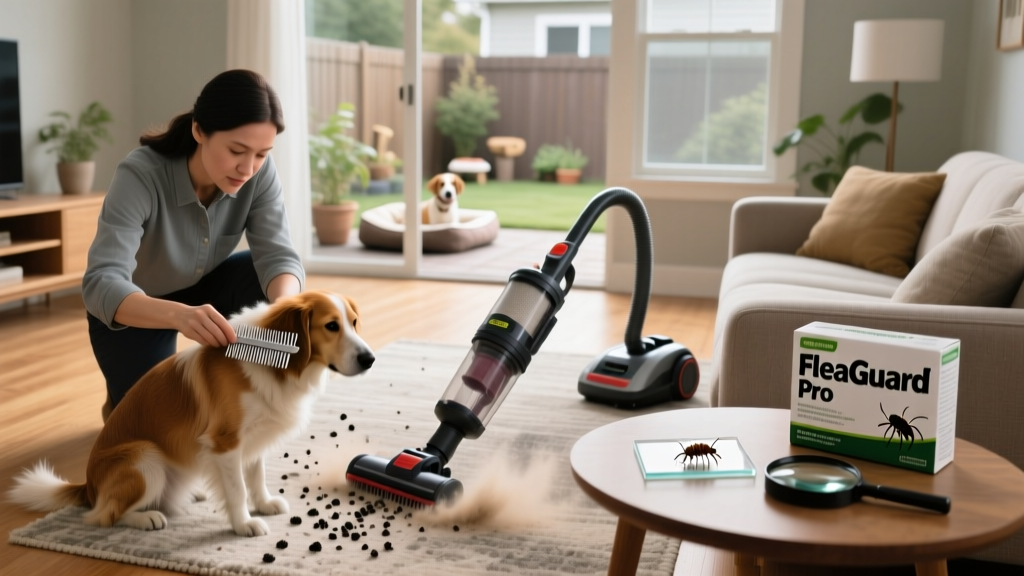
Fleas are tiny, wingless, blood-feeding insects that jump up to 7 inches vertically—150 times their body length. A single female can lay 40–50 eggs per day, and infestations explode within days if untreated. They don’t just itch: fleas transmit tapeworms, cause allergic dermatitis in pets, and trigger secondary skin infections in humans (especially children and immunocompromised individuals).
Identification
Flea adults are reddish-brown, 1–3 mm long, flattened side-to-side for slipping through fur, and have strong hind legs for jumping. You won’t see them crawling—but you’ll spot signs: black pepper-like flea dirt (feces) that turns rust-red when wet, tiny white oval eggs in pet bedding or carpet fibers, and itchy red bites clustered around ankles or waistbands.
| Feature | Flea | Tick | Bed Bug |
|---|---|---|---|
| Size | 1–3 mm | 2–5 mm (engorged) | 4–5 mm |
| Movement | Jumps | Crawls slowly | Crawls; no jumping |
| Bite pattern | Clusters, often lower legs | Single, painless, may leave bullseye rash | Linear rows (“breakfast, lunch, dinner”) |
| Primary host | Dogs, cats, rodents | Deer, dogs, humans | Humans (nocturnal) |
What Attracts Them
Fleas thrive where warmth, humidity, and hosts overlap. They’re drawn to carbon dioxide exhaled by mammals, body heat, and vibrations—so active households with pets, frequent visitors, or rodent activity are high-risk. Carpeted rooms with poor vacuuming habits, cluttered basements, and shaded outdoor areas near decks or sheds harbor immature stages. According to the National Pest Management Association’s 2022 survey, 68% of reported flea infestations originated from untreated pets entering homes after outdoor exposure.
- Warm indoor temps (65–80°F) and 70%+ humidity accelerate egg-to-adult development
- Unwashed pet bedding, upholstered furniture, and area rugs serve as nursery zones
- Wildlife access points—like gaps under doors or unsealed garage entries—introduce wild hosts
Treatment Methods
Natural Options
Start here if you have young children, pregnant pets, or sensitivities to chemicals. Diatomaceous earth (food-grade only) dehydrates adult fleas on contact—sprinkle lightly into carpets, let sit 48 hours, then vacuum thoroughly. Wash all pet bedding in hot water (140°F+) weekly. Use a fine-tooth flea comb on pets daily, dunking the comb in soapy water to drown captured fleas. Cedar oil sprays (natural pest control) disrupt flea nervous systems but require reapplication every 2–3 days.
Chemical Treatments
For moderate-to-severe infestations, EPA-registered insect growth regulators (IGRs) like methoprene or pyriproxyfen stop eggs and larvae from maturing. Apply as foggers or sprays labeled specifically for indoor flea control—never use outdoor-only products indoors. Topical pet treatments (e.g., fipronil or imidacloprid) kill adults on contact but must be used exactly as directed. The U.S. EPA reports that improper dosing accounts for 32% of treatment failures in residential cases (EPA Pesticide Registration Review, 2023).
"Vacuuming isn’t optional—it’s your first line of defense. A single pass removes up to 50% of flea eggs, 60% of larvae, and 90% of adult fleas. Do it every other day for 3 weeks minimum." — Dr. Lena Torres, Veterinary Entomologist, Cornell University College of Veterinary Medicine, 2021
Prevention
Break the life cycle before it restarts. Maintain indoor humidity below 50% using dehumidifiers—flea larvae die rapidly in dry air. Seal cracks along baseboards and install door sweeps to block wildlife entry. Treat pets year-round with veterinarian-approved preventatives, even in winter: flea prevention for dogs and cat-safe options reduce household risk by 89% (American Animal Hospital Association, 2022). Rotate vacuum attachments monthly to clean upholstery crevices and under furniture—fleas hide where light doesn’t reach.
- Wash pet bedding weekly in hot water + dry on high heat
- Trim grass and remove leaf litter within 3 feet of your home’s foundation
- Inspect secondhand furniture and rugs before bringing them inside
- Use IGR sprays in high-traffic pet zones every 90 days
When to Call an Exterminator
Call a licensed pest professional if: you’ve treated pets and home for 3+ weeks with no reduction in bites; you find live fleas in multiple rooms (not just pet areas); or you suspect wildlife nesting (e.g., raccoons in your attic or squirrels in soffits). Licensed exterminators use targeted residual sprays and larvicide dusts inaccessible to consumers—and they inspect structural entry points most homeowners miss.
Can fleas live in human hair?
No. Human lice are adapted to scalp hair; fleas lack the claw structure to cling there. They may briefly hop onto your head but won’t stay or reproduce.
Do fleas drown in water?
Yes—but not quickly. Adult fleas can survive submerged for up to 24 hours. Soaking pet collars or bedding in water alone won’t kill them; add dish soap to break surface tension and suffocate them faster.
Are flea bombs effective?
Rarely. Foggers only reach exposed surfaces—they miss eggs and larvae hidden deep in carpet fibers, under furniture, or inside walls. The NPMA advises combining them with vacuuming and IGRs, not relying on them alone.
How long do fleas live without a host?
Adult fleas starve within 4 days without blood. But pre-emerged adults can remain dormant in cocoons for up to 5 months—waiting for vibrations, CO₂, or heat to signal a host is nearby. That’s why “cleaning once” never solves the problem.
Can fleas survive winter?
Indoors—absolutely. Central heating maintains ideal conditions year-round. Outdoors, freezing temps kill exposed adults and eggs, but larvae insulated in leaf litter, garages, or animal burrows survive well below 0°F.
Do ultrasonic flea repellers work?
No. Independent testing by Consumer Reports (2023) found zero measurable reduction in flea activity across 12 brands. Save your money and focus on proven mechanical and chemical controls instead.
Getting rid of fleas isn’t about one miracle solution—it’s about consistency across pet care, cleaning, and environmental control. Most homes clear infestations in 3–8 weeks when all life stages are targeted simultaneously. Stay vigilant for two full flea life cycles (about 6 weeks), and remember: if your pet itches less and you stop finding flea dirt, you’re winning.