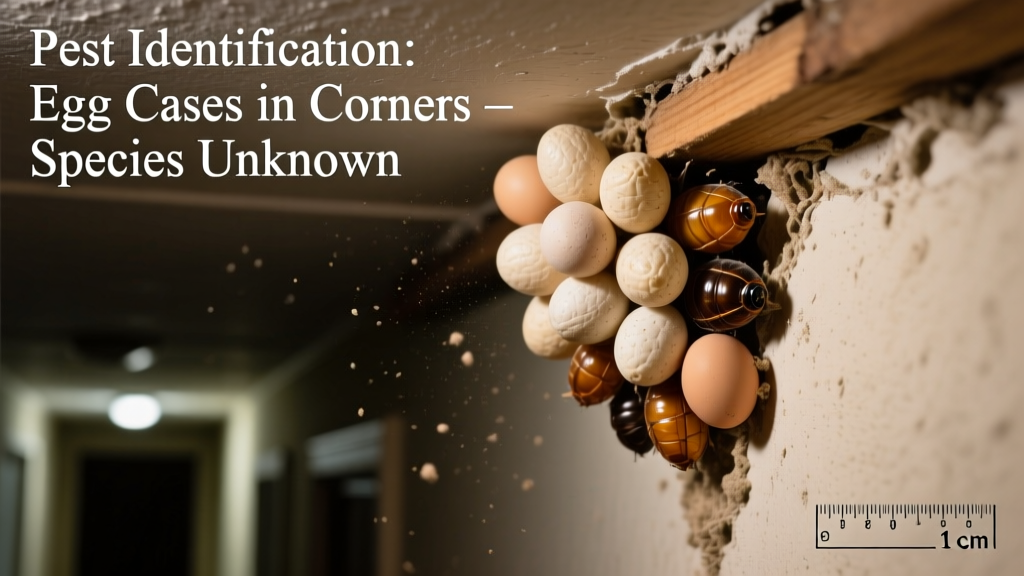
Those small, tan-to-brown, papery capsules tucked into ceiling corners, behind baseboards, or along window frames aren’t dust bunnies — they’re egg cases, and they signal an active, reproducing pest population. Left unaddressed, these cases hatch dozens of nymphs that feed on fabrics, skin flakes, and even book bindings — turning quiet corners into breeding hubs.
Identification
Three pests commonly leave egg cases in corners — but only one matches the classic description: small (¼-inch), oval, leathery, amber-to-tan, with a distinct ridged or purse-like texture. That’s the German cockroach (Blattella germanica). Unlike bed bugs (which don’t lay visible cases) or spiders (whose sacs are rounder and silkier), German roach oothecae are carried by the female until just before hatching — meaning you’ll find them glued in sheltered spots, not dropped randomly.
| Pest | Case Size & Shape | Color & Texture | Typical Location | Hatching Time |
|---|---|---|---|---|
| German cockroach | ¼–⅜ inch; elongated, slightly curved | Tan, leathery, ribbed surface | Behind baseboards, inside cabinets, ceiling corners | 28–30 days at 70°F |
| Brown recluse spider | ⅜–½ inch; spherical, silken | Creamy white, smooth, cottony | Undisturbed closets, attic corners, storage boxes | 20–30 days |
| Asian lady beetle | ⅛ inch; clustered, oval, yellowish | Yellow-orange, soft, often in tight groups | Window sills, ceiling corners near light sources | 3–5 days |
Confirm with a magnifying glass: German roach cases have 30–40 parallel ridges running lengthwise — like tiny corrugated cardboard. If you see live adults nearby (small, light brown, two dark parallel stripes behind the head), it’s confirmed.
What Attracts Them
German cockroaches don’t wander in from outdoors — they hitchhike in via grocery bags, used appliances, or cardboard boxes. Once inside, they thrive where warmth, moisture, and food residue converge. Kitchens and bathrooms are hotspots, but they’ll colonize laundry rooms, basements, and even offices if crumbs, grease films, or leaky pipes go unchecked.
- Crumb accumulation under appliances (especially refrigerators and dishwashers)
- Uncleaned drip pans and trash can liners
- High humidity (>60% RH) combined with poor ventilation
- Cluttered storage — especially cardboard, which provides nesting material and harborage
According to the National Pest Management Association’s 2022 Cockroach Control Guidelines, 78% of confirmed German roach infestations originated from items brought in from outside — not structural gaps.
Treatment Methods
Natural First Steps
Start with sanitation and physical removal — no chemicals needed yet. Vacuum egg cases using a shop vac with a HEPA filter (never a standard vacuum — eggs can survive and hatch in the canister). Immediately seal the bag in a freezer for 48 hours before disposal.
- Boric acid dust applied as a thin film in wall voids and behind baseboards (not on surfaces pets or kids access)
- Diatomaceous earth in dry, undisturbed cracks — dehydrates nymphs on contact
- Bay leaves and catnip oil sprays act as mild repellents but won’t eliminate established populations
Chemical Options
When nymphs are visible or cases reappear within 10 days, targeted insecticides become necessary. Gel baits containing fipronil or hydramethylnon are most effective — they’re consumed by foragers and shared via trophallaxis, killing hidden colony members. Avoid broad-spectrum sprays: they repel roaches deeper into walls, worsening long-term control.
"Gel bait placement is more critical than product choice — put pea-sized dabs every 12 inches behind appliances, under sinks, and along cabinet hinges. One study found proper spacing increased kill rates by 63% versus random application." — Dr. Susan Jones, Ohio State University Extension Entomology, 2021
Prevention
German roaches reproduce fast — one female can produce up to 300 offspring per year. Prevention means disrupting their life cycle *before* egg cases form. Seal all gaps >1/16 inch with copper mesh and silicone caulk — especially around plumbing, electrical conduits, and HVAC lines. Replace cardboard storage with sealed plastic bins, and wipe down countertops nightly with vinegar-water (1:1) to remove pheromone trails.
- Install door sweeps on exterior doors (gap ≤ ¼ inch)
- Fix leaky faucets within 24 hours — roaches need water every 2–3 days
- Run dishwasher and vacuum daily in high-risk areas during active monitoring
- Store pet food in rigid containers with locking lids — never in original bags
For ongoing protection, consider pairing German cockroach control strategies with regular monitoring using sticky traps placed near suspected harborages — check weekly for nymph counts.
When to Call an Exterminator
Call a licensed pest professional if you find more than five egg cases in one room, see live adults during daytime (signaling overcrowding), or notice a musty, oily odor — that’s the aggregation pheromone indicating a mature colony. DIY methods rarely eliminate nests hidden inside wall voids or behind built-in cabinetry.
The U.S. EPA estimates that 62% of homes with documented German roach infestations required ≥2 professional treatments to achieve full suppression — especially when egg cases were found in multiple rooms.
Can I scrape off the egg cases myself?
Yes — but only with gloves and immediate disposal. Use a stiff credit card or putty knife to lift them intact, then drop into rubbing alcohol for 10 minutes before sealing in a zip-top bag. Never crush them bare-handed: viable eggs can stick to skin.
Do egg cases mean my home is dirty?
No. German roaches thrive in spotless homes — they need far less food than other species. A single coffee ground or speck of toothpaste residue is enough. Their presence reflects access points and microclimates, not housekeeping habits.
Will freezing kill the eggs?
Yes — but only at 0°F for ≥48 hours. Standard home freezers (0–5°F) work if the case is fully exposed (no insulation from paper or fabric). Don’t rely on fridge-freezer combos: their freezer compartments rarely stay below 10°F consistently.
Are these cases dangerous to pets?
Not directly — the cases themselves aren’t toxic. But if your pet chews one open, newly hatched nymphs may scatter and hide in bedding or litter boxes. More critically, chemical treatments used nearby (e.g., boric acid dust) pose ingestion risks — always follow label precautions and keep pets out of treated zones for 24 hours.
Why do cases appear only in corners?
Corners offer three advantages: structural support for glue attachment, reduced airflow (slowing desiccation), and protection from foot traffic or cleaning. Roaches instinctively choose these microenvironments — it’s why crack-and-crevice treatment remains essential in any control plan.
How long until I see results after treatment?
With gel bait, expect nymph sightings to drop by 70% within 7–10 days. Egg cases laid *before* treatment will still hatch, so monitor closely for 3–4 weeks. Reapply bait where it’s consumed — fresh dabs every 7 days for the first month ensures continuous exposure.
If you’ve removed egg cases but still see adults, revisit sanitation and harborage reduction — because new cases will appear within 21 days if conditions remain favorable. For persistent issues, pair your efforts with a targeted roach monitoring trap system to map activity and adjust tactics in real time.