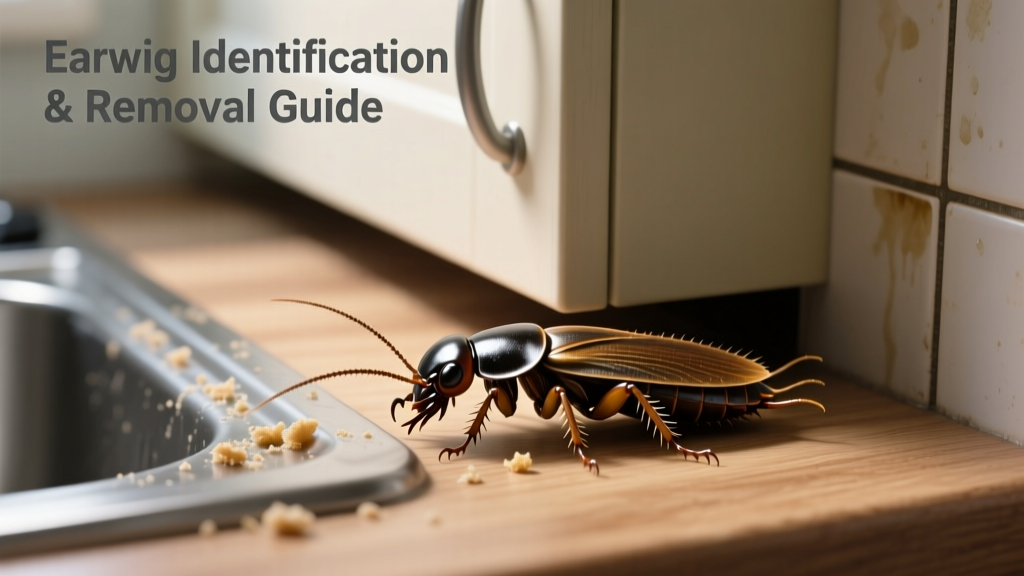
Earwigs are nocturnal, moisture-loving insects that occasionally invade kitchens—especially during late summer and early fall—seeking damp hiding spots and food scraps. Though they don’t bite humans or spread disease, their presence signals excess moisture or entry points, and large numbers can trigger alarm among residents.
Identification
Earwigs are slender, reddish-brown insects about 5–15 mm long, with distinctive pincer-like cerci at the tip of their abdomen. These forceps are used for defense and mating—not for stinging or injecting venom. Their wings are leathery and short; most species rarely fly. You’ll often spot them under sinks, near dishwashers, inside pantry cabinets, or behind refrigerators—always in humid, dark crevices.
| Pest | Key Features | Common Kitchen Locations | Behavioral Clue |
|---|---|---|---|
| Earwig | Pincher tail, segmented body, light brown, ½ inch max | Under sink, baseboards, pantry corners | Active at night; hides in tight, damp folds of paper or cardboard |
| Ground beetle | Hard shell, no pincers, often metallic blue/black | Along floor edges, near door thresholds | Rapid, erratic running; doesn’t seek moisture like earwigs |
| Sowbug/Pillbug | Gray, oval, rolls into ball (pillbug), no pincers | Under trash cans, leaky faucet areas | Requires constant high humidity; dies quickly in dry air |
What Attracts Them
Kitchens offer three things earwigs love: moisture, shelter, and organic debris. Leaky faucets, condensation under appliances, damp sponges left overnight, and even overwatered herb pots on windowsills create ideal microhabitats. They’re also drawn to crumbs, spilled cereal, pet food residue, and decaying fruit peelings—especially near trash bins or recycling containers.
- Standing water from a dripping faucet or clogged drain pan
- Cardboard boxes stored on cold, concrete floors (e.g., pantry backups)
- Cracks around window frames, pipe entries, or baseboards wider than 1/16 inch
- Cluttered cabinets where humidity lingers and food particles accumulate unseen
Treatment Methods
Natural Remedies
Start with low-risk options—especially if you have kids or pets. Diatomaceous earth (food-grade) applied as a thin line along baseboards and cabinet undersides dehydrates earwigs on contact. Rolled-up damp newspaper placed overnight near suspected activity zones works as a trap: earwigs crawl in seeking moisture, and you discard the bundle each morning. A spray of equal parts water and rubbing alcohol (70% isopropyl) kills on contact and disrupts pheromone trails.
Chemical Options
For persistent populations, targeted insecticides can help—but use them sparingly and only in cracks, voids, or behind appliances—not on countertops or food prep surfaces. The U.S. EPA estimates that 87% of indoor pesticide misuse occurs due to overapplication in visible areas (EPA Pesticide Registration Review, 2022). Pyrethroid-based sprays (e.g., bifenthrin or cyfluthrin) applied to exterior foundation walls and interior perimeter zones reduce entry. Always follow label instructions and ventilate thoroughly.
"Earwigs rarely breed indoors—they’re almost always coming in from outside. If you’re finding more than 10 per night in your kitchen, check your home’s perimeter moisture and sealing first." — Dr. Elena Ruiz, Urban Entomologist, UC Riverside IPM Program, 2023
Prevention
Long-term control means making your kitchen inhospitable. Fix leaks within 24 hours—earwigs detect moisture gradients as small as 0.5% relative humidity change. Install exhaust fans that vent outdoors (not into attics), and run them during and after cooking or dishwashing. Store dry goods in rigid, sealable containers—not paper bags or open cereal boxes. Vacuum weekly behind and beneath appliances using a crevice tool to remove eggs and nymphs.
- Replace worn weatherstripping on exterior doors leading to garages or patios
- Trim shrubbery and mulch at least 12 inches away from foundation walls
- Use dehumidifiers in basements or crawlspaces that feed into kitchen subfloors
- Wipe down countertops and sweep floors nightly—even if no visible crumbs remain
When to Call an Exterminator
Call a licensed pest professional if you find earwigs consistently for more than three weeks despite sealing and drying efforts—or if you see them emerging from wall voids, electrical outlets, or HVAC vents. These indicate nesting sites beyond surface-level control. Reputable companies will conduct a moisture audit and inspect exterior grading and irrigation patterns, not just spray baseboards.
Do earwigs damage food or packaging?
No—they don’t chew through sealed plastic or glass, but they’ll feed on exposed grains, flour, or dried fruit. They may tunnel into soft packaging like chip bags left open overnight, especially if moisture is present. Store pantry items in pest-proof containers to eliminate this risk.
Can earwigs get into my dishwasher or refrigerator?
Yes—but rarely while running. They enter through gaps under appliance doors or along hose connections. Check the rubber gasket on your dishwasher’s lower front panel and the drip pan under your fridge for standing water and debris. Clean both every 90 days.
Are earwigs dangerous to pets?
No documented cases exist of earwigs harming cats or dogs. Their pincers can’t penetrate pet skin, and they carry no known pathogens harmful to mammals. That said, pets may chase or eat them—and ingesting multiple earwigs could cause mild GI upset. Keep pet food bowls clean and elevated off the floor.
Why do I only see them at night?
Earwigs are photophobic and thermoregulate by avoiding heat and light. Kitchens cool down after evening use, and residual moisture from dinner cleanup creates ideal conditions. Use sticky traps (like monitoring glue boards) placed along cabinet toe-kicks to confirm activity patterns before committing to broader treatment.
Do earwigs lay eggs in my kitchen?
It’s possible—but uncommon. Earwigs prefer moist soil or decaying leaf litter for egg-laying. Indoor egg clusters (usually 20–50 pale, oval eggs) appear only in chronically damp, undisturbed spaces like under warped flooring or inside leaky wall cavities. Finding nymphs (smaller, lighter-colored earwigs without full pincers) suggests recent local breeding.
Will bleach kill earwigs?
Bleach diluted 1:10 in water can kill earwigs on contact, but it’s corrosive to grout, metal fixtures, and septic systems. It also fails to address root causes like moisture or entry points. Safer alternatives like vinegar-water sprays or diatomaceous earth deliver comparable results without damaging surfaces or risking fumes.
Earwigs aren’t a sign of poor hygiene—they’re a sign of environmental opportunity. Fix the moisture, seal the gaps, and monitor with simple traps. Most kitchen infestations resolve in under two weeks when you target the conditions—not just the bugs. For ongoing support, explore our kitchen-specific prevention checklist and home moisture mapping guide.