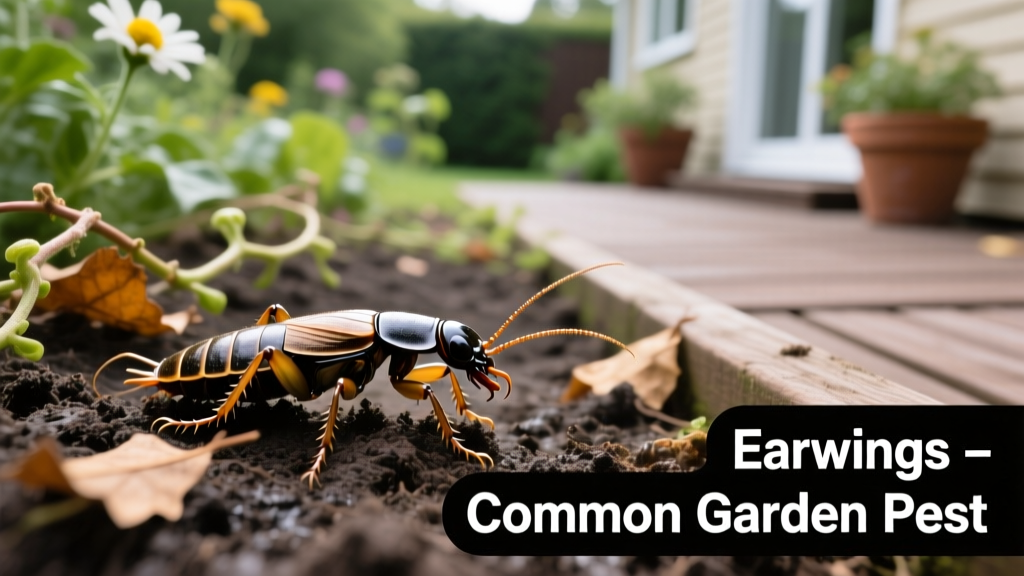
Earwigs are nocturnal, elongated insects with distinctive pincer-like cerci at their rear—often mistaken for dangerous or aggressive pests. While they rarely harm people, they can chew irregular holes in soft-leaved plants like lettuce, marigolds, and strawberries, especially during damp, warm springs. Their presence doesn’t always mean infestation—but consistent leaf damage paired with sightings under mulch or flowerpots is a strong indicator.
Identification
Earwigs (order Dermaptera, commonly Forficula auricularia) are 5–15 mm long, reddish-brown to black, with smooth, leathery forewings and membranous hindwings folded tightly beneath. They’re most active at night and hide in tight, moist crevices by day. Unlike beetles or caterpillars, earwigs don’t chew entire leaves—they leave ragged, irregular edges and shallow gouges, often on young, tender foliage.
| Pest | Key Features | Typical Damage | Time Active |
|---|---|---|---|
| Earwig | Pinchers (cerci), segmented abdomen, no wings visible at rest | Ragged leaf edges, holes in petals, seedling damage | Night only |
| Slater (woodlouse) | Gray, oval, 7 pairs of legs, rolls into ball | Minimal—mostly feeds on decaying matter | Night & damp days |
| Caterpillar | Soft-bodied, many prolegs, chewing mouthparts | Clean-edged holes, frass (droppings) present | Dawn/dusk + daytime |
| Snail/Slug | Shiny, slimy trail, no pinchers, rasping mouth | Smooth, round holes; silvery mucous trails | Night & after rain |
Confirm identity by checking under damp cardboard traps placed overnight—you’ll find earwigs clustered underneath, not scattered like slaters or snails.
What Attracts Them
Earwigs seek moisture, shelter, and food—not your home, but your garden’s microhabitats. They thrive where humidity stays above 60% and temperatures hover between 65–75°F. Key attractants include:
- Excessive mulch (especially bark or straw deeper than 3 inches)
- Leaky irrigation emitters or overwatered raised beds
- Decaying plant debris, fallen fruit, or compost piles near vegetable rows
- Cracks in retaining walls, stacked firewood, or cluttered garden sheds
According to the University of California IPM’s 2022 Pest Notes, earwig populations peak in gardens with >2 inches of organic mulch and poor air circulation—conditions that also favor fungal diseases and root rot.
Treatment Methods
Natural Control Options
Start with low-risk interventions that preserve beneficial insects like ladybugs and lacewings. Diatomaceous earth (food-grade) applied as a dry dust along garden bed edges dehydrates earwigs on contact—but reapply after rain. Rolled-up, damp newspaper traps laid flat at dusk collect dozens overnight; discard in sealed bag each morning.
- Beer traps: Shallow saucers filled with 1 inch of cheap lager + 1 tsp yeast—earwigs drown seeking fermentation
- Nematodes: Steinernema carpocapsae applied at dusk reduce soil-dwelling nymphs (UC Davis trials, 2021)
- Beneficial predators: Ground beetles and spiders naturally suppress earwig numbers—avoid broad-spectrum sprays
Chemical Treatments
Reserve chemical options for severe, recurring damage—especially when natural methods fail across two growing seasons. Pyrethrin-based sprays (e.g., Safer Brand Yard & Garden Insect Killer) offer short residual activity and low mammal toxicity. For persistent hotspots, granular carbaryl (Sevin) applied at label rates around perimeter beds reduces adult movement—but avoid use within 7 days of harvest per EPA guidelines (2023).
"Earwigs aren’t primary pests—they’re symptom pests. If you’re seeing dozens nightly, fix the moisture first. Spraying without changing habitat is like mopping a flooded floor without turning off the tap." — Dr. Lena Torres, UC Cooperative Extension Entomologist, 2023
Prevention
Long-term earwig management hinges on making your garden less hospitable—not eradicating every individual. Focus on airflow, drainage, and sanitation:
- Switch to 1-inch layers of gravel or cocoa hulls instead of thick organic mulch near susceptible crops
- Install drip irrigation with timers—avoid overhead watering after dusk
- Clean up fallen fruit, wilted blooms, and spent pea vines within 48 hours
- Seal gaps >1/8 inch in garden shed doors and fence bases using copper mesh
These steps also reduce risk of slugs, spider mites, and fungal blights—making them high-value, multi-benefit fixes.
When to Call an Exterminator
Professional help isn’t usually needed for earwigs in gardens—but consider it if:
- You find earwigs inside your home regularly (more than 5/week for 3 weeks)
- They’re emerging from cracks in foundation walls or basement window wells
- Neighboring properties have unmanaged compost piles or standing water feeding regional populations
Licensed applicators can inspect structural entry points and apply barrier treatments with longer-lasting pyrethroids—but they won’t treat your garden beds unless part of a broader integrated plan.
Do earwigs actually crawl into human ears?
No—this is a persistent myth with zero documented cases in medical literature. Earwigs lack the anatomy or behavior to enter ear canals. The name likely stems from Old English “ēarwicga” (ear creature), possibly referencing the shape of their cerci.
Are earwigs harmful to pets or children?
No. Their pinchers can’t break human skin and deliver no venom. If a child or pet mouths one, mild oral irritation may occur—but no treatment is needed beyond rinsing. They pose far less risk than bees or wasps.
Can earwigs damage my vegetable garden severely?
Rarely—but seedlings, sweet corn silks, and ripening strawberries are vulnerable. UC Master Gardeners observed 30–40% yield loss in untreated strawberry patches during wet May–June periods (2020–2022 field surveys). Mature kale, tomatoes, and peppers rarely suffer meaningful damage.
Why do I see more earwigs after rain?
Rain saturates soil and floods their underground tunnels, forcing adults and nymphs to the surface to seek drier refuge—often under pots, boards, or dense foliage. This is temporary dispersal, not population explosion.
Do earwigs eat aphids or other pests?
Yes—occasionally. Earwigs are omnivorous scavengers and will consume aphids, mite eggs, and insect larvae when preferred plant material is scarce. But don’t rely on them for biocontrol: their predatory behavior is inconsistent and outweighed by plant-feeding in most home gardens.
Will vinegar or essential oils repel earwigs?
No reliable evidence supports this. Vinegar disrupts soil pH and harms beneficial microbes; peppermint oil has shown no field efficacy against earwigs in Cornell trials (2021). Stick to proven moisture and habitat controls instead.
Earwigs aren’t invaders to fear—they’re indicators of conditions you can adjust. Tackle dampness, tidy up, and monitor closely. You’ll likely reduce them by 70–90% in one season without a single spray. For related concerns, see our guides on cutworms in garden and aphids on lettuce.