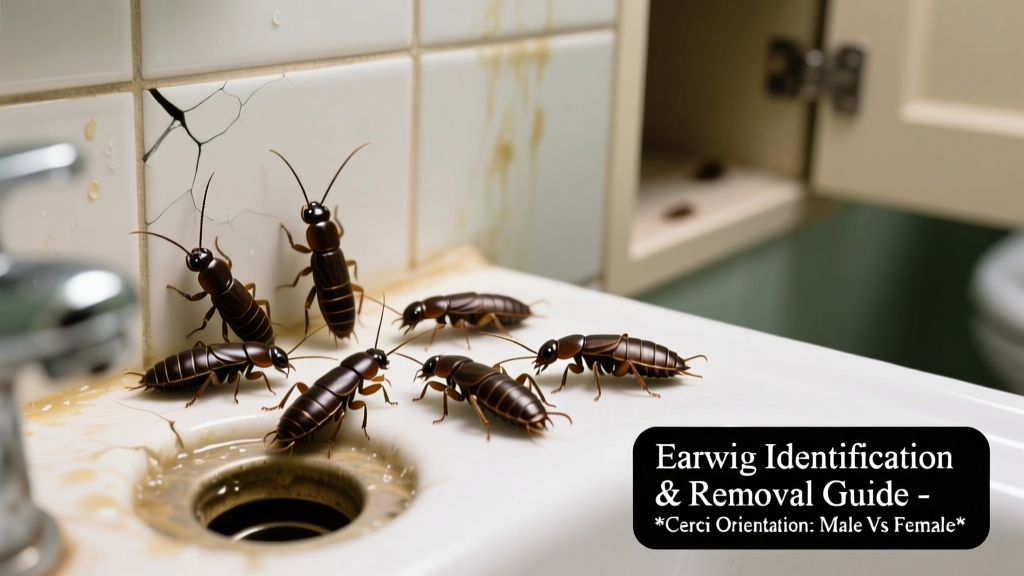
Earwigs are nocturnal, moisture-loving insects that frequently show up in bathrooms—especially during humid summer months or after heavy rain. Though harmless to humans (they don’t bite or spread disease), their presence signals excess moisture and potential entry points, and their pincers can trigger alarm when spotted near sinks, showers, or under towels.
Identification
Earwigs are slender, reddish-brown insects about ½ inch long, with distinctive curved pincers (forceps) at the tip of their abdomen. Their bodies are segmented, and though they have wings, they rarely fly. You’ll most often see them scurrying along baseboards, behind toilets, or tucked into damp bath mats.
Unlike silverfish or cockroaches, earwigs don’t leave droppings—but you may spot shed exoskeletons or small clusters in moist corners. They’re active at night, so daytime sightings usually mean a larger population is nearby.
| Insect | Key Distinguishing Features | Typical Bathroom Location |
|---|---|---|
| Earwig | Paired pincers, segmented body, 6 legs, no antennae bands | Under sink cabinets, behind toilet tank, shower grout lines |
| Silverfish | No pincers, silvery scales, wiggling motion, three tail filaments | Inside shampoo bottles, behind mirrors, in linen closets |
| Ground beetle | Harder shell, no pincers, faster runners, often metallic | Along floor drains, near exterior door thresholds |
| House centipede | 15+ pairs of legs, very fast, elongated body | On walls or ceilings near vents or windows |
What Attracts Them
Bathrooms offer three things earwigs need: moisture, shelter, and organic debris. Leaky faucets, poor ventilation, and standing water around drains create ideal microhabitats. High humidity—especially above 60%—triggers seasonal migration indoors. Cracks around pipes, gaps under doors, and unsealed exhaust fan housings serve as easy entry routes.
- Relative humidity above 60% for more than 48 hours
- Standing water in shower pans or overflow trays
- Cluttered storage (stacked towels, piles of washcloths)
- Decaying hair or soap scum buildup in drains
- Exterior foundation cracks within 3 feet of bathroom walls
Treatment Methods
Natural Methods
Start with low-risk options—especially if you have kids or pets. Diatomaceous earth (food-grade) applied in a thin line along baseboards and under the sink dehydrates earwigs on contact. Place rolled-up, damp newspaper overnight near suspected harborage areas; collect and discard each morning. A 50/50 vinegar-water spray deters them from surfaces without damaging grout or tile.
According to the University of California Statewide IPM Program’s 2022 Pest Notes, “Earwigs respond more reliably to physical removal and habitat modification than to broad-spectrum sprays.”
Chemical Options
If populations persist beyond two weeks of natural intervention, targeted insecticides can help. Use pyrethrin-based aerosols (e.g., MGK Pyrethrum TR) only in cracks and crevices—not open surfaces. For longer-term control, apply a perimeter treatment with bifenthrin granules (like Talstar PL) around the home’s foundation, focusing on the bathroom’s exterior wall and vent openings.
- Avoid foggers—they push earwigs deeper into walls
- Never mix chemicals; label instructions override general advice
- Always ventilate during and after application
Prevention
Long-term success hinges on moisture control and exclusion. Install an exhaust fan with a humidity sensor (like the Broan QTRE110L), set to activate at 55% RH. Replace worn caulk around tubs and sinks annually. Seal pipe penetrations with expanding foam sealant (e.g., Great Stuff Pest Block), then cover with stainless steel mesh for durability.
Keep bathroom doors closed when not in use—and run the fan for at least 20 minutes after every shower. Store towels on racks instead of folded piles, and wash bath mats weekly to disrupt nesting sites.
When to Call an Exterminator
Call a licensed pest professional if you find more than 10 earwigs per day over five consecutive days—or if you spot them in multiple rooms beyond the bathroom. This suggests a structural moisture issue or exterior infestation source. Licensed technicians can perform thermal imaging to locate hidden damp zones and install targeted bait stations in wall voids near plumbing chases.
Look for companies certified by the National Pest Management Association (NPMA) and ask for a written moisture assessment—not just a spray-and-go service. Moisture control in bathroom is often the missing piece in recurring earwig cases.
Do earwigs lay eggs in bathroom drains?
No—they avoid standing water for egg-laying. Earwigs deposit eggs in moist soil or mulch outdoors, typically in late winter. What you see in drains are adults seeking humidity, not breeding sites. Still, cleaning drains with a stiff brush and baking soda/vinegar helps eliminate organic film they feed on. Drain pests like drain flies or moth flies are more likely culprits for true drain infestations.
Can earwigs damage bathroom fixtures?
Not directly. They don’t chew plastic, metal, or ceramic. But large numbers may accelerate corrosion by trapping moisture against metal fixtures or feeding on mold growing on silicone caulk. That’s why early detection matters—before secondary issues develop.
Are earwigs attracted to light?
Unlike moths or flies, earwigs are photophobic. They actively avoid light and retreat to dark, tight spaces when exposed. If you see them crawling across a brightly lit countertop at night, it’s likely because their usual hiding spot was disturbed—or humidity levels spiked unexpectedly.
Why do I only see earwigs in my bathroom at night?
Their circadian rhythm peaks between 10 p.m. and 2 a.m., aligning with peak bathroom humidity after evening showers. Nighttime also offers cooler surface temps and less human activity—making it safer for movement. Use this pattern to time sticky trap placements (try sticky traps for pests) right before bedtime.
Will sealing my bathroom window stop earwigs?
It helps—but only if the window is the main entry point. Most earwigs enter through gaps around plumbing, not windows. Check the PVC sleeve where the shower arm exits the wall, the gap beneath the vanity, and the space between the toilet flange and subfloor. Silicone + copper mesh is the most durable fix for these spots.
Can houseplants in the bathroom attract earwigs?
Potting soil that stays constantly damp—especially if it contains decaying leaves or bark—can host earwigs temporarily. Let topsoil dry 1–2 inches deep between waterings, and avoid using outdoor compost in indoor pots. A quick rinse of plant saucers weekly prevents moisture pooling.
Earwigs aren’t dangerous, but their appearance means your bathroom’s moisture balance is off. Fix the humidity, seal the gaps, and monitor for patterns—not just pests. Consistent action beats reactive panic every time. For ongoing support, review our bathroom pest prevention checklist and revisit your exhaust fan’s performance quarterly.