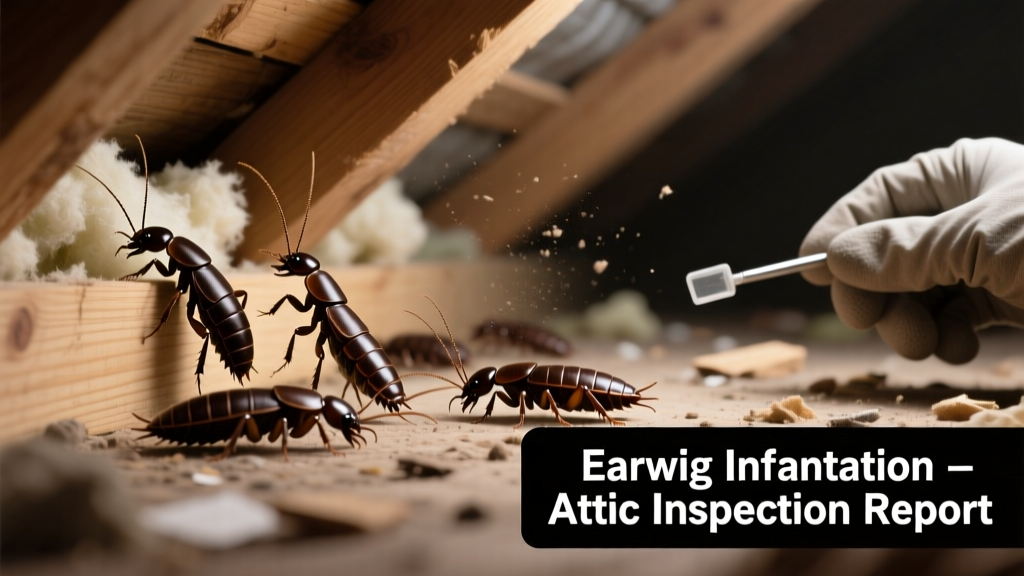
Earwigs are nocturnal, moisture-loving insects that occasionally invade attics—especially older homes with poor ventilation, leaks, or stored cardboard and insulation. While they don’t bite humans or damage wood structurally, their presence signals underlying moisture issues and can escalate into larger infestations if left unchecked. According to the National Pest Management Association’s 2022 Residential Pest Report, earwig sightings in upper-level spaces like attics increased 23% in humid climate zones over the past five years.
Identification
Earwigs are slender, reddish-brown insects about 5–16 mm long, with distinctive pincer-like cerci at the tip of their abdomen. These forceps are curved in males and straighter in females—but neither uses them to sting or inject venom. Their wings are leathery and short; most attic-dwelling earwigs are flightless or rarely fly.
Look for these signs in your attic:
- Clusters under damp insulation or cardboard boxes
- Small, irregular holes chewed in paper-based materials (e.g., old blueprints, book bindings)
- Faint, musty odor mixed with mildew (not from earwigs themselves, but their damp habitat)
- Shiny, dark droppings resembling coarse coffee grounds near rafters or soffits
Here’s how earwigs compare to similar attic pests:
| Pest | Key Distinguishing Feature | Typical Attic Behavior |
|---|---|---|
| Earwig | Paired abdominal pincers; segmented body; no antennae bands | Hides in damp insulation, under plywood sheathing, near roof leaks |
| Centipede | Many long, thin legs (15–177 pairs); faster movement | Active hunter; found near spider webs or dead insect piles |
| Sowbug/Pillbug | Hard, oval exoskeleton; rolls up when disturbed (pillbugs only) | Clusters in wet cellulose debris; no pincers; breathes through gills |
| Carpet Beetle Larva | Hairy, tapered body; no pincers; moves slowly | Feeds on wool, feathers, or stored fabrics—not moisture-dependent |
What Attracts Them
Earwigs don’t seek attics as primary habitat—but they migrate upward when ground-level conditions deteriorate. Key attractants include:
- Moisture sources: roof leaks, condensation on cold ductwork, or blocked soffit vents causing humidity above 60%
- Organic debris: old newspapers, cardboard boxes, discarded insulation batting, or rodent nests
- Entry points: gaps >1/8” around plumbing stacks, recessed lighting cans, or attic hatches
- Light gradients: they follow faint light seepage from gable vents or cracked access panels at night
Crucially, earwigs won’t survive long in dry, well-ventilated attics—they’re indicators, not residents. Finding more than 10–15 in one inspection usually means a persistent moisture source is nearby.
Treatment Methods
Natural Methods
Start with non-toxic interventions—especially if you store valuables or have pets accessing the attic. Diatomaceous earth (food-grade) works best when applied as a thin line along joists and entry seams. It dehydrates earwigs on contact but loses efficacy if dampened. Place shallow tuna cans filled with soy oil and a drop of soy sauce near suspected harborage zones—earwigs crawl in and drown. Vacuuming with a shop vac (and immediately freezing the canister for 48 hours) removes live specimens and eggs without residue.
"Earwigs rarely reproduce indoors—but if you find egg clusters (tiny white ovals, ~0.8 mm) in damp insulation, assume a nearby exterior population is seeding the space. Removing moisture stops reproduction within 72 hours." — Dr. Lena Cho, Urban Entomology Extension, UC Davis, 2023
Chemical Methods
If natural methods stall after two weeks, targeted chemical treatment may be warranted. Use residual insecticides labeled for indoor attic use—such as deltamethrin dust (0.05%) applied only in wall voids, behind insulation, or inside inaccessible soffit cavities. Avoid sprays: they degrade quickly in dusty, high-heat attic environments and pose inhalation risks during application. Never apply liquid insecticides directly to fiberglass insulation—it compromises R-value and traps moisture.
Always wear an N95 mask and gloves. Per the U.S. EPA’s Pesticide Label Review Guidelines (2021), attic pesticide applications require ventilation for at least 2 hours post-treatment before re-entry.
Prevention
Long-term prevention focuses on making the attic inhospitable—not just killing current bugs. First, install vapor-permeable ridge vents and clear all soffit vents of paint or debris to maintain airflow. Aim for 1 square foot of net free vent area per 150 sq ft of attic floor. Replace water-damaged insulation—especially batts with visible mold or compression—and seal gaps around electrical conduits using expanding foam rated for attic temperatures (e.g., Great Stuff Fireblock).
Store items in sealed plastic totes—not cardboard—and elevate them on pallets or metal shelving. Install LED motion-sensor lights near access points: earwigs avoid consistent illumination. Also check your gutter system—clogged gutters cause overflow that wets fascia boards and invites earwigs up soffits.
When to Call an Exterminator
Call a licensed pest management professional if:
- You spot earwigs consistently for more than three weeks despite moisture fixes
- You find live earwigs in living areas below the attic (indicating established vertical migration)
- Inspection reveals structural wood decay or active carpenter ant activity alongside earwigs
- Your home has cathedral ceilings or unvented attic assemblies—these require specialized treatment protocols
Reputable firms will conduct a moisture mapping survey first. Avoid companies offering blanket “attic fogging”—it’s ineffective against earwigs and violates EPA Section 3 labeling rules for attic spaces.
Do earwigs damage attic insulation?
No—they don’t eat fiberglass or mineral wool. But they tunnel through damp cellulose insulation seeking shelter, which reduces its thermal performance. More critically, their presence confirms moisture levels high enough to support mold growth in that material.
Can earwigs get into HVAC ducts from the attic?
Rarely—most residential duct boots are sealed with mastic or metal tape. However, if duct seams are loose or flex duct is torn near the air handler, earwigs can enter. Inspect duct connections annually; seal with aluminum foil tape, not duct mastic alone.
Are earwigs dangerous to pets or children in the attic?
No documented cases exist of earwigs harming pets or people. Their pincers can’t break skin, and they carry no known human pathogens. That said, avoid letting toddlers handle them—their defensive secretion smells foul and may irritate sensitive skin.
Why do I only see earwigs after rain?
Rain saturates soil and forces earwigs to seek drier refuge. They follow foundation cracks, utility lines, and weep holes upward—often ending up in attics via roof vents or soffits. This surge typically peaks 1–2 days after 0.5+ inches of rainfall.
Will attic fans help reduce earwigs?
Yes—if properly sized and paired with intake ventilation. A solar-powered attic fan moving ≥800 CFM can lower relative humidity by 15–20% in under an hour, making the space less attractive. But fans alone won’t fix chronic leaks or blocked vents.
How often should I inspect my attic for earwigs?
Twice yearly: once in early spring (March–April) and again after summer monsoons or heavy fall rains. Focus on north-facing roof slopes and areas near bathroom exhaust vents—these hold the most condensation. Use a flashlight with red filter (preserves night vision) and keep a log of findings to spot trends.
Earwigs in the attic aren’t an emergency—but they’re a reliable early warning sign. Fix the moisture, seal the gaps, and monitor closely. For deeper guidance on sealing attic penetrations, see our attic air leak sealing guide. If you’ve recently replaced roofing and still see earwigs, review our roof ventilation checklist—improper balance is the #1 missed culprit. And if insulation replacement is on your list, compare options in our attic insulation types comparison.