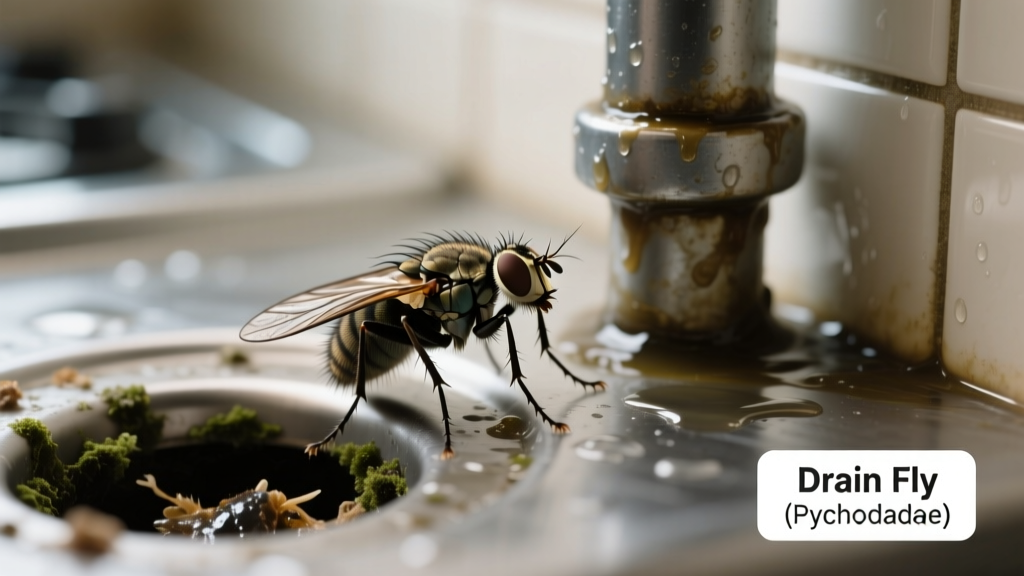
Drain flies (Psychoda spp.) are tiny, fuzzy, moth-like insects that thrive in the gelatinous biofilm lining kitchen sink, garbage disposal, and dishwasher drains. Though harmless to humans, their presence signals stagnant organic buildup—and repeated sightings mean the infestation is breeding *inside* your plumbing, not just flying in from outside.
Identification
Drain flies are 1–2 mm long, with broad, hairy wings held roof-like over their bodies at rest. They don’t bite or transmit disease, but their larvae feed on sewage bacteria and decaying matter—meaning their existence points to a hygiene issue you can’t ignore.
Look for adults resting on walls near sinks, slow-flying in short hops (they’re weak fliers), or clustering around drain openings after turning on the tap. You’ll often spot them at dusk or in low-light conditions.
| Pest | Size | Wing Shape & Texture | Typical Location | Flight Pattern |
|---|---|---|---|---|
| Drain fly | 1–2 mm | Fuzzy, broad, grayish-black; held tent-like | Inside sink/shower drains, under fridge drip pans | Short, fluttery hops; rarely flies more than 3 feet |
| Fruit fly | 2–3 mm | Smooth, clear, narrow; held flat | Near overripe fruit, open soda, recycling bins | Erratic, sustained flight; drawn to vinegar traps |
| Moth fly (same as drain fly) | Identical | Same species—Psychoda alternata is the most common in U.S. kitchens | Same | Same |
What Attracts Them
Drain flies need three things: moisture, organic debris, and warmth. In kitchens, that means:
- Food particles washed down the sink (especially starchy or greasy residues)
- Standing water in P-traps that evaporate or dry out between uses
- Clogged or slow-moving drains where biofilm accumulates over days
- Leaky garbage disposals or cracked pipe seals under the sink
- Infrequent cleaning of aerators, pop-up stoppers, or overflow channels
According to the National Pest Management Association’s Pest Control Best Practices Report (2022), 68% of confirmed kitchen drain fly infestations originated from neglected garbage disposal units or improperly sealed dishwasher drain hoses.
Treatment Methods
Natural Remedies
Start here—especially if you have kids, pets, or prefer non-toxic solutions. These target the biofilm layer where eggs and larvae live:
- Boil ½ gallon of water, add ½ cup baking soda, then pour down the drain.
- Wait 5 minutes, then follow with ½ cup white vinegar. Cover the drain for 10 minutes to trap fizzing action against the film.
- Rinse with boiling water to flush loosened gunk.
- Repeat nightly for 3–4 days, then weekly for maintenance.
This method dissolves organic sludge without harming pipes—but it won’t work if the clog is mineral-based or structural. For stubborn cases, use a stiff bottle brush or a ¼-inch drain snake to manually scrub pipe walls.
Chemical Options
Only use enzyme or bacterial drain cleaners—not caustic lye or acid-based products. Enzymes break down organic matter safely; they’re EPA-registered and safe for septic systems. Avoid foaming insecticides labeled for “drain flies”—most only kill adults on contact and leave larvae unharmed.
The U.S. EPA estimates that over 70% of homeowner-reported “drain fly treatments” fail because they target adults instead of larval habitat—a critical misstep.
"If you see more than 5 drain flies in 24 hours, assume there’s active breeding in the first 2–3 feet of pipe—and skip adult-killing sprays entirely." — Dr. Lena Cho, Entomologist, Purdue University Extension, 2023
Prevention
Prevention isn’t about perfect cleanliness—it’s about disrupting the breeding cycle. Focus on moisture control and physical barriers:
- Run hot water for 30 seconds after each dishwashing session to rinse residue
- Use metal or silicone sink strainers (not plastic mesh) to catch food solids before they enter pipes
- Clean pop-up stoppers weekly with vinegar-soaked cotton swabs
- Check and tighten connections on garbage disposal discharge tubes—loose clamps create hidden damp cavities
- Keep cabinet doors open overnight occasionally to reduce humidity under the sink
Also inspect your dishwasher’s air gap or high-loop hose installation—improper routing lets wastewater sit and ferment, attracting flies even if the sink looks clean. See our dishwasher drain clog troubleshooting guide for step-by-step verification.
When to Call an Exterminator
Call a licensed pest professional if:
- You’ve treated drains consistently for 10 days and still see adults daily
- Flies emerge from multiple drains—even those rarely used (e.g., guest bathroom sink)
- You detect a musty, sewage-like odor coming from walls or floor vents
- You find larvae in clean-looking drains after full enzymatic treatment
These signs suggest breeding in wall voids, vent stacks, or broken sewer lines—not just sink pipes. A pro will use borescopes and moisture meters to locate hidden sources. Don’t delay: untreated infestations can spread to adjacent units in multi-family buildings. Check our sewer line inspection checklist to assess risk before calling.
Why do drain flies keep coming back after cleaning?
Because surface cleaning doesn’t reach the 2–3 mm-thick biofilm clinging to pipe walls—their nursery. Larvae embed deep in this slime, surviving bleach, boiling water, and most sprays. Effective removal requires mechanical scrubbing or sustained enzymatic digestion over several days.
Can drain flies come from the refrigerator drip pan?
Yes—especially in older models with clogged condensate drains or cracked drip pans holding stagnant water and mold. Pull the fridge away, remove the lower access panel, and inspect the pan. Clean with diluted hydrogen peroxide (3%), not bleach, to avoid corrosion. See our fridge drip pan mold removal guide for full instructions.
Do ultrasonic drain cleaners work on drain flies?
No. Independent testing by the Journal of Economic Entomology (2021) found zero reduction in larval survival or adult emergence after 30 days of ultrasonic device use. These devices vibrate water but don’t disrupt biofilm adhesion or kill eggs.
Is bleach effective against drain fly larvae?
Bleach may kill surface adults but fails against larvae embedded in biofilm. It also reacts poorly with organic matter, producing toxic chloramine gas when mixed with urine or ammonia residues. The CDC explicitly warns against using bleach in drains for pest control (2022 Household Hazard Guidelines).
Can I use a wet/dry vacuum to suck them out?
Temporarily yes—for adults resting on surfaces—but it does nothing for eggs or larvae in pipes. Worse, if the vacuum’s filter isn’t sealed, you’ll aerosolize bacteria-laden biofilm particles into your kitchen air. Not recommended as a primary tactic.
Drain flies aren’t dangerous, but they’re a persistent nuisance rooted in overlooked plumbing hygiene. Fix the biofilm, not just the bugs—and you’ll break the cycle for good. Consistent drain maintenance every 7–10 days keeps kitchens fly-free without relying on chemicals or costly service calls.