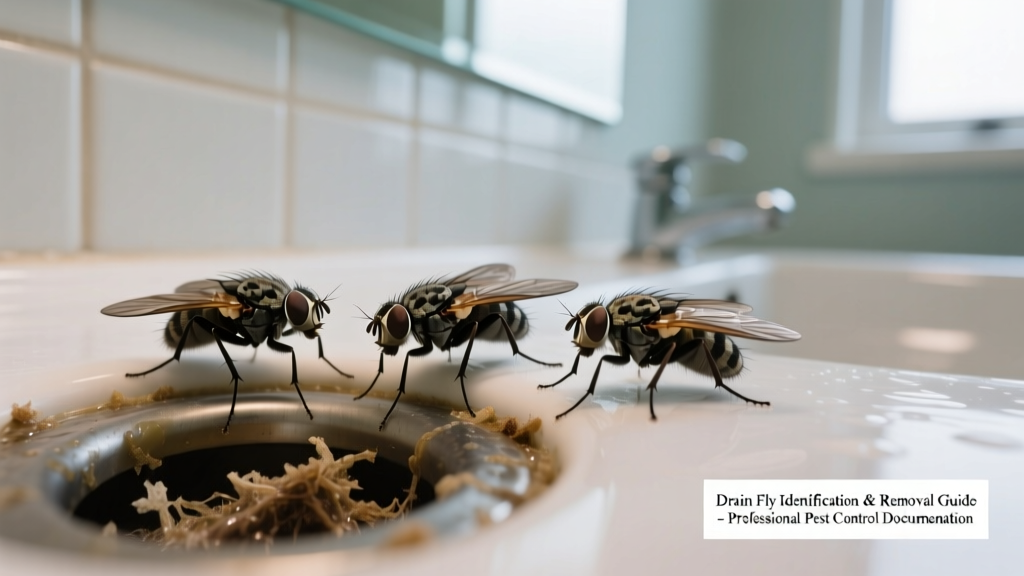
Drain flies (Psychoda spp.) are tiny, fuzzy, moth-like insects that thrive in the gelatinous biofilm lining bathroom drains—especially those with slow flow or infrequent use. Though harmless to humans, their presence signals plumbing neglect and can spike rapidly: a single female lays up to 300 eggs in 48 hours, and larvae mature in just 9–15 days (University of Florida IFAS Extension, 2022).
Identification
Drain flies are often mistaken for fruit flies or gnats—but they’re distinct in behavior and biology. They don’t bite, don’t transmit disease, but their sheer numbers near damp fixtures raise hygiene concerns and indicate organic buildup.
| Feature | Drain Fly | Fruit Fly | Moth Fly (same as drain fly) |
|---|---|---|---|
| Size | 1.5–2.0 mm | 2.5–4.0 mm | Same species — Psychoda alternata |
| Wing shape | Heart-shaped, fuzzy, held roof-like over body | Clear, veined, flat at rest | Identical — not a separate species |
| Flight pattern | Weak, short hops; rarely flies more than 3 feet | Strong, sustained flight; drawn to fermenting odors | Same as drain fly |
| Primary habitat | Inside drain pipes, sewer traps, overflow channels | Kitchen trash, fruit bowls, mops | Same as drain fly |
Look for adults resting on bathroom walls near sinks or shower stalls—or hovering low above standing water. Larvae are translucent, legless, and up to 5 mm long; you’ll only spot them if you remove the drain cover and shine a flashlight down the pipe.
What Attracts Them
Drain flies aren’t flying in from outside—they’re breeding inside your home’s plumbing. Their sole requirement is stagnant, nutrient-rich organic sludge: hair, soap scum, toothpaste residue, skin cells, and mildew. A bathroom sink used only once daily can accumulate enough film to support hundreds of larvae in under two weeks.
- Infrequently used drains (guest bath, powder room)
- Clogged or slow-moving P-traps holding standing water
- Overflow holes in sinks and tubs—often overlooked cleaning zones
- Cracked or dry trap seals (e.g., floor drains behind toilets)
- Old caulk around tubs/shower bases trapping moisture and debris
According to the National Pest Management Association’s 2023 Residential Pest Report, 68% of confirmed drain fly infestations originated in bathrooms—not kitchens—due to higher humidity and less frequent deep-cleaning of vertical drain lines.
Treatment Methods
Natural Remedies
Start with mechanical and enzymatic approaches—these break down biofilm without damaging pipes or exposing family members to fumes.
- Boiling water flush (once weekly): Pour ½ gallon of near-boiling water directly into the drain—effective only if the clog isn’t mineral-based or grease-heavy
- Baking soda + vinegar + boiling water sequence: ½ cup baking soda, wait 5 min; ½ cup vinegar, cover drain 10 min; flush with 1 quart boiling water
- Enzyme drain cleaners (e.g., Bio-Clean, Green Gobbler): Apply overnight weekly for 3 weeks—live bacteria digest organic matter at the pipe wall level
- Vacuum extraction: Use a wet/dry vac with a narrow nozzle sealed over the drain opening for 60 seconds to suck out adult flies and surface larvae
Chemical Options
Reserve chemical treatments for persistent cases where biofilm has hardened or drain covers can’t be fully removed. Never mix chemicals—especially bleach and ammonia—and always ventilate.
- 1/4 cup chlorine bleach + 2 cups hot water, left in drain for 15 minutes, then flushed—kills surface larvae but doesn’t penetrate thick biofilm
- Drain gels with sodium hydroxide (e.g., Liquid-Plumr Build-Up Remover): Effective on organic layers but corrosive to older pipes and septic systems
- Insect growth regulators (IGRs) like pyriproxyfen: Applied as foams into drain lines by professionals—disrupts larval development without killing adults
"Drain flies don’t respond to space sprays or bug zappers—they’re not flying pests. You must treat the breeding site, not the symptom. If you see more than five adults in 10 minutes, assume active larvae are present in at least one drain." — Dr. Elena Ruiz, Entomologist, NPMA Technical Advisory Board, 2023
Prevention
Consistent maintenance beats reactive treatment every time. Focus on disrupting the life cycle: no biofilm = no breeding ground.
- Clean overflow holes monthly with a bottle brush and enzyme spray
- Run hot water for 60 seconds after each shower or sink use
- Use mesh drain covers to catch hair and debris—clean weekly
- Check P-trap water level every 2 weeks; add ½ cup water to dry traps (common in guest baths)
- Replace cracked or deteriorated caulk around tubs and vanities to prevent hidden moisture pockets
For homes with older cast-iron or galvanized pipes, consider installing drain camera inspection to map biofilm buildup before it becomes visible. Pair this with quarterly enzyme treatments—especially before winter when bathroom use drops and traps dry faster.
When to Call an Exterminator
Call a licensed pest professional if:
- You’ve treated all visible drains for 3+ weeks and still see adults daily
- Flies emerge from walls, baseboards, or ceiling vents—not just drains
- You suspect a broken sewer line or septic backup (e.g., sewage odor, gurgling sounds)
- Multiple bathrooms show simultaneous activity—indicating main stack or vent pipe involvement
A certified technician will use fogging foam, IGR foams, and pipe inspection tools not available to consumers. Most charge $125–$275 for a standard bathroom-focused service, including a written maintenance plan. Ask whether they offer a 30-day retreatment guarantee—reputable firms do.
Can drain flies come from the toilet?
Yes—but rarely. Toilets usually flush too vigorously and contain too much chlorine residue for sustained breeding. However, if the toilet hasn’t been flushed in over 10 days (e.g., vacation home), the trap water can evaporate, allowing flies to enter from the sewer side. Always pour 1 cup water into unused toilets weekly.
Do drain flies mean my pipes are clogged?
Not necessarily. They breed in thin biofilm—not blockages. A perfectly clear, slow-moving drain can host dozens of larvae. Conversely, a fully clogged drain may starve them out by eliminating airflow and moisture exchange. Use a bathroom drain cleaning guide to distinguish between slime and solids.
Will bleach kill drain fly eggs?
Bleach kills exposed eggs and adults on contact but fails to penetrate the protective mucilage layer surrounding eggs embedded in biofilm. Lab tests show bleach eliminates only 22% of eggs after 15-minute exposure (Journal of Medical Entomology, Vol. 60, 2023). Enzymes or physical scrubbing work far better.
How long until drain flies go away after treatment?
Adults live 3–5 days, so visible activity drops quickly once breeding stops. But because eggs hatch in 48 hours and larvae take up to 2 weeks to mature, full resolution takes 2–3 weeks—even with perfect treatment. Continue enzyme applications through week 3 to catch late-hatchers.
Can drain flies lay eggs in dry drains?
No. Eggs require constant moisture and organic film. A completely dry P-trap won’t support egg-laying—but it’s also a red flag: dry traps allow sewer gases and adult flies to enter your home. Rehydrate the trap first, then treat.
Are drain flies attracted to light?
Slightly—but weakly. Unlike moths, they’re not phototactic. You’ll see them near fixtures because those areas are humid and near breeding sites—not because they’re drawn to bulbs. Turning off lights won’t reduce numbers; cleaning drains will.
Drain flies are a nuisance rooted in routine—not neglect. With weekly attention to overflow holes, consistent hot-water flushing, and enzyme maintenance, most households eliminate them within three weeks and stay fly-free for years. For stubborn cases, pair professional help with a bathroom ventilation upgrade to reduce ambient humidity—the invisible fuel behind every infestation.