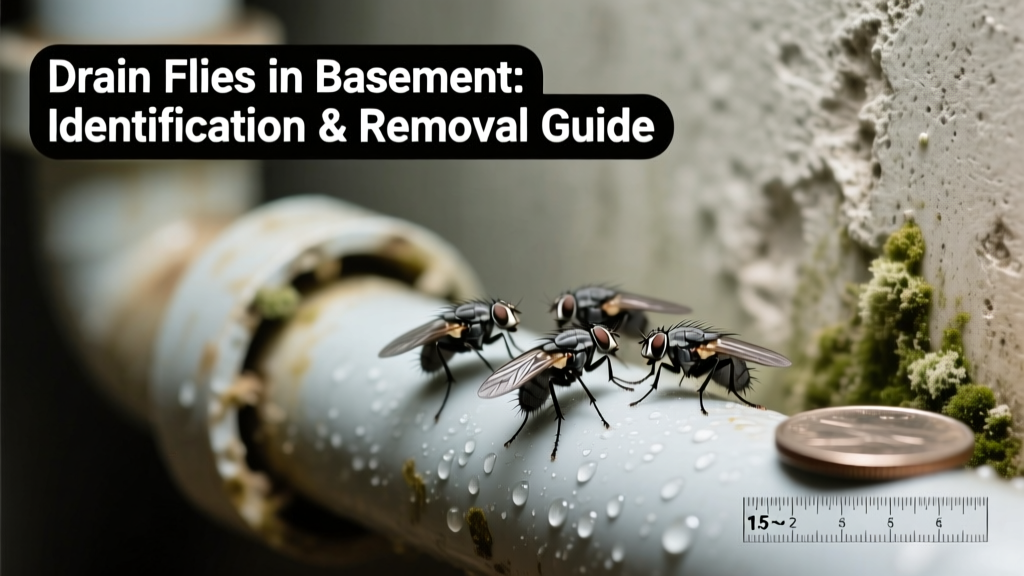
Drain flies (Psychoda spp.) are tiny, moth-like insects that thrive in the organic slime lining basement floor drains, sump pump pits, and leaky plumbing. Unlike fruit flies, they don’t seek food—they breed in stagnant, gelatinous biofilm where moisture and decaying matter accumulate. Left unchecked, a single female can lay up to 30 eggs every 48 hours—leading to visible swarms near damp concrete walls or utility sinks within days.
Identification
Drain flies are 1–2 mm long, with fuzzy gray or tan wings held roof-like over their bodies when at rest. Their antennae are longer than their heads, and they move in short, hopping flights—not sustained buzzing. You’ll spot them clinging to walls near floor drains, hovering above sump pump covers, or crawling slowly on wet basement pipes.
| Pest | Size & Color | Flight Pattern | Typical Location | Key Clue |
|---|---|---|---|---|
| Drain fly | 1–2 mm, fuzzy gray/tan | Hopping, erratic, low flight | Inside drain openings, sump pits, behind washer hoses | Wings form a triangle when folded; no compound eyes visible |
| Fruit fly | 2–3 mm, red-eyed, shiny tan | Sustained, purposeful flight | Near spilled drinks, garbage cans, compost bins | Red eyes; drawn to fermenting sugars—not moisture alone |
| Moth fly (same as drain fly) | Identical—Psychoda is the genus name | Same | Same | No distinction—"moth fly" is a synonym |
What Attracts Them
Drain flies need three things: standing water, organic debris, and warmth. Basements provide all three—especially where condensation pools under HVAC units, sump pumps run intermittently, or old cast-iron drains hold stagnant water beneath grates. Biofilm buildup (a slimy mix of bacteria, fungi, hair, soap scum, and food particles) is their nursery. A 2022 study by the National Pest Management Association found 78% of basement drain fly infestations originated from floor drains unused for more than 3 weeks.
- Slow or clogged basement floor drains with visible black gunk around the rim
- Sump pump pits with algae or scum layers, especially if covered with plastic lids
- Leaking water heater pan or laundry hose connections behind washers
- Cracked or missing cleanout plugs in drain lines under concrete slabs
Treatment Methods
Natural Remedies
Start here—especially if you have pets, kids, or prefer non-toxic options. Boiling water poured down the drain twice daily for 3 days kills larvae on contact but won’t penetrate thick biofilm. More effective is a 1:1 vinegar-and-baking-soda flush: pour ½ cup baking soda, wait 5 minutes, then 1 cup white vinegar. Cover the drain for 10 minutes, then flush with boiling water. Repeat for 5 days. For sump pits, scrub sides with a stiff brush and diluted hydrogen peroxide (3%)—it breaks down organic film without corroding metal components.
Chemical Options
If natural methods stall after 7 days, use enzyme-based drain cleaners like Bio-Clean or Green Gobbler. These contain live bacteria that digest biofilm over 24–72 hours—safer than caustic lye or acid formulas that damage PVC and cast iron. Avoid foaming insecticides unless applied by a pro: over-the-counter aerosols only kill adults, not eggs or larvae embedded in slime. According to the U.S. EPA’s 2023 Residential Pesticide Use Report, 62% of DIY drain fly chemical treatments fail because they ignore the breeding source.
"Drain flies aren't flying in from outside—they're hatching *in your pipes*. If you’re seeing them, the breeding site is within 10 feet of where you spot them." — Dr. Lena Cho, Entomologist, University of Illinois Extension (2023)
Prevention
Prevention targets the root cause: moisture + organic buildup. Install grate-style floor drain covers with fine mesh (≤1/16") to block adult access while allowing water flow. Run basement dehumidifiers to keep relative humidity below 50%—drain flies won’t develop in dry conditions. Pour 1 quart of hot water mixed with 1 tbsp dish soap down all basement drains weekly: the soap breaks surface tension and drowns emerging adults.
- Clean sump pump pits monthly with a nylon brush and vinegar rinse
- Inspect and replace cracked or warped cleanout plugs in basement drain lines
- Use a wet/dry vacuum to remove standing water from under appliances before cleaning
- Seal gaps around pipe penetrations in concrete floors with hydraulic cement—not caulk
When to Call an Exterminator
Call a licensed pest professional if you see drain flies for more than 10 days despite consistent treatment—or if you find them emerging from wall voids, ceiling tiles, or behind baseboards. That signals a hidden leak or broken sewer line beneath the slab. A certified technician can perform camera inspections of drain lines and apply targeted larvicide gel inside pipes, which isn’t available to consumers. Also consider professional help if your basement has recurring flooding: standing floodwater creates ideal breeding conditions for weeks.
Why do drain flies appear only in winter?
They don’t vanish in cold months—they become more noticeable. Indoor heating dries out upper floors, pushing adults downward toward humid basements. Also, infrequent drain use during holidays lets biofilm thicken unnoticed. Check drains under holiday decorations or storage bins.
Can drain flies make you sick?
Not directly—they don’t bite or transmit disease—but their presence indicates unsanitary conditions. The biofilm they breed in can harbor Legionella, E. coli, and mold spores. People with asthma or compromised immunity may experience increased respiratory irritation in affected areas.
Do UV light traps work?
Marginally. They catch adults but ignore larvae—and often attract more flies from adjacent rooms. Reserve them for monitoring, not control. Place one near a suspected drain for 48 hours; if >5 flies collect, that drain needs deep cleaning.
Will bleach kill drain fly larvae?
No. Household bleach (5.25% sodium hypochlorite) doesn’t penetrate biofilm and evaporates too quickly to reach larvae hiding beneath it. In fact, bleach can feed certain biofilm bacteria by breaking down complex organics into simpler nutrients. Stick to enzymatic or mechanical removal instead.
How fast do they reproduce in basements?
At 70°F, their life cycle—from egg to adult—takes just 9–15 days. One female lays ~30 eggs per batch, and she can produce 5–6 batches in her 2-week lifespan. That means one pair can generate over 1,000 offspring in three weeks—explaining sudden swarms after heavy rain or sump pump cycling.
Are they attracted to LED lights?
No. Unlike moths, drain flies aren’t phototactic. They’re drawn to moisture gradients and CO₂ plumes—not light spectra. If you see them near LEDs, it’s likely because those fixtures are mounted near damp walls or vents carrying humid air.
Drain flies are less about invasion and more about invitation. Fix the damp, disrupt the slime, and they’ll disappear—no fogging or fumigation needed. Focus on your floor drains, sump pit, and any overlooked drip under that old water heater. For persistent cases, review our basement moisture control checklist—it tackles the real root cause behind half of all basement pest issues.