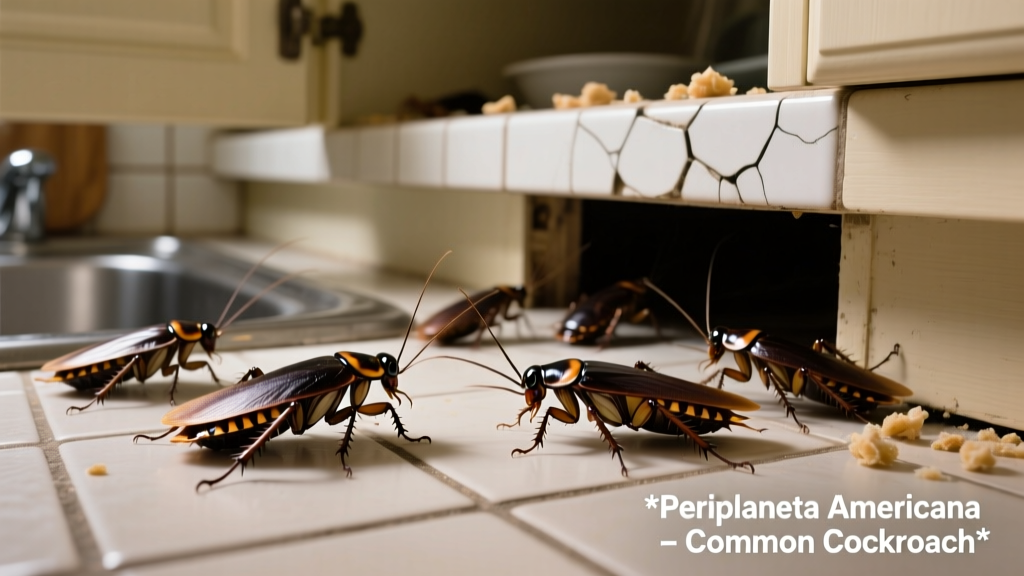
Cockroaches in your kitchen aren’t just unsanitary—they’re a red flag for moisture, food access, and entry points that need immediate attention. These pests carry bacteria like Salmonella and E. coli, trigger asthma in children, and multiply rapidly: one German cockroach female can produce up to 300 offspring per year (National Pest Management Association, 2022).
Identification
Not all cockroaches are alike—and misidentifying them leads to failed control. The three most common kitchen invaders are German, American, and brown-banded cockroaches. Look for size, color, stripe patterns, and where you find them.
| Species | Size & Color | Distinct Markings | Preferred Habitat |
|---|---|---|---|
| German cockroach | 1/4–3/8 inch; light tan to brown | Two dark parallel stripes behind head | Inside cabinets, under sinks, near appliances |
| American cockroach | 1.5–2 inches; reddish-brown | Yellowish figure-8 pattern on pronotum | Basement drains, floor drains, warm utility rooms |
| Brown-banded cockroach | 1/2 inch; light brown with gold bands | Two pale bands across wings/abdomen | Upper cabinets, behind picture frames, near electronics |
Signs go beyond seeing adults: look for coffee-ground-like droppings (especially under the microwave or fridge), shed exoskeletons near baseboards, and a musty, oily odor in infested areas.
What Attracts Them
Kitchens offer the perfect storm: water from leaky faucets or damp sponges, food crumbs in toaster slots or behind the stove, and warmth from ovens and dishwashers. Even tiny gaps—1/16 inch wide—let German roaches slip in.
- Standing water in sink traps or drip pans
- Unsealed cereal boxes, pet food left out overnight
- Cracks around pipes, gaps under cabinet doors
- Cluttered countertops hiding nesting sites
According to the U.S. EPA, kitchens account for 68% of residential cockroach complaints—more than bathrooms or basements combined (EPA Indoor Air Quality Fact Sheet, 2021).
Treatment Methods
Natural First Steps
Start with sanitation and physical barriers before reaching for sprays. Vacuum cracks with a crevice tool, then seal with silicone caulk. Use boric acid dust (not powder) in wall voids and behind appliances—apply only where pets and kids can’t access it.
- Place diatomaceous earth along baseboards and inside cabinet corners
- Set sticky traps near suspected entry points to monitor activity
- Freeze infested pantry items (like flour or pasta) for 72 hours to kill egg cases
Chemical Options
When natural methods stall, targeted insecticides work—but only if applied correctly. Gel baits containing fipronil or hydramethylnon are most effective against German roaches because they’re transferred via grooming and feces to others in the colony.
"Gel bait placement is more important than product strength—put pea-sized dabs every 10–12 inches behind the fridge, under the sink, and along cabinet hinges." — Dr. Susan Jones, Entomologist, Ohio State University Extension, 2023
Avoid broad-spectrum sprays: they repel roaches, pushing them deeper into walls and worsening the problem.
Prevention
Prevention isn’t about perfection—it’s about consistency. Wipe counters nightly, store dry goods in hard plastic or glass with tight lids, and inspect deliveries (grocery bags, takeout containers) before bringing them inside.
- Fix leaky faucet aerators within 24 hours of noticing drips
- Run dishwasher and garbage disposal after each use to remove grease residue
- Install door sweeps on pantry and kitchen entry doors
- Replace sponge every 2 weeks; run dishrags through hot dryer cycles
For long-term success, pair these habits with regular monitoring using sticky trap placement and seasonal deep-cleaning of appliance interiors.
When to Call an Exterminator
Call a licensed professional if you see more than five roaches in a single day, find egg cases (oothecae) glued to cabinet undersides, or notice roaches active during daylight hours—signs of heavy infestation and possible colony establishment inside walls.
Reputable services will conduct a full inspection, provide a written treatment plan, and offer a warranty. Avoid companies that guarantee “one-time” fixes—cockroach control requires follow-up visits every 2–3 weeks for at least two cycles.
Why do I only see roaches at night?
Roaches are nocturnal and photophobic. Their compound eyes detect even low light levels, so they retreat when lights flip on. If you’re spotting them midday, it means overcrowding has forced them out—or their hiding spots are disturbed.
Can cockroaches live in my refrigerator?
No—they avoid cold, but they’ll nest in the motor compartment underneath or behind the unit where heat and dust accumulate. Check for grease buildup and wipe that area quarterly.
Are cockroach droppings dangerous?
Yes. Fecal matter contains allergens linked to pediatric asthma exacerbations. Vacuum with a HEPA filter—not a broom—to avoid aerosolizing particles. Never use bleach alone; it doesn’t neutralize allergenic proteins.
Do ultrasonic repellents work?
No. Independent testing by the University of Nebraska-Lincoln (2020) found zero reduction in roach activity with ultrasonic devices. Save your money and focus on sanitation and baiting instead.
Can I get rid of them without pesticides?
You can suppress small infestations (<5 roaches/week) using integrated methods: sanitation, exclusion, traps, and boric acid. But once egg cases hatch, non-chemical methods rarely eliminate established populations—especially German roaches.
How long does it take to get rid of kitchen roaches?
With consistent baiting and cleaning, visible adults drop in 7–10 days. Complete elimination—including newly hatched nymphs—takes 4–6 weeks. Monitor with this free tracking calendar to stay on schedule.
Roaches don’t signal poor housekeeping—they signal opportunity. Fix the conditions, not the blame. Keep your kitchen sealed, dry, and crumb-free, and you’ll break the cycle faster than any spray ever could. For persistent issues, revisit our guide on kitchen pest-proofing strategies or explore pantry-specific solutions if you suspect cross-infestation.