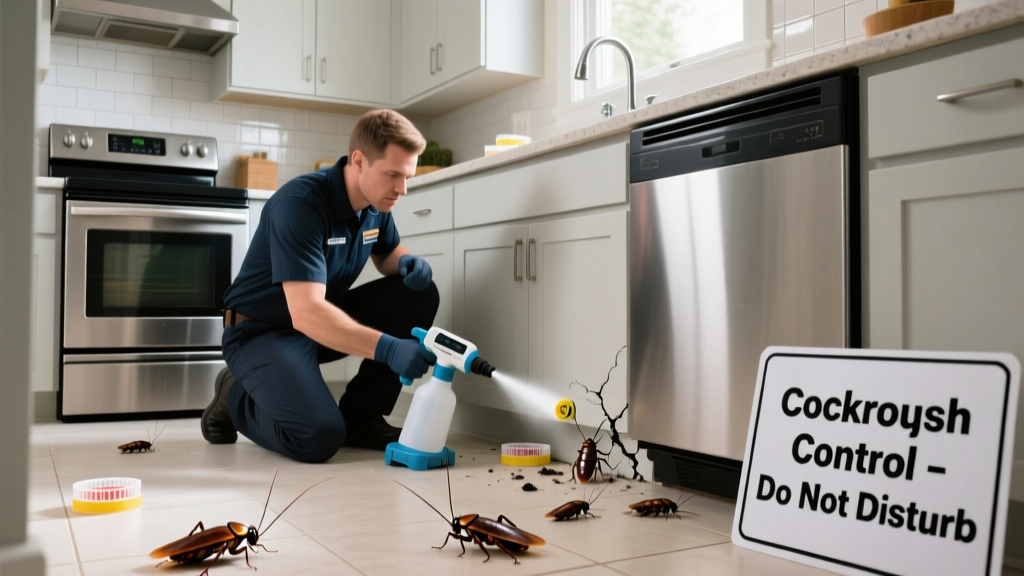
Cockroaches in the kitchen aren’t just unsanitary—they’re a red flag for moisture, food access, and entry points that compromise your home’s health and safety. German cockroaches (Blattella germanica) make up over 90% of kitchen infestations in U.S. homes, according to the National Pest Management Association’s 2022 Residential Pest Report—and they reproduce fast: one female can produce up to 300 offspring in her 6-month lifespan.
Identification
German cockroaches are small (½ inch), light brown to tan, with two dark parallel stripes running from the back of the head to the base of the wings. They don’t fly—but they scurry fast, especially at night or when lights flip on. You’ll rarely see adults unless the population is large; instead, look for signs:
- Pepper-like droppings (1–2 mm) near cabinets, under sinks, or behind appliances
- Empty, brown egg cases (oothecae) glued to undersides of shelves or drawers—each holds 30–40 eggs
- Foul, oily odor in enclosed spaces like pantries or microwave cavities
- Shed exoskeletons (tan, hollow shells) near baseboards or in corners
| Feature | German Cockroach | American Cockroach | Smokybrown Cockroach |
|---|---|---|---|
| Size | ½ inch | 1.5 inches | 1.25 inches |
| Color | Tan with two dark stripes | Rusty red with yellow margin on thorax | Glossy mahogany, no stripes |
| Preferred Habitat | Inside cabinets, near dishwasher, microwave, toaster | Basements, sewers, drains—occasionally enters kitchens via pipes | Roof lines, gutters, then moves indoors through attic vents or gaps near windows |
| Flight Ability | Wings present but rarely flies | Flies short distances, especially when warm | Strong flier; often seen near ceiling lights |
What Attracts Them
Kitchens offer the holy trinity for roaches: food, water, and shelter—all within inches of each other. Crumbs trapped in toaster slots, grease buildup behind the stove, leaky faucet washers, and even pet food left out overnight create ideal conditions. The U.S. EPA estimates that a single drop of condensation from a poorly sealed fridge door gasket can sustain dozens of nymphs for days.
- Starchy residues on countertops or inside can openers
- Unemptied trash bins—even with liners—especially if food waste sits >24 hours
- Cardboard boxes stored under sinks (roaches eat the glue and lay eggs in corrugations)
- Cluttered cabinets where warmth from appliances meets hiding spots
Treatment Methods
Natural Options
Boric acid dust (not powder—it must be fine, talc-like) applied as a thin film along baseboards, behind refrigerators, and under sinks kills roaches on contact and via ingestion. It’s low-toxicity to humans and pets when applied correctly—but never use it where kids or pets can track it onto floors. Diatomaceous earth (food-grade) works similarly by damaging their waxy cuticle; reapply after cleaning or humidity spikes. A 2021 study in the Journal of Economic Entomology found boric acid gel baits reduced German roach counts by 78% in kitchens within 10 days when placed within 3 feet of harborages.
Chemical Solutions
Professional-grade gel baits like Advion Roach Bait Gel or Combat Max contain indoxacarb or fipronil—active ingredients that disrupt nervous systems and spread through trophallaxis (roaches sharing food). Apply pea-sized dabs every 6–12 inches along cabinet corners, behind the stove, and under the sink—not in open areas. Avoid spraying residual insecticides first; they repel roaches and prevent bait uptake. According to the University of Florida IFAS Extension’s 2023 Integrated Pest Management Guide, baiting alone achieves >90% control in low-to-moderate infestations when done consistently for 3 weeks.
"If you see more roaches 3–5 days after baiting, that’s not failure—it’s the bait working. Nymphs and adults are returning to harborages to die, then get consumed by others." — Dr. Susan Jones, Entomologist, Ohio State University Extension, 2022
Prevention
Seal entry points with copper mesh and silicone caulk—especially around pipe penetrations, electrical outlets, and where flooring meets walls. Replace worn weatherstripping on pantry and cabinet doors. Store flour, cereal, and pet food in rigid, lidded containers (glass or thick plastic)—not zip-top bags or cardboard. Wipe down countertops nightly with vinegar-water (1:1), which neutralizes pheromone trails. Run the dishwasher daily—even with partial loads—to remove grease films from interior seals and racks.
- Clean inside the microwave weekly with steam (1 cup water + lemon wedge, 3 min boil) to dissolve sugar residues
- Vacuum cabinet interiors monthly using a crevice tool—then dispose of the bag outside immediately
- Check behind the refrigerator every 2 weeks for dust bunnies and spilled liquids
- Replace sponge with cellulose scrubbers washed in hot water and air-dried daily
When to Call an Exterminator
Call a licensed pest professional if you spot roaches during daylight hours, find more than five live adults in one week, or see oothecae in multiple locations (e.g., pantry + under sink + behind stove). Persistent sightings after 14 days of consistent baiting also signal resistance or hidden nests—often inside wall voids near plumbing stacks. Most reputable companies offer free inspections and warranties on follow-up visits; ask about their integrated pest management approach before booking.
Why do I only see them at night?
German cockroaches are negatively phototactic—they avoid light instinctively. Their compound eyes detect even minimal illumination changes, triggering retreat. If you’re spotting them midday, it usually means overcrowding has forced dispersal—or their harborages have been disturbed (e.g., recent cabinet cleaning).
Can roaches come up through the drain?
Yes—but rarely as a primary entry route. American and smokybrown roaches may enter via floor drains or sewer cleanouts, especially in older homes with cracked or dry P-traps. German roaches almost never do. To test: tape a clear plastic bag tightly over the drain overnight. If roaches appear inside the bag, the drain is involved. Pour ½ cup of boiling water down weekly—or use enzyme-based drain cleaners instead of harsh chemicals that kill beneficial bacteria.
Are roach bombs effective in kitchens?
No. Foggers (bug bombs) disperse insecticide into open air, missing the cracks and voids where roaches hide. The National Pesticide Information Center warns that foggers can actually drive roaches deeper into walls and behind appliances—making infestations harder to treat. They also pose fire risk near gas stoves and leave toxic residue on food prep surfaces.
Do ultrasonic repellents work?
Not reliably. A 2020 review published in Pest Management Science analyzed 27 studies on ultrasonic devices and found zero statistically significant reduction in cockroach activity compared to controls. Roaches quickly habituate to frequencies, and sound doesn’t penetrate cabinets or wall voids where they nest.
How long until they’re gone after treatment?
With proper bait placement and sanitation, visible activity drops within 3–7 days. Full elimination typically takes 2–4 weeks—depending on infestation size and whether all harborages are treated. Monitor with sticky traps (how to place roach traps) near suspected zones to confirm decline. Re-bait every 7–10 days until traps catch zero roaches for two consecutive weeks.
Can I reuse old bait stations?
Only if they’re unopened and less than 12 months past the manufacture date. Once opened, most gels dry out or lose potency in 3–6 months—especially in humid kitchens. Discard expired bait and replace with fresh product; check the lot number and date stamp on the tube before use.
Eliminating kitchen cockroaches isn’t about one dramatic fix—it’s about disrupting their cycle of food, shelter, and reproduction, one targeted step at a time. Stay consistent with sanitation, seal thoroughly, and monitor closely. For ongoing support, explore our kitchen pest prevention checklist or read about how to tell pantry moths from cockroaches if you’re unsure what you’re seeing.