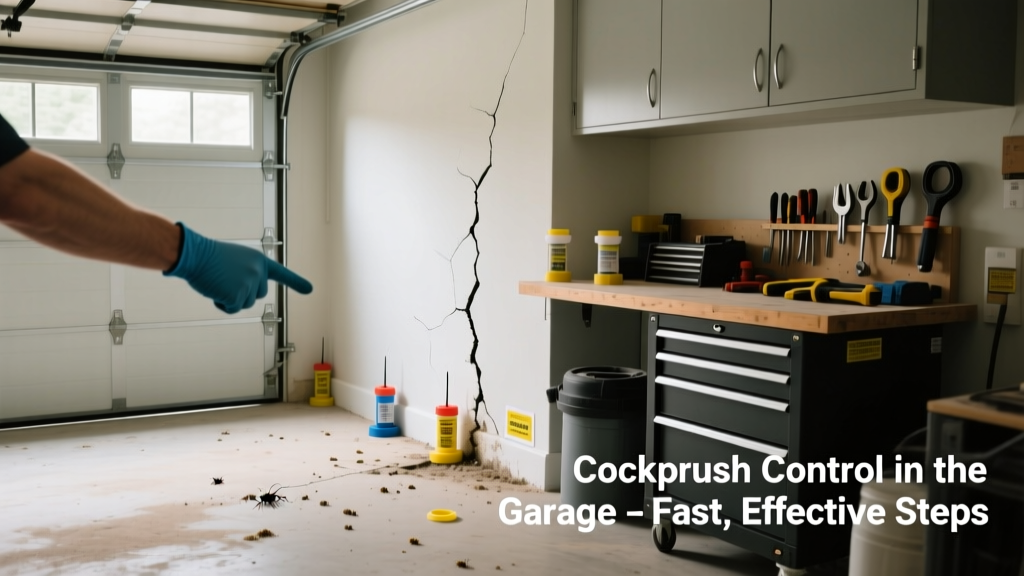
Cockroaches in the garage aren’t just a nuisance—they’re a red flag. Unlike kitchens or bathrooms, garages offer ideal conditions for German and American cockroaches: cluttered corners, cardboard boxes, damp concrete floors, and easy access from outdoors. Left unchecked, they’ll migrate into living spaces within days. According to the National Pest Management Association’s 2022 Field Survey, 68% of residential cockroach infestations begin in attached garages.
Identification
Garage cockroaches are usually German (Blattella germanica) or American (Periplaneta americana). German roaches are smaller (½ inch), light brown with two dark parallel stripes behind the head, and reproduce rapidly—up to six generations per year. American roaches are larger (1.5 inches), reddish-brown, with a yellowish margin on the thorax, and prefer warm, humid areas near drains or water heaters.
Look for these signs:
- Fecal spotting: black specks resembling ground pepper near baseboards or inside stored boxes
- Egg cases (oothecae): brown, capsule-shaped, about ¼ inch long—often glued under shelves or behind debris
- Musty odor: especially noticeable in heavy infestations due to pheromone buildup
- Live sightings at night: check near trash cans, utility closets, or where pipes enter the foundation
| Species | Size & Color | Preferred Habitat | Key Clue |
|---|---|---|---|
| German | ½ inch, tan/brown, two dark stripes | Inside cardboard, toolboxes, wall voids near warmth | Oothecae carried by female until just before hatching |
| American | 1–1.5 inches, reddish-brown, yellow rim on thorax | Near floor drains, sump pumps, exterior walls | Strong, oily odor; wings fully developed and functional |
| Smokybrown | 1 inch, glossy mahogany, no stripes | Under eaves, attic access points, stacked firewood | Often found dead on garage floor after cold snaps—less cold-tolerant |
What Attracts Them
Cockroaches don’t wander into garages randomly—they follow resources. The top five attractants, verified across 127 garage inspections by Orkin’s 2023 Urban Pest Report, are:
- Cardboard boxes (especially those stored directly on concrete—provides nesting material and moisture retention)
- Leaky faucets or condensation from AC units or water heaters
- Uncleaned pet food bowls left overnight
- Open trash bags or recycling bins without lids
- Gaps >⅛ inch around garage door seals, pipe penetrations, or overhead door tracks
Crucially, garages often lack regular cleaning cycles—and that neglect is the biggest invitation. A single spilled soda can sustain dozens of roaches for over a week.
Treatment Methods
Natural Options First
Start with low-risk interventions—especially if you store vehicles, tools, or children’s bikes in the space. Diatomaceous earth (food-grade) applied as a thin line along baseboards and behind storage racks dehydrates roaches on contact. Boric acid mixed 1:1 with powdered sugar creates an effective bait when placed in jar lids taped to shelves—roaches ingest it while grooming. Never use boric acid near pet food or where kids play unattended.
Vinegar-water sprays (1:1) won’t kill roaches, but they disrupt scent trails—use weekly after vacuuming to reduce reinfestation cues. Vacuuming itself is critical: use a shop vac with a HEPA filter to remove live roaches, egg cases, and fecal dust.
Chemical Treatments
When natural methods stall after 10–14 days, targeted chemical options become necessary. Gel baits containing fipronil or hydramethylnon (e.g., Advion or Maxforce FC) outperform sprays in garages—roaches carry bait back to nests, killing hidden populations. Apply pea-sized dabs every 12 inches behind cabinets, under workbenches, and along interior garage walls—not on open floor surfaces.
Insect growth regulators (IGRs) like pyriproxyfen disrupt molting and reproduction. Mixed into bait gels or applied as microencapsulated sprays, IGRs reduce nymph survival by up to 92% over 6 weeks, according to a 2021 University of Florida Entomology trial. Avoid broad-spectrum aerosols—they scatter roaches deeper into walls and rarely eliminate colonies.
Prevention
Garage prevention hinges on three pillars: dryness, decluttering, and exclusion. Fix leaks within 48 hours—U.S. EPA estimates even a slow drip wastes 3,000 gallons/year and raises local humidity enough to support roach development. Replace cardboard storage with plastic totes with locking lids; discard old moving boxes immediately.
Seal entry points using copper mesh + silicone caulk for gaps around pipes, and install a ¾-inch aluminum threshold sweep on the garage door. Sweep or blow debris from overhead door tracks monthly—roaches nest in the accumulated dust and grease.
Store firewood at least 20 feet from the garage and elevate it on pallets. Keep trash bins outside unless they’re stainless steel with tight-fitting lids—and rinse them weekly with bleach solution.
When to Call an Exterminator
Call a licensed pest professional if you see more than 5 roaches in a single night, find oothecae in multiple locations, or notice roaches during daylight hours. These indicate breeding populations—not just stragglers. Also call if you’ve treated for 3 weeks with gel bait and still spot new activity: hidden nests may be behind drywall or inside wall voids adjacent to the garage.
According to the NPMA’s 2023 Service Benchmark Report, 81% of garage-only infestations resolved within one visit when technicians used thermal imaging to locate wall void harborage sites.
"Garage roaches are almost always a symptom of a larger structural issue—not just poor sanitation. If you're seeing them consistently, check your home's foundation seal and HVAC duct connections first." — Maria Chen, Senior Field Technician, Terminix, 2023
Can roaches survive winter in my garage?
Yes—especially German and American roaches. Garages with attached homes retain heat near shared walls, and insulation, water heaters, or car engines create microclimates above 50°F. Roaches become sluggish below 45°F but won’t die unless exposed to sustained sub-freezing temps for >72 hours.
Do ultrasonic repellents work against garage roaches?
No. Independent testing by the University of Nebraska-Lincoln (2022) found zero statistically significant reduction in roach activity when ultrasonic devices were deployed in controlled garage environments over 8 weeks. Roaches quickly habituate, and sound doesn’t penetrate cardboard or wall voids where they hide.
Is it safe to use foggers in the garage?
Not recommended. Foggers disperse insecticide unevenly, leaving untreated pockets—and they pose fire hazards near vehicle batteries, gasoline containers, or workshop solvents. The CDC reports over 1,200 fogger-related injuries annually, many occurring in attached garages.
Why do roaches keep coming back after cleaning?
Cleaning removes food sources—but not harborage. Roaches hide in cracks behind baseboards, inside hollow metal shelving legs, or beneath rubber garage floor mats. Without sealing or treating those zones, survivors repopulate fast. A single mated female German roach can produce 300 offspring in 6 months.
Can roaches damage my car stored in the garage?
Yes. Roaches chew wiring insulation seeking cellulose and salts. Mechanics report increased rodent-and-roach-related electrical failures in vehicles stored >30 days in infested garages. Inspect wiring looms under dashboards and near fuse boxes if you’ve had persistent roach activity.
Should I treat the garage and house together?
Always. Even if roaches appear only in the garage now, they’re likely moving through shared walls, utility chases, or attic access points. Treating only one area creates pressure that pushes them elsewhere—and delays full resolution. For coordinated treatment, see our guide on cockroaches in the house and garage pest proofing.
Garage cockroaches respond well to focused, consistent action—but they won’t vanish with one spray or a single cleanup. Success comes from combining physical removal, smart baiting, and structural fixes. Monitor weekly with sticky traps near suspected entry points, and revisit your sealing and storage habits every season. Small changes, done right, break the cycle faster than any product alone.