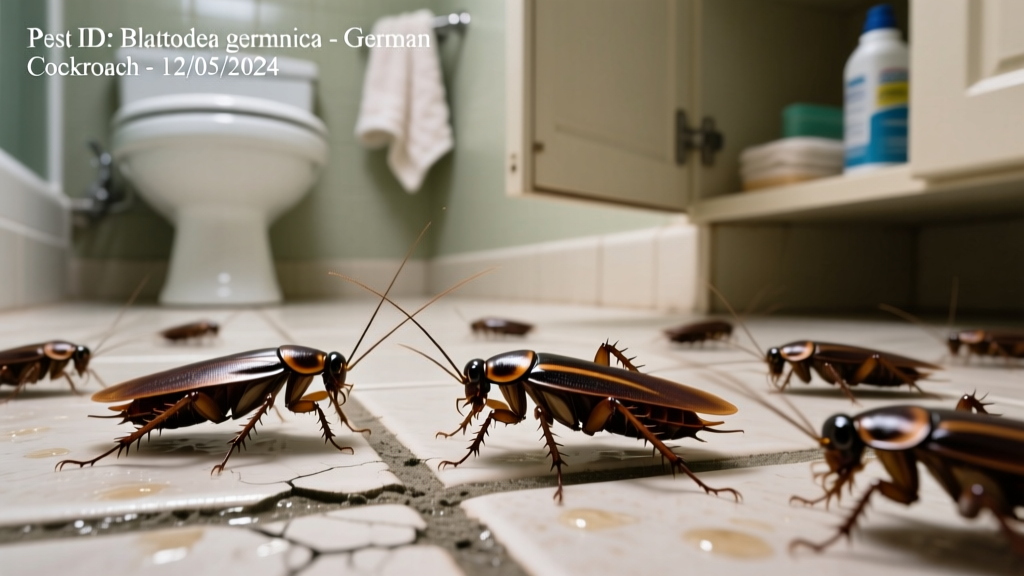
Cockroaches in your bathroom aren’t just unsanitary—they’re a red flag that moisture, food residue, or entry points are going unchecked. German cockroaches (Blattella germanica) are the most common culprits in bathrooms, especially in multi-unit buildings and homes with older plumbing.
Identification
German cockroaches are small (½–⅝ inch), light brown to tan, with two dark parallel stripes running from the back of the head to the wings. They don’t fly but scurry quickly into cracks when disturbed. Unlike larger species like American or Oriental roaches, German roaches thrive indoors—especially near sinks, drains, and under cabinets.
| Species | Size & Color | Wings? | Typical Bathroom Behavior |
|---|---|---|---|
| German cockroach | ½–⅝", light brown, two dark stripes | Wings present but rarely used for flight | Nests in wall voids behind toilets, under sinks, inside vanity cabinets |
| American cockroach | 1.5–2", reddish-brown, glossy | Full wings; can glide short distances | Enters via floor drains or gaps around pipes; less common indoors unless plumbing is compromised |
| Oriental cockroach | 1–1.25", dark brown to black, greasy sheen | Males have partial wings; females wingless | Often found near damp baseboards or leaking tubs—prefers cooler, wetter zones |
Look for these signs: tiny brown egg cases (oothecae) glued to underside of shelves or pipe insulation; musty odor in enclosed spaces; shed exoskeletons near drain openings; or live roaches spotted at night (they’re nocturnal).
- Fecal spotting: resembles black pepper or coffee grounds near baseboards or cabinet corners
- Smear marks: oily streaks on walls or tiles from their bodies rubbing surfaces
- Live sightings after lights go off—use a flashlight to check under sink cabinets and behind the toilet tank
What Attracts Them
Bathrooms offer three essentials for cockroaches: water, warmth, and shelter. Even tiny leaks—a dripping faucet losing 1 drip per second wastes over 3,000 gallons yearly (U.S. EPA, 2022)—create enough moisture for German roaches to survive for weeks without food.
Other key attractants:
- Organic debris in drains (hair, soap scum, toothpaste residue)
- Uncleaned toothbrush holders or damp bath mats
- Gaps >1/8" around pipes, baseboards, or window frames
- Old caulk or cracked grout that traps moisture and biofilm
Treatment Methods
Natural Methods
Boric acid dust applied with a bulb duster into wall voids and under cabinets remains effective for months—if kept dry and out of reach of kids and pets. Diatomaceous earth (food-grade) works similarly by dehydrating roaches on contact—but only where humidity stays below 60% (National Pesticide Information Center, 2021).
Bait gels containing hydramethylnon or abamectin target foraging roaches and spread poison through grooming and cannibalism. Place pea-sized dabs every 6–12 inches along baseboards, behind the toilet, and under the sink—never near standing water.
Chemical Methods
For active infestations, professional-grade insect growth regulators (IGRs) like pyriproxyfen disrupt molting and reproduction. Over-the-counter sprays (e.g., those with cypermethrin) kill on contact but leave no residual control—and may scatter roaches deeper into walls if misapplied.
"Spraying baseboards alone solves nothing. German roaches breed every 30 days—so if you don’t treat harborage sites, you’ll see new adults in under five weeks." — Dr. Susan Jones, Entomologist, Ohio State University Extension, 2023
Prevention
Fix all leaks within 48 hours—especially around the toilet flange and shower pan. Replace worn caulk every 12–18 months; use silicone-based sealant rated for mold resistance. Install drain covers with <1mm mesh to block access while allowing flow.
Keep bathroom surfaces dry: run exhaust fans for 20 minutes post-shower, wipe down countertops and sink basins daily, and store cotton balls, floss, and toothpaste in sealed containers—not open jars.
- Empty trash daily—even if it’s just tissue paper and hair
- Vacuum crevices monthly with a HEPA-filter vacuum to remove eggs and allergens
- Inspect and replace worn door sweeps on bathroom doors (gap should be ≤¼")
When to Call an Exterminator
If you spot more than 5 roaches in one week—or find oothecae attached to pipe insulation or behind mirrors—it’s time for professional help. German roach infestations grow exponentially: one female produces up to 300 offspring in her 6-month lifespan (University of Florida IFAS, 2020).
Exterminators use thermal imaging to locate hidden nests, apply targeted IGRs, and seal entry points inaccessible to homeowners. Most charge $150–$300 for initial service, with follow-ups every 2–3 weeks until activity stops.
Why do cockroaches appear only in my bathroom and not the kitchen?
German roaches prefer tight, humid spaces with constant ambient heat—like bathrooms with poorly insulated hot-water pipes. Kitchens may be too variable in temperature or cleaned more frequently, making them less hospitable than consistently warm, moist bathroom wall voids.
Can cockroaches come up through the toilet?
No—they cannot swim up a properly functioning toilet trap. But they *can* crawl in through sink, shower, or bathtub drains if the P-trap is dry or the drain cover is missing. A 2021 study in Journal of Medical Entomology documented 12% of bathroom roach sightings linked to uncovered floor drains in rental units.
Do cockroach baits work in humid bathrooms?
Yes—if placed in dry micro-zones: behind the toilet tank (not under the bowl), inside vanity cabinets with ventilation, or on top of medicine cabinets. Avoid placing gel baits directly on tile near showers or sinks—the moisture dilutes active ingredients within 48 hours.
Is bleach effective against cockroaches?
Bleach kills roaches on direct contact but offers zero residual effect and doesn’t penetrate cracks or voids. More critically, mixing bleach with ammonia (found in some glass cleaners) creates toxic chloramine gas. Use vinegar-and-water solutions for surface cleaning instead—and reserve bleach for disinfecting drains weekly.
How long does it take to eliminate a bathroom cockroach infestation?
With consistent baiting and sanitation, visible activity drops in 7–10 days. Full elimination—including eggs and nymphs—takes 4–6 weeks. Delayed results often mean missed harborage sites—like the space between double-layered drywall behind the shower or inside hollow-core vanity doors.
Will sealing bathroom vents keep roaches out?
Only if vents lack proper screens. Standard bathroom exhaust vents often have coarse plastic grilles easily chewed through by roaches. Install 20-mesh metal vent covers (available at hardware stores) and inspect them quarterly for damage. Pair this with sealing gaps around vent ducts using copper mesh + acoustical sealant.
Once you’ve confirmed it’s a German cockroach—and not a stray American or Oriental—you’re already halfway to control. Focus on moisture control first, then targeted baiting, then structural sealing. For related issues, see our guides on drain flies in bathroom and silverfish in bathroom.