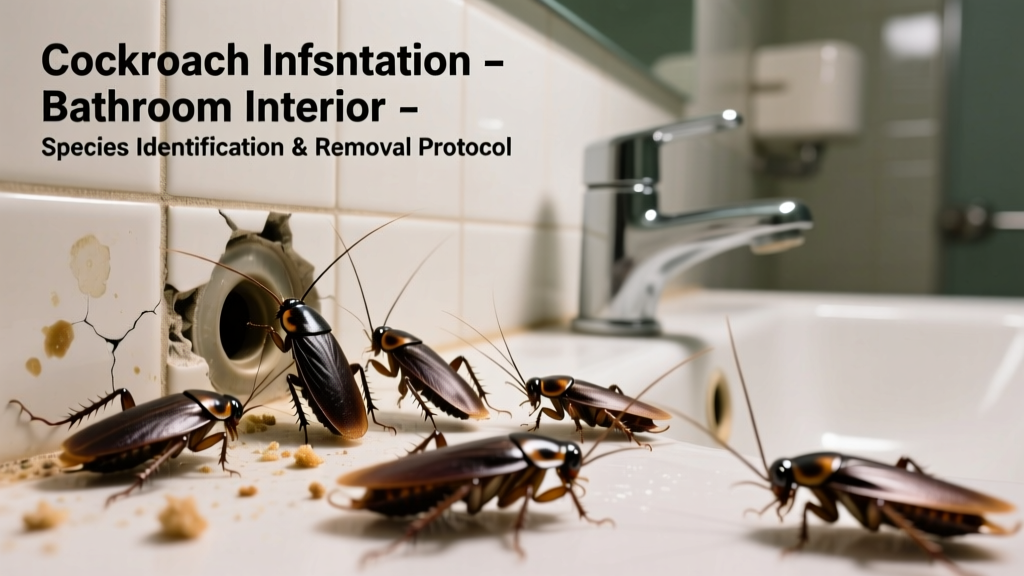
Cockroaches in the bathroom aren’t just gross—they’re a red flag for moisture issues, hidden entry points, and potential infestation spread. German cockroaches (Blattella germanica) are the most common culprits here, thriving in warm, humid spaces with easy access to water and organic debris like toothpaste residue or hair.
Identification
German cockroaches are small—about 1/2 to 5/8 inch long—with two dark parallel stripes running from the back of the head to the wings. They’re tan to light brown, have six legs, long antennae, and cannot fly despite having wings. Nymphs are darker, wingless, and often mistaken for ants.
Look for these signs specifically in bathrooms: tiny pepper-like droppings near baseboards or under the sink; shed exoskeletons behind the toilet tank or in cabinet corners; a musty, oily odor in enclosed spaces; and live roaches scurrying when you flip on the light at night.
| Species | Size | Key Features | Typical Bathroom Locations |
|---|---|---|---|
| German cockroach | ½–⅝ inch | Two dark thoracic stripes; non-flying | Under sink, behind toilet, inside vanity cabinets |
| American cockroach | 1½–2 inches | Reddish-brown; flying adults; glossy body | Drain pipes, floor drains, utility closets |
| Brown-banded cockroach | ½ inch | Lighter bands across wings/abdomen; prefers drier heat | Upper cabinets, light fixtures, medicine cabinets |
What Attracts Them
Bathrooms offer three essentials cockroaches need: water, warmth, and food scraps. Even trace residues—like soap scum, toothpaste, lotion, or skin flakes—serve as meals. Leaky faucets, standing water in shower pans, and poor ventilation create ideal humidity levels above 60%, which German roaches prefer.
Cracks around pipes, gaps under doors, and unsealed openings behind toilets or vanities act as highways into the space. According to the National Pest Management Association’s 2022 Cockroach Control Report, 78% of bathroom infestations originate from plumbing-related entry points—not open windows or doors.
- Leaky faucet or showerhead (even slow drips add up)
- Unclean grout lines or silicone sealant harboring biofilm
- Cluttered cabinets blocking airflow and hiding nests
- Overflowing trash bins without lids
- Old caulk or cracked grout near tub/shower bases
Treatment Methods
Natural Remedies
Boric acid dust applied *thinly* along baseboards, behind the toilet, and under the sink is highly effective—but keep it away from children and pets. Diatomaceous earth works similarly by dehydrating roaches on contact, though it loses potency if damp. A 2021 University of Florida IFAS study found boric acid gel bait placed within 3 feet of harborages reduced German cockroach populations by 92% in bathrooms within 10 days—when applied correctly.
"Never pile boric acid—it must be a nearly invisible dust layer. Roaches avoid thick applications, and they’ll groom it off instead of ingesting it." — Dr. Susan Jones, Entomologist, Ohio State University Extension, 2023
Vinegar-water sprays (1:1) disrupt scent trails but don’t kill roaches. They’re best used *after* elimination to clean surfaces and reduce reinfestation cues.
Chemical Options
Gel baits containing fipronil or hydramethylnon (e.g., Advion, Combat) work best in bathrooms because roaches carry the toxin back to nests. Avoid aerosol sprays near drains—they can push roaches deeper into walls and worsen the problem. Insect growth regulators (IGRs) like pyriproxyfen disrupt molting and egg development but require 2–3 weeks to show results.
- Apply gel bait dots every 6–12 inches along baseboards and behind fixtures
- Replace bait every 2 weeks until no activity is observed for 14 days
- Use IGRs only in conjunction with baits—not as standalone treatment
- Never mix chemicals (e.g., bleach + insecticide)—toxic fumes can result
Prevention
Fix leaks first—even a drip of 1 drop per second wastes over 3,000 gallons yearly (U.S. EPA WaterSense, 2023). Then seal entry points: use silicone caulk around pipes, steel wool stuffed into gaps behind toilets, and door sweeps on bathroom entrances.
Wipe down sinks and countertops nightly. Run the exhaust fan for 20 minutes after showers to lower humidity. Store toiletries in sealed containers—not open bottles—and empty trash daily. Replace worn grout and caulk every 2 years; mold and mildew attract roaches indirectly by supporting microbial growth they feed on.
When to Call an Exterminator
If you see more than 5 roaches in a single night—or find egg cases (oothecae) glued to underside of cabinets or behind mirrors—professional help is needed. Licensed exterminators use flush-and-vacuum techniques in wall voids and install monitoring stations that detect low-level activity before it escalates. The NPMA reports that DIY-only attempts fail in 63% of persistent bathroom infestations due to inaccessible harborages behind tiles or inside plumbing chases.
Why do cockroaches gather around the toilet?
They’re drawn to condensation on cold pipes, moisture trapped under the tank gasket, and organic film buildup in the bowl’s rim jets. Flush daily—even if unused—to disrupt biofilm. Clean the tank interior with vinegar and a stiff brush every 3 months.
Can roaches come up through the drain?
Yes—but rarely as a primary entry point. More often, they nest in wall voids adjacent to drain pipes and emerge near floor drains or overflow holes. Pouring boiling water down drains kills surface roaches but won’t reach nests. Instead, install metal drain covers with ≤1/8-inch gaps and use enzyme-based cleaners weekly to break down organic sludge.
Are bathroom cockroaches dangerous?
Absolutely. German cockroaches carry Salmonella, E. coli, and allergens linked to childhood asthma. Their feces and shed skins contain proteins that trigger allergic reactions—especially in enclosed, high-humidity rooms like bathrooms. The American College of Allergy, Asthma & Immunology (2022) identifies bathroom roach exposure as a top contributor to nocturnal wheezing in urban pediatric patients.
How fast do bathroom roaches multiply?
A single female German cockroach produces 4–6 egg cases in her lifetime, each holding 30–40 eggs. Under ideal bathroom conditions (75°F, >60% RH), she can hatch a new generation every 30–40 days. That means one pair could produce over 300,000 descendants in one year—if unchecked.
Do ultrasonic devices work against bathroom roaches?
No. Multiple controlled studies—including a 2020 Rutgers University trial—found zero statistically significant reduction in roach activity using ultrasonic emitters in bathrooms or kitchens. These devices waste money and delay proven interventions.
Can I use bleach to kill roaches in the bathroom?
Bleach may kill on contact but offers no residual effect and poses inhalation risks in poorly ventilated spaces. It also damages grout and metal fixtures. Stick to targeted baits and sanitation—bleach is better suited for disinfecting surfaces *after* roaches are gone.
Staying ahead of bathroom cockroaches means treating the environment—not just the insects. Fix the leak, seal the gap, clean the grout, and monitor closely. For ongoing support, explore our how to seal pipes against roaches guide and bathroom ventilation tips. Consistent action beats panic every time.