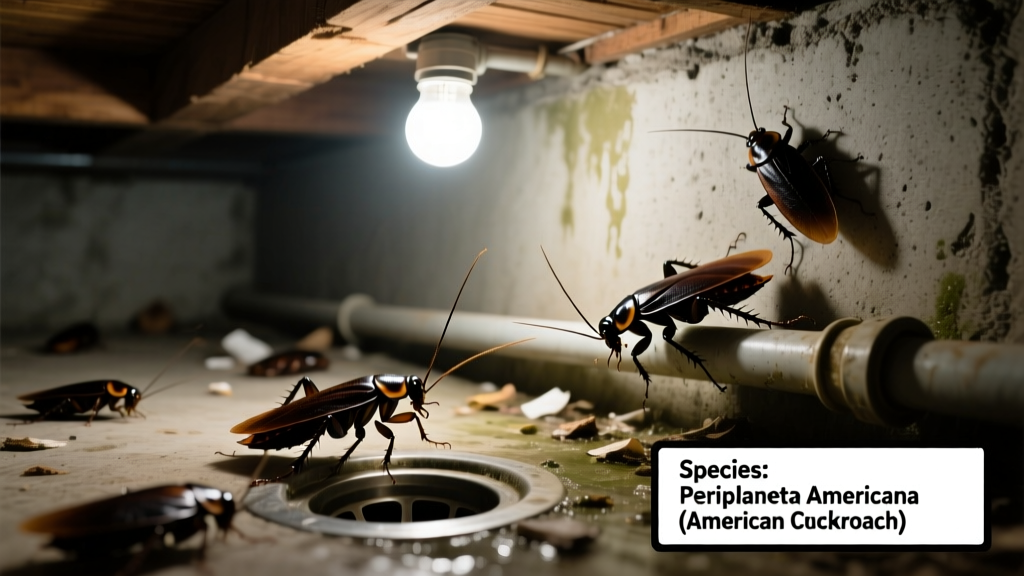
Cockroaches in basements aren’t just a nuisance—they’re a sign of moisture intrusion, structural gaps, or long-standing sanitation issues. German and American cockroaches dominate these cool, damp zones, thriving where humidity exceeds 60% and temperatures stay between 70–85°F. Left unchecked, they spread bacteria like Salmonella and E. coli, trigger asthma attacks (especially in children), and multiply rapidly: one female German cockroach can produce up to 300 offspring per year (National Pest Management Association, 2022).
Identification
Basement cockroaches are most often German (Blattella germanica) or American (Periplaneta americana) species—but their behavior and appearance differ significantly. German roaches are smaller (½ inch), light brown with two dark parallel stripes behind the head, and rarely fly. American roaches are larger (1.5 inches), reddish-brown with a yellowish figure-8 pattern on the pronotum, and capable of short gliding flights.
| Feature | German Cockroach | American Cockroach |
|---|---|---|
| Size | ¼–½ inch | 1–1.5 inches |
| Color | Tan to light brown with dark stripes | Reddish-brown with yellow rim on thorax |
| Preferred Habitat | Warm, humid interior cracks near plumbing | Damp, cooler areas: sump pits, floor drains, foundation cracks |
| Activity Peak | Night; avoids light aggressively | Night; may move during day if disturbed or overcrowded |
| Egg Case (Ootheca) | Carried externally for ~3 weeks before hatching | Deposited in protected crevices; holds ~16 nymphs |
Look for signs beyond live sightings: small, dark droppings resembling ground pepper (German) or coffee grounds (American); musty, oily odor in enclosed corners; shed exoskeletons near baseboards; and egg cases glued to underside of shelves or behind water heaters.
What Attracts Them
Basements offer three critical attractants: moisture, shelter, and food sources—even when you think there’s none. Leaky sump pumps, condensation on cold water pipes, poor ventilation, and foundation seepage create persistent dampness. Cardboard boxes stored directly on concrete floors absorb moisture and provide nesting material. Forgotten pet food bowls, crumbs from utility room snacks, or even dust bunnies containing skin cells become viable food.
- Relative humidity above 60% (common in unventilated basements)
- Cracks >1/16 inch in foundation walls or around utility penetrations
- Cluttered storage—especially cardboard, paper, or fabric piles
- Standing water in floor drains, sump pits, or laundry areas
- Unsealed garbage cans or recycling bins left overnight
Treatment Methods
Natural Approaches
Start with non-toxic interventions—especially if children or pets use the space. Diatomaceous earth (food-grade) applied as a thin line along baseboards and behind appliances dehydrates roaches on contact. Boric acid mixed with flour and sugar (1:1:1 ratio) acts as bait; place in shallow bottle caps away from foot traffic. Essential oil sprays (e.g., peppermint oil diluted at 10 drops per ounce of water) disrupt pheromone trails but require weekly reapplication.
Trapping works best when combined with sanitation: glue boards placed near suspected entry points (behind water heaters, under sinks, beside floor drains) catch scouts and help map activity zones. Replace every 3–4 days until catches drop below two per board.
Chemical Options
For established infestations, targeted insecticides deliver faster results—but precision matters. Gel baits (e.g., Advion or Maxforce FC) applied in pea-sized dabs every 6–12 inches behind appliances, inside cabinet voids, and along pipe chases are highly effective. They’re slow-acting, allowing roaches to return to nests and spread toxins. Avoid broad-spectrum sprays: they repel roaches, driving them deeper into wall voids and worsening the problem.
The U.S. EPA recommends rotating active ingredients annually to prevent resistance. For example, switch from fipronil-based gels to hydramethylnon baits after six months of continuous use (U.S. EPA Pesticide Registration Manual, 2021).
"Gel bait placement is more important than product choice. If you put it where roaches don’t travel—or cover it with dust—you’ve wasted your time and money." — Dr. Susan Jones, Entomologist, Ohio State University Extension, 2023
Prevention
Long-term control hinges on making your basement inhospitable. Install a dehumidifier set to 45–50% RH and run it year-round—even in winter, when warm indoor air meets cold foundation walls and condenses. Seal all gaps >1/16 inch using silicone caulk or copper mesh (steel wool corrodes and fails in damp conditions). Elevate stored items on plastic pallets—not cardboard—and discard old boxes immediately.
- Inspect and clean floor drains monthly with a stiff brush and vinegar solution
- Fix dripping faucets and insulate cold water pipes to reduce condensation
- Install door sweeps on basement egress doors and seal window frames with expandable foam
- Use LED motion-sensor lights to discourage nocturnal activity in unused corners
- Store firewood at least 20 feet from the foundation and off the ground
When to Call an Exterminator
Call a licensed pest professional if you see more than five roaches in a single night, find live roaches on upper floors, or spot egg cases in multiple rooms. Also consult one if you’ve treated consistently for four weeks with no reduction in sightings—or if your home has a crawl space or interconnected wall voids that allow hidden nesting.
Reputable providers will conduct a moisture assessment, inspect for structural vulnerabilities, and offer a written service plan with retreatment clauses. Avoid companies that push blanket fogging: it’s ineffective against hidden nests and violates EPA labeling for most residential products.
Can cockroaches come up through floor drains?
Yes—especially American roaches. They’re strong swimmers and can navigate smooth PVC pipes up to 12 feet vertically. Install drain covers with ≤1/8-inch grating or pour ½ cup of bleach down unused floor drains weekly to disrupt biofilm buildup that attracts them.
Do cockroaches survive winter in basements?
Absolutely. Basements maintain stable temperatures year-round. German roaches need only 50°F to remain active; American roaches tolerate lows down to 45°F. Unheated basements with sump pits or leaky pipes still provide enough warmth and moisture for full reproductive cycles.
Why do I keep finding roaches near my water heater?
Water heaters generate ambient heat and often sit atop uninsulated concrete slabs where moisture wicks upward. The gap between the unit and wall offers darkness, warmth, and access to nearby plumbing lines. Pull the unit away (power off first), vacuum the area thoroughly, then apply boric acid powder in the void before reinstalling.
Will sealing my basement windows stop cockroaches?
It helps—but only if done correctly. Roaches enter through gaps around window frames, not glass. Use low-expansion polyurethane foam (not latex caulk) for gaps >¼ inch, and replace cracked or warped window sills. Pair this with exterior perimeter treatment using granular insecticide (like Talstar PL) within 2 feet of the foundation.
Are cockroach droppings dangerous to touch?
Yes. Their feces contain allergenic proteins linked to pediatric asthma exacerbations. Always wear N95 masks and nitrile gloves when cleaning infested areas. Vacuum with a HEPA-filter vacuum, then wipe surfaces with a 10% bleach solution. Never dry sweep—this aerosolizes allergens.
Can I use cat litter to absorb basement moisture and deter roaches?
No. Clay-based cat litter absorbs moisture temporarily but becomes a dusty, alkaline breeding ground once saturated. It also lacks repellent properties. Use calcium chloride-based desiccants (like DampRid) or a mechanical dehumidifier instead—both proven to lower RH below cockroach survival thresholds.
Basements don’t have to be cockroach magnets. Consistent moisture control, structural sealing, and targeted baiting break the cycle faster than reactive spraying ever can. If you’ve tackled leaks, reduced clutter, and deployed gel baits correctly—and still see activity after three weeks—it’s time for professional evaluation. For ongoing monitoring, pair sticky traps with a dehumidifier rated for your square footage, and revisit your foundation crack sealing checklist each spring and fall.