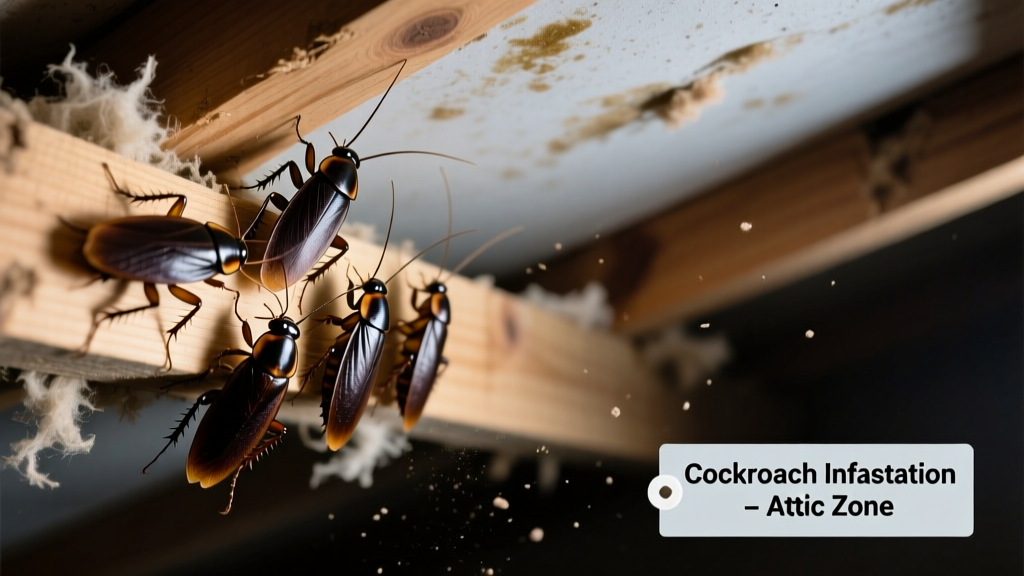
Cockroaches in the attic are often overlooked—until you spot a fast-moving shadow scurrying behind insulation or hear rustling in stored boxes. Unlike kitchen roaches, attic-dwelling species (especially German and American cockroaches) exploit dry, warm, cluttered spaces with minimal human traffic—making detection harder and infestations more entrenched.
Identification
Attic cockroaches aren’t a distinct species—but certain types thrive there due to temperature, moisture, and shelter. German cockroaches (Blattella germanica) occasionally migrate upward if lower floors are treated; American cockroaches (Periplaneta americana) prefer warmer, humid attics near roof vents or plumbing stacks. Oriental cockroaches (Blatta orientalis) may enter via foundation cracks and settle in cooler, damper attic corners.
Key signs include:
- Fecal spotting: small, dark specks resembling ground pepper or coffee grounds on rafters or cardboard boxes
- Musty, oily odor—especially noticeable when opening sealed storage bins
- Shed exoskeletons (light brown, hollow, oval-shaped) near insulation seams or soffit gaps
- Egg cases (oothecae): ¼-inch long, dark reddish-brown capsules glued to underside of beams or box flaps
| Species | Size & Color | Preferred Attic Conditions | Key Clue |
|---|---|---|---|
| American | 1.5–2 inches; reddish-brown with yellow pronotum band | Warm (>70°F), near roof vents or HVAC ducts | Larger size + flying capability (short glides) |
| German | ½ inch; light brown with two dark parallel stripes | Dry, insulated areas near stored food or pet supplies | Most common in homes with prior kitchen infestation |
| Oriental | 1–1.25 inches; shiny black or dark brown | Cooler, damp zones near eaves or leaky gutters | Strong foul odor; avoids light aggressively |
What Attracts Them
Attics become cockroach magnets when three conditions converge: warmth, shelter, and accessible resources. Roof heat gain can push attic temps above 80°F year-round—ideal for breeding. Cluttered storage (cardboard boxes, old furniture, paper piles) provides nesting sites and cellulose food sources. Even tiny moisture leaks from roof vents, bathroom exhaust fans, or condensation on cold-water pipes supply enough hydration for survival.
According to the National Pest Management Association’s 2022 Residential Pest Report, 63% of attic cockroach infestations trace back to unsealed utility penetrations or improperly vented bathrooms.
- Cardboard boxes (roaches eat glue and paper fibers)
- Unused pet food or birdseed stored in attic
- Unsealed HVAC duct joints leaking warm, humid air
- Gaps >1/8” around plumbing stacks, electrical conduits, or recessed lighting
Treatment Methods
Natural Methods
Boric acid dust applied with a hand duster into wall voids, along rafter edges, and under insulation is highly effective—and low-risk if kept away from children and pets. Diatomaceous earth (food-grade) works similarly by dehydrating roaches but loses efficacy if damp. Place shallow dishes of sugar-borax bait (1:1 ratio) near suspected entry points; roaches carry it back to nests. Vacuuming with a HEPA-filter vacuum removes live roaches, eggs, and allergen-laden frass—critical before sealing.
Chemical Methods
For active infestations, professional-grade gel baits like Advion Cockroach Gel or Maxforce FC work best in attics because they’re non-repellent and transferable. Apply pea-sized dabs every 12 inches along joists, near soffits, and behind stored items—not on insulation itself. Avoid broad-spectrum sprays: they scatter roaches deeper into walls and reduce bait effectiveness. The U.S. EPA notes that improper spray use increases resistance risk by 40% in multi-unit dwellings (EPA Pesticide Registration Review, 2023).
"Attic roaches rarely live *only* in the attic—they’re using it as a satellite colony. Always inspect kitchens, basements, and utility rooms within 10 feet of attic access points." — Dr. Lena Torres, Entomologist, University of Florida IFAS Extension, 2021
Prevention
Start with exclusion: seal all gaps >1/8” using copper mesh + acoustical sealant (not caulk alone—roaches chew through it). Install fine-mesh vent covers (≤1/8” openings) on gable, ridge, and soffit vents. Replace cardboard storage with sealed plastic totes labeled “pest-resistant.” Keep attic humidity below 50% using properly sized attic fans or dehumidifiers—roaches avoid dry air.
Also:
- Remove unused items annually—especially paper, fabric, and wood pallets
- Inspect and clean HVAC drip pans and condensate lines quarterly
- Install vapor barriers over insulation to limit moisture absorption
- Trim tree branches >6 feet from roofline to block canopy bridges
When to Call an Exterminator
Call a licensed pest pro if you find more than 10 live roaches in one attic inspection, see egg cases in multiple locations, or notice roaches moving between attic and living spaces during daytime. Licensed technicians can perform thermal imaging to locate hidden nests inside insulation and apply targeted dusts inaccessible to DIYers. According to the NPMA, 78% of severe attic infestations require at least two treatments spaced 10–14 days apart for full control.
Can cockroaches live in a completely dry attic?
Yes—but only if they have access to moisture elsewhere. They’ll travel up to 100 feet nightly for water, often using plumbing chases or electrical conduits. A single leaky pipe joint in a bathroom ceiling can sustain dozens of roaches in an otherwise arid attic.
Do attic roaches come out during the day?
Rarely—unless disturbed or overcrowded. Daytime sightings signal high population pressure or disruption of their normal harborages (e.g., after insulation removal or cleaning). German roaches may appear midday if competing with other pests like rodents.
Will attic roaches go away on their own?
No. Without intervention, populations double every 45–60 days. A single female American cockroach can produce 150+ offspring per year. Left unchecked, attic colonies often seed secondary infestations in walls and ceilings.
Are attic cockroaches dangerous to health?
Yes. Their feces, saliva, and shed skins contain potent allergens linked to childhood asthma exacerbations (per the American College of Allergy, Asthma & Immunology, 2020). Dust from attic insulation contaminated with roach debris becomes airborne during HVAC operation—circulating allergens throughout the home.
Can I use foggers in the attic?
Avoid total-release foggers (“bug bombs”). They’re ineffective against roaches hiding deep in insulation or wall voids and pose fire hazards near insulation, wiring, or stored solvents. The CDC reports over 1,200 fogger-related injuries annually—many involving attic misuse (CDC Injury Prevention & Control, 2022).
How long does it take to eliminate attic roaches?
With consistent baiting and exclusion, visible activity drops in 7–10 days. Complete elimination—including egg hatch-outs—takes 4–6 weeks. Monitor with sticky traps placed along joists; fewer than 2 captures per trap per week indicates success. For more on related issues, see our guides on rodents in attic and silverfish in attic.