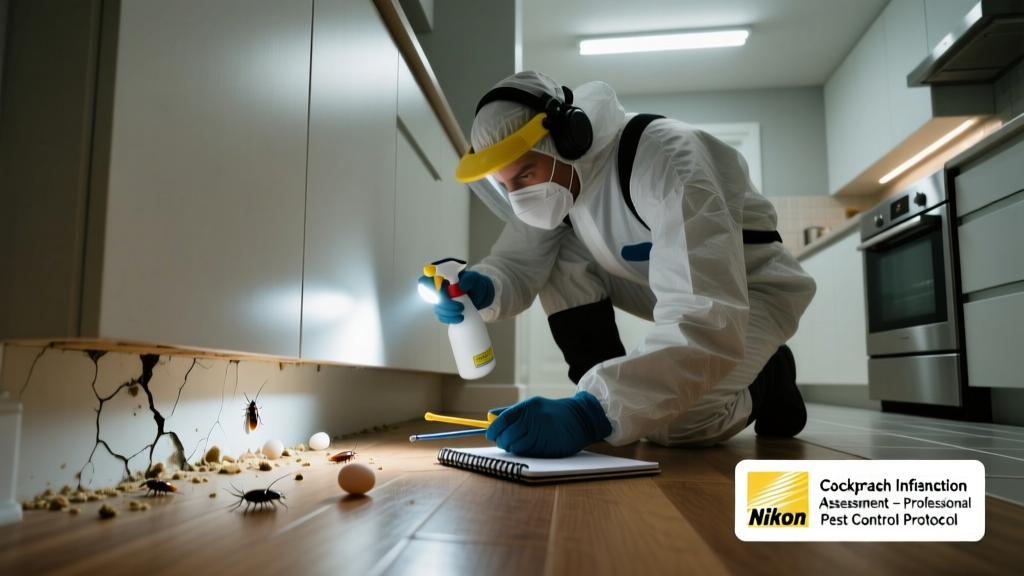
Cockroaches are among the most resilient household pests—surviving for over 300 million years, thriving in kitchens, bathrooms, and basements where warmth, moisture, and food converge. They spread bacteria like Salmonella and E. coli, trigger asthma attacks (especially in children), and contaminate surfaces with feces and shed skins—making swift, targeted action essential.
Identification
Not all roaches are the same—and misidentifying them leads to failed treatments. The three species most common in U.S. homes are German, American, and Oriental cockroaches. German roaches are small (½ inch), light brown, with two dark parallel stripes behind the head. American roaches are reddish-brown, up to 2 inches long, and often mistaken for beetles. Oriental roaches are shiny black, about 1 inch long, and emit a musty odor.
| Species | Size | Color | Preferred Habitat | Key Behavior |
|---|---|---|---|---|
| German | ¼–½ inch | Tan to light brown | Kitchens, pantries, near appliances | Most common indoor species; reproduces rapidly—up to 6 generations per year |
| American | 1–2 inches | Reddish-brown | Basements, sewers, utility rooms | Strong fliers; avoids light but may scatter when disturbed |
| Oriental | ¾–1 inch | Shiny black | Damp areas: drains, crawl spaces, garbage chutes | Cannot climb smooth vertical surfaces; emits foul odor when crushed |
Look for these signs—not just live bugs: small, dark droppings resembling ground pepper (especially under sinks or behind refrigerators), egg cases (oothecae) that look like tiny, ridged capsules (German roach oothecae carry ~30–40 nymphs), and a greasy, musty smell in infested zones.
What Attracts Them
Cockroaches don’t wander in randomly—they’re drawn by predictable conditions. Food residue—even microscopic crumbs—left on counters or floors is enough to sustain a colony. Leaky faucets, condensation under appliances, and poor ventilation create the humidity they need (they require water every 3–5 days). Cluttered cabinets, cardboard boxes (which they chew for cellulose), and gaps around pipes or baseboards serve as shelter and entry points.
- Cracked grout or missing caulk around sinks and tubs
- Unsealed pet food bowls left out overnight
- Piles of newspapers, old takeout menus, or stacked paper bags
- Garbage cans without tight-fitting lids
According to the National Pest Management Association’s 2022 Residential Pest Report, 78% of cockroach infestations begin in kitchens or bathrooms—locations where all three attractants (food, water, shelter) overlap.
Treatment Methods
Natural Methods
Start here if you have pets, young children, or mild infestations (fewer than 10 sightings per week). Diatomaceous earth (food-grade) dehydrates roaches on contact—sprinkle a thin line along baseboards, behind appliances, and inside cabinet corners. Boric acid mixed with flour and sugar (in a 1:1:1 ratio) acts as bait—roaches eat it, carry it back to nests, and die within 3–7 days. Essential oils like peppermint or cedarwood can deter movement but won’t eliminate colonies.
- Apply boric acid bait only in inaccessible spots (e.g., behind fridge, under stove)
- Replace diatomaceous earth after cleaning or spills—it loses effectiveness when wet
- Never mix boric acid with bleach—it creates toxic chloramine gas
Chemical Methods
For moderate to heavy infestations (more than 15 sightings weekly), targeted insecticides work faster—but precision matters. Gel baits containing fipronil or hydramethylnon (like Advion or Maxforce) are EPA-registered and low-risk when placed in cracks and crevices—not open surfaces. Insect growth regulators (IGRs) like pyriproxyfen disrupt molting and reproduction, breaking the life cycle over 4–6 weeks. Avoid broadcast sprays—they repel roaches deeper into walls and reduce bait uptake.
"Gel baits applied directly into harborages—behind outlets, under sinks, inside wall voids—are 3x more effective than perimeter sprays alone." — Dr. Susan Jones, Entomologist, Ohio State University Extension, 2023
Prevention
Elimination means nothing without prevention. Seal entry points with copper mesh and silicone caulk—roaches can squeeze through gaps as narrow as 1/16 inch. Store dry goods in hard-sided, airtight containers (glass or thick plastic—not zip-top bags). Fix leaks within 24 hours—U.S. EPA data shows even a dripping faucet wastes 3,000 gallons/year and creates ideal microhabitats. Vacuum weekly with a HEPA filter to remove eggs and allergens from carpets and baseboards.
- Wipe down stovetops and microwave interiors after every use
- Run dishwasher and empty trash nightly—especially if it holds food waste
- Sweep and mop kitchen floors with vinegar solution (1:1 water/vinegar) twice weekly
Pair these habits with quarterly inspections of plumbing access panels and under-sink cabinets—you’ll catch early signs before populations explode.
When to Call an Exterminator
Call a licensed professional if you see roaches during daylight hours (a sign of overcrowding), find egg cases in multiple rooms, or spot more than 25 roaches in a single night. Also act immediately if you live in a multi-unit building—cockroaches move between apartments via shared walls, pipes, and HVAC ducts. Licensed exterminators use thermal imaging to locate hidden nests and apply residual dusts like deltamethrin in wall voids where DIY methods can’t reach.
Can cockroaches survive without their heads?
Yes—for up to a week. They breathe through spiracles along their body segments and don’t rely on a brain to control basic functions like breathing or heart rate. But they’ll die from dehydration or starvation, not decapitation itself.
Do cockroaches bite humans?
Rarely—and only in extreme infestations with scarce food. Bites appear as small, red, slightly swollen bumps, often on hands, fingers, or eyelids. They’re not dangerous but can become infected if scratched.
Will keeping lights on keep roaches away?
No. While they avoid light, turning on lamps or overheads only makes them retreat temporarily into wall voids or under appliances. It doesn’t reduce population or discourage nesting.
Are cockroaches resistant to pesticides?
Yes—especially German roaches. A 2021 study in the Journal of Economic Entomology found >90% of field-collected German roach populations showed resistance to at least one class of insecticide, including pyrethroids. That’s why rotating bait types and combining physical controls is critical.
How fast do cockroaches multiply?
German roaches reproduce fastest: females produce a new ootheca every 20–30 days, each holding 30–40 eggs. Under ideal conditions, one pair can generate over 300,000 descendants in a single year.
Can I use bleach to kill cockroaches?
Bleach may kill on contact, but it’s ineffective against hidden nests and dangerous when mixed with other cleaners. It also corrodes pipes and fails to address the root causes—food, water, and shelter. Safer alternatives exist, like boric acid or diatomaceous earth.
Roaches aren’t just gross—they’re a measurable health risk and a sign your home’s sanitation or structural integrity needs attention. Consistent monitoring, targeted treatment, and daily hygiene habits break the cycle faster than any single product ever could. For persistent problems, pair DIY efforts with a licensed pest control service—not as a last resort, but as part of a layered defense strategy.