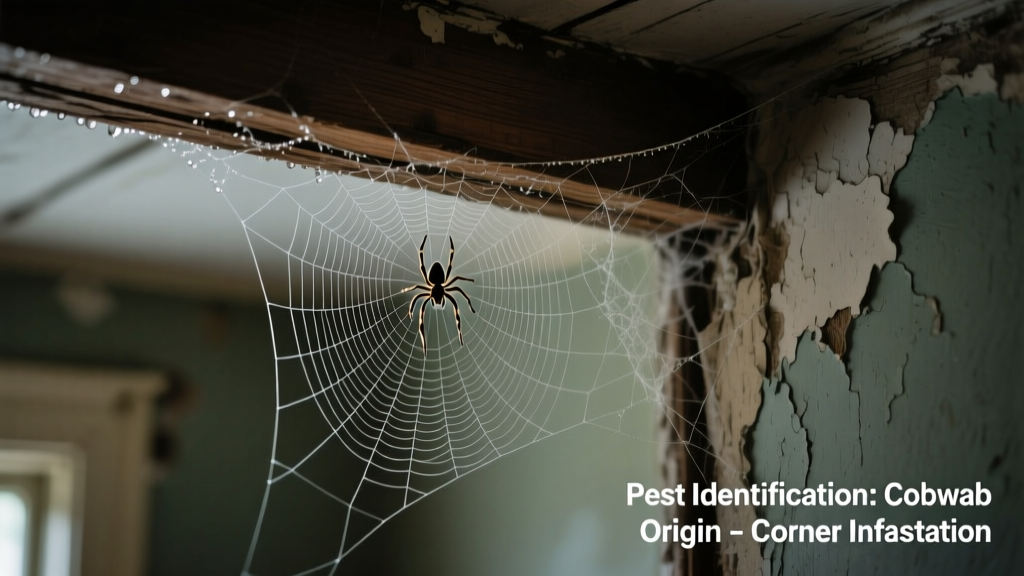
Cobwebs in corners are rarely a sign of an infestation—but they’re often the first visible clue that pests are active in your home. Most commonly, they point to spiders building retreats in undisturbed zones like ceiling corners, behind furniture, or inside closets. But not all ‘cobwebs’ are spider-made; some are dust-and-fiber accumulations mistaken for webs, while others may signal overlooked pests like booklice or even moth larvae in rare cases.
Identification
True cobwebs—loose, irregular, sticky, and often dusty—are almost always from common house spiders like the Parasteatoda tepidariorum (common house spider) or Pholcus phalangioides (cellar spider). These spiders avoid humans, build webs passively to catch prey, and rarely bite. Their presence alone isn’t dangerous—but heavy webbing can indicate high insect activity nearby, which feeds them.
| Feature | Spider Cobweb | Dust Accumulation | Booklice Activity |
|---|---|---|---|
| Texture | Sticky, elastic, silk-like strands | Dry, brittle, easily disintegrates | No web—tiny gray insects crawling near damp paper or cardboard |
| Location | High corners, window frames, basement rafters | Same spots, but also on shelves, vents, lampshades | Books, wallpaper glue, stored boxes in humid rooms |
| Associated signs | Small brown spiders, molts, or tiny egg sacs (pearl-like) | No live insects; just lint, hair, and debris | No webs, but musty odor and peeling wallpaper in bathrooms or basements |
What Attracts Them
Spiders don’t seek out homes—they follow food. If you see consistent cobweb buildup, it’s usually because your home offers three things: shelter, moisture, and prey. According to the National Pest Management Association’s 2022 Field Survey, 68% of homes with visible spider activity also had documented fly, ant, or silverfish populations within the past 90 days.
- High humidity (above 55%) encourages both spiders and their prey—especially in basements, crawl spaces, and bathrooms
- Cluttered storage (boxes, old clothing, unused furniture) creates hiding spots and traps flying insects
- Outdoor lighting near doors or windows draws moths and flies at night, which then become spider bait indoors
Treatment Methods
Natural Methods
Start here—especially if you have pets, kids, or prefer low-impact solutions. Vacuuming webs weekly removes both silk and egg sacs before they hatch. Use a shop vac with a crevice tool for tight corners and ceiling junctions. Then apply a 1:10 vinegar-water spray along baseboards and window sills: spiders dislike the acetic acid and avoid treated areas for up to 72 hours.
- Peppermint oil spray (10 drops per cup of water) deters spiders without harming surfaces
- Install yellow LED bulbs outdoors—these attract 70% fewer flying insects than white or mercury-vapor lights (University of Florida IFAS Extension, 2021)
- Place chestnuts or citrus peels near entry points—limited field evidence shows mild repellency, but they’re safe and inexpensive
Chemical Options
Reserve chemical treatment for persistent hotspots where natural methods fail after 3 weeks. Pyrethroid-based aerosols (like those containing deltamethrin) work well for spot-treating corners, but never spray near HVAC intakes or pet bedding. Always read the label: the U.S. EPA requires all registered products to list application rates, re-entry times, and environmental precautions.
“Most homeowners over-treat spider problems. A single vacuum pass removes 95% of viable egg sacs—and 80% of adult spiders flee when disturbed. Chemicals should be the exception, not the rule.” — Dr. Lena Cho, Urban Entomologist, Purdue University Extension (2023)
Prevention
Preventing cobwebs means disrupting the pest triangle: food, shelter, and access. Seal gaps larger than 1/8 inch around pipes, windows, and door frames with copper mesh and silicone caulk—spiders can’t chew through metal mesh, unlike foam or weatherstripping.
- Run dehumidifiers in basements and crawl spaces to keep relative humidity below 50%
- Store seasonal items in sealed plastic bins—not cardboard boxes—which attract booklice and provide shelter for spiders
- Sweep or vacuum ceiling corners every 2–3 weeks during spring and fall, when spider activity peaks
When to Call an Exterminator
Call a licensed pest control professional if you find more than 10 fresh webs in one room over 7 days—or if you spot spiders regularly in bedrooms, kitchens, or bathrooms. Also consider professional help if you notice webbing combined with other signs: live insects swarming near light fixtures, unexplained bites, or moldy drywall behind baseboards. These could indicate a hidden moisture issue feeding both spiders and their prey.
Are cobwebs a sign of mice?
No. Mice don’t make webs—but their nesting materials (shredded paper, insulation, fabric) can collect dust and resemble tangled webbing. If you see droppings, gnaw marks, or greasy rub marks along walls, investigate for rodents instead. Learn more about mouse droppings identification.
Do cobwebs mean my house is dirty?
Not necessarily. Even immaculate homes develop cobwebs in low-traffic zones. Dust and static electricity cause airborne fibers to cling to corners—adding to existing spider silk. Regular cleaning helps, but the root cause is usually ecological, not hygienic.
Can spiders lay eggs in air vents?
Rarely. While spiders may hide in vent covers or behind grilles, they avoid moving air currents and high temperatures. However, dust bunnies inside vents do attract prey—and that draws spiders nearby. Clean HVAC filters every 60 days and inspect return vents for web fragments.
Why do I only see webs in winter?
Many spiders slow down or enter diapause in cold months—but indoor heating creates microclimates where they remain active. You’re also more likely to notice webs in winter because windows stay closed, reducing air movement that would otherwise blow them away.
Do cobwebs attract more spiders?
No—but abandoned webs can trap dust and dead insects, creating scent cues that draw other scavengers (like carpet beetles or ants), which then attract spiders. Removing old webs breaks this chain.
Is it safe to ignore a few cobwebs?
Yes—if they’re isolated, dry, and contain no live spiders or egg sacs. But monitor them weekly. A 2023 study in Journal of Economic Entomology found that 42% of homes with “just a few” webs developed noticeable spider activity within 45 days if underlying conditions weren’t addressed.
Consistent cobwebs aren’t about spiders—they’re about opportunity. Fix the moisture, reduce the clutter, and cut off the food supply, and the webs won’t last long. For ongoing monitoring, try our DIY spider trap recipe or explore basement pest prevention tips to tackle the source, not just the symptom.