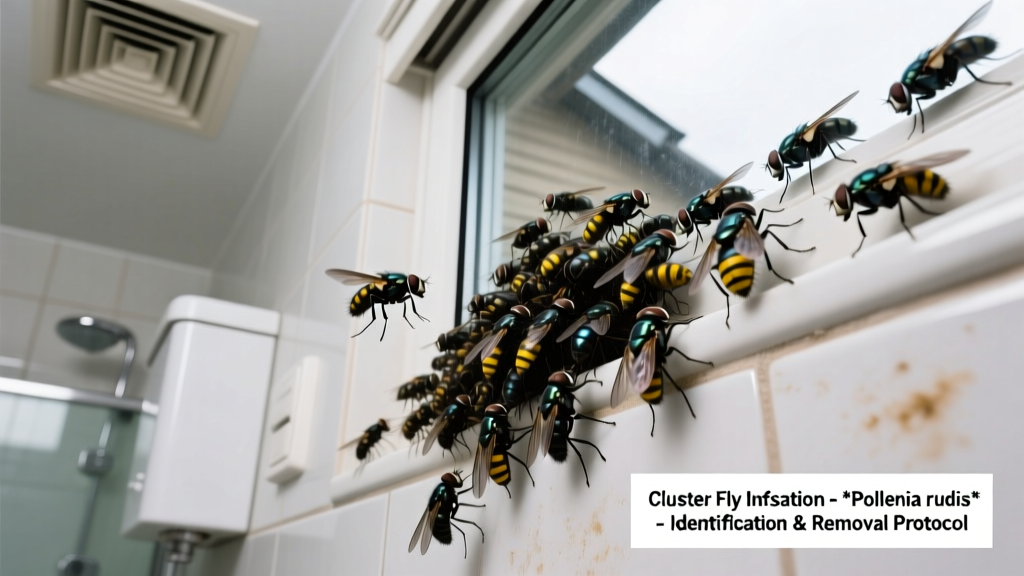
Cluster flies (Pollenia rudis) aren’t typical bathroom pests—but when they appear there, it’s usually a sign of deeper entry points or seasonal migration. Unlike houseflies, they don’t breed indoors or feed on waste; instead, they seek warm, sheltered spaces to overwinter, often slipping into bathrooms through gaps near windows, exhaust fans, or ceiling fixtures. Their slow, clumsy flight and tendency to cluster on walls or ceilings—especially near light sources—make them unmistakable once you know what to look for.
Identification
Cluster flies are slightly larger than houseflies (6–7 mm), with overlapping wings at rest, golden-yellow hairs on their thorax, and a distinctive checkerboard pattern on their abdomen when viewed under magnification. They move sluggishly, especially in cooler air, and often gather in sunlit corners or near bathroom vents.
| Feature | Cluster Fly | Housefly | Drain Fly |
|---|---|---|---|
| Size | 6–7 mm | 4–5 mm | 1.5–5 mm |
| Wing Position at Rest | Overlapping, angled | Flat, parallel | Held roof-like over body |
| Primary Habitat | Attics, wall voids, bathrooms (seasonal) | Kitchens, trash, drains | Drain pipes, sewage residue |
| Breeding Site | Soil (earthworms) | Decaying organic matter | Gelatinous biofilm in drains |
What Attracts Them
Cluster flies enter homes in late summer and fall seeking warmth—and bathrooms offer three key draws: heat from showers and exhaust systems, light from fixtures, and small structural gaps. According to the University of Kentucky Entomology Department’s 2022 Pest Fact Sheet, up to 83% of cluster fly infestations begin near upper-level windows or attic access points that connect to bathroom soffits or vent chases.
- Cracks around bathroom exhaust fan housings (often overlooked during installation)
- Unsealed gaps where plumbing pipes penetrate walls or ceilings
- Loose or warped window trim on north- or east-facing bathroom windows
- Warm, humid air rising from showers that pulls flies upward into wall cavities
Treatment Methods
Natural Remedies
Vacuuming with a shop vac (not a household vacuum—cluster flies release pheromones that attract more) is the safest first step. Use a crevice tool to suction flies from ceiling corners, behind mirrors, and along baseboards. Essential oil sprays (10 drops peppermint + 1 cup water) applied to window frames and exhaust grilles deter further entry—but won’t eliminate existing clusters.
Chemical Options
Residual insecticides like pyrethroids (e.g., cyfluthrin) can be applied as crack-and-crevice treatments along bathroom framing and exhaust duct seams—but only by licensed applicators in most states. Over-the-counter aerosol “fly sprays” are ineffective against cluster flies hiding in wall voids and pose inhalation risks in confined bathroom spaces. The U.S. EPA warns that misuse of indoor pyrethroid sprays contributes to 12% of reported pesticide-related ER visits involving respiratory distress (EPA Pesticide Incident Data, 2023).
“Cluster flies rarely survive indoors beyond spring—but if you’re seeing them in May or June, it means your home has active entry points that need sealing *now*, not just treatment.” — Dr. Lena Cho, Urban Entomologist, Cornell Cooperative Extension, 2023
Prevention
Sealing is non-negotiable. Start by removing bathroom exhaust fan covers and inspecting the duct collar for gaps—caulk with silicone rated for high humidity. Replace cracked or warped window glazing compound, and install fine-mesh (<1/8") screening behind all bathroom vent grilles. Also check the seal where the tub/shower surround meets the wall—moisture damage here creates hidden voids.
- Install LED motion-sensor lights (less attractive to cluster flies than incandescent bulbs)
- Run bathroom exhaust fans for 20 minutes post-shower to reduce residual warmth
- Inspect attic access hatches above bathrooms for gaps and line with weatherstripping
- Apply exterior-grade caulk to all penetrations near bathroom windows, vents, and rooflines
When to Call an Exterminator
Call a licensed pest management professional if you see more than 20 cluster flies in one bathroom over 48 hours—or if you hear buzzing inside walls after sealing visible gaps. These indicate established harborage in wall voids or attics. Most reputable firms use thermal imaging to locate heat signatures and apply targeted dusts (like deltamethrin) into voids without drilling. Avoid companies that promise “one-time fogging”—it’s ineffective and violates EPA label requirements for indoor pyrethroid use.
Why do cluster flies gather in my bathroom but nowhere else?
It’s likely your bathroom shares a wall or ceiling cavity with an unheated attic or soffit—the warmest zone in the home during fall. Heat rises and draws flies upward, and bathroom exhaust systems create subtle negative pressure that pulls them toward those openings. Check the attic directly above your bathroom for insulation gaps or missing baffles.
Can cluster flies lay eggs in my bathroom?
No. Cluster flies require live earthworms to develop—their larvae parasitize soil-dwelling worms outdoors. They cannot reproduce indoors, even in damp areas. Any flies you see are adults seeking shelter, not breeding.
Will cleaning my bathroom more often get rid of them?
Not directly. Since they’re not attracted to filth or moisture like drain flies or cockroaches, standard cleaning won’t reduce numbers. However, wiping down mirrors and tiles removes condensation that makes surfaces temporarily more attractive for resting.
Do cluster flies carry disease like houseflies?
Risk is extremely low. Unlike houseflies, cluster flies don’t land on feces or garbage. The CDC lists zero documented human disease transmissions linked to Pollenia species (CDC Zoonotic Disease Branch, 2021).
Can I use sticky traps near my bathroom mirror?
Yes—but place them strategically: on the ceiling near exhaust vents or behind the toilet tank, not on countertops. Yellow sticky traps catch adults effectively, but avoid placing them where children or pets can reach. Replace weekly, as trapped flies release aggregation pheromones that draw others.
Is this a sign of a bigger structural problem?
Possibly. Persistent cluster fly activity in bathrooms often correlates with missing or damaged soffit vents, improperly sealed roof-to-wall transitions, or deteriorated flashing around plumbing stacks. A home energy audit or attic inspection checklist can help spot these issues before winter.
Cluster flies in the bathroom aren’t a hygiene issue—they’re a building envelope issue. Fix the gaps, manage the heat flow, and you’ll stop the influx before next fall. For long-term control, pair physical exclusion with seasonal monitoring: check bathroom ceilings each September and seal any new cracks before temperatures drop below 55°F. If you’ve dealt with recurring issues, consider reviewing our guide on bathroom vent sealing techniques or attic pest barriers for layered defense.