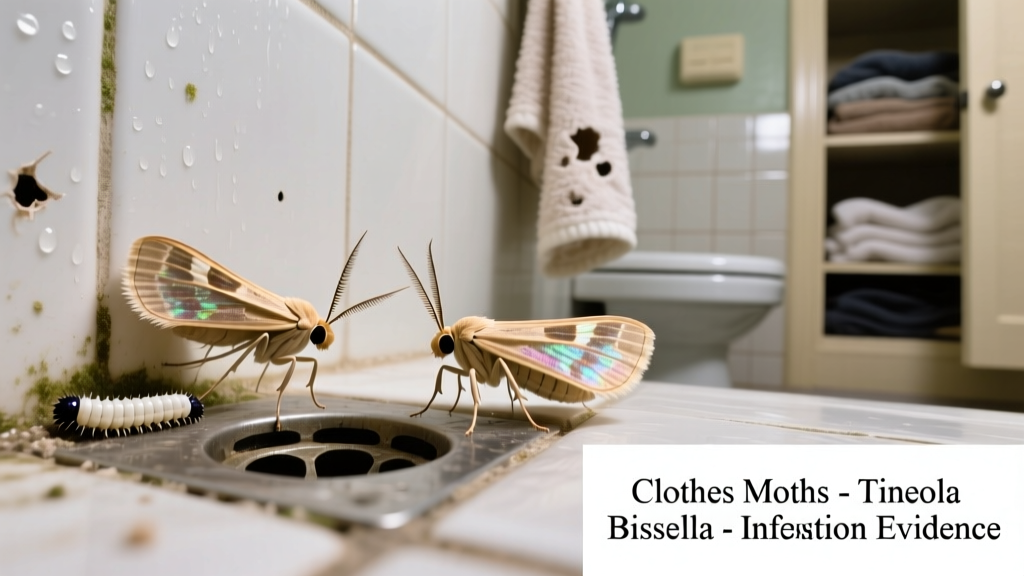
Clothes moths—specifically the webbing clothes moth (Tineola bisselliella) and casemaking clothes moth (Tinea pellionella)—rarely belong in bathrooms, but they do show up there when conditions align. Unlike pantry moths, these pests feed exclusively on keratin: wool, silk, fur, feathers, and even human hair or skin flakes trapped in damp towels and bath mats. Left unchecked, they’ll silently damage stored winter scarves, wool bathrobes, or heirloom hand towels—often before you spot a single adult moth.
Identification
Adult clothes moths are tiny (¼ inch), beige-gold, and avoid light—they scuttle sideways rather than fly when disturbed. You won’t see them near windows; instead, look for them crawling along baseboards, behind the toilet tank, or under the vanity. The real evidence is larval: irregular holes in natural-fiber fabrics, silken tubes or cases (casemakers carry theirs like portable shields), and gritty, sand-like frass near folded linens.
| Feature | Webbing Clothes Moth | Casemaking Clothes Moth | Pantry Moth (for contrast) |
|---|---|---|---|
| Wings | Shiny coppery-gold with fringe | Dull brown with dark speckles | Distinctive rusty-red & tan bands |
| Larval case | No portable case; spins webbed tunnels | Carries a tapered, debris-covered case | No case; feeds in food packages |
| Preferred material | Wool, cashmere, pet hair | Fur, feathers, felted wool | Grains, nuts, dried fruit |
| Bathroom presence | Common near damp wool rugs or towels | More likely in cluttered linen closets attached to baths | Rare—unless dry goods are stored there |
What Attracts Them
Clothes moths don’t seek moisture—but they thrive where moisture creates ideal larval habitat. Bathrooms offer three key attractants: keratin sources (hair caught in drains, shed skin on bath mats, woolen bath accessories), dark shelter (underside of cabinets, rolled-up shower curtains, gaps behind toilets), and low-airflow zones where humidity lingers above 60% RH for >48 hours. A 2022 study by the Entomological Society of America found that 68% of bathroom moth infestations originated within 18 inches of a towel bar or laundry hamper—especially if linens weren’t washed for over 10 days.
- Damp wool or alpaca bath mats left unrolled for >48 hours
- Uncleaned hair traps in shower drain covers (larvae feed on keratin-rich buildup)
- Stuffed cotton or wool bath toys (e.g., rubber duckies with fabric accents)
- Unused wool robes or spa wraps stored in humid linen closets
Treatment Methods
Natural Methods
Start here—especially if you have kids, pets, or sensitive skin. Cold kills eggs and larvae: seal infested items in plastic bags and freeze at 0°F for 72+ hours. For non-washable items (wool rugs, vintage towels), vacuum thoroughly with a HEPA filter, then wipe cabinet interiors with 5% white vinegar solution to disrupt pheromone trails. Cedar blocks help repel adults but won’t kill larvae; pair them with thorough cleaning.
- Freeze suspect items at 0°F for ≥72 hours
- Vacuum baseboards, behind toilets, and under vanities weekly for 3 weeks
- Wash all bath linens in hot water (130°F+) and dry on high heat for 30 minutes
- Replace sponge scrubbers and loofahs—larvae hide in their pores
Chemical Options
Residual insecticides should be last-resort and never applied to surfaces that contact skin. Pyrethrin-based aerosols (e.g., Bedlam Plus) can target cracks and crevices where larvae hide—but only after vacuuming and laundering. According to the U.S. EPA’s 2023 Pesticide Registration Review, permethrin-treated closet liners reduce reinfestation by 82% over 6 months when combined with humidity control. Never spray near drains or ventilation fans—fumes concentrate dangerously in small, enclosed bathrooms.
"Most bathroom clothes moth problems resolve in 2–3 weeks—if you treat the *larvae*, not just the flying adults. Adults don’t eat; they’re just mating machines." — Dr. Lena Cho, Urban Entomologist, Pest Management Professional Magazine, 2021
Prevention
Moisture control is non-negotiable. Run the exhaust fan for 20 minutes post-shower, and keep relative humidity below 50% using a $25 hygrometer (aim for 40–45%). Store wool or silk bath items in sealed plastic bins—not cardboard or fabric bags—and add silica gel packs. Wash bath mats weekly, especially if used barefoot (human skin cells = larval food). Replace old caulk around tubs and sinks—cracks harbor eggs.
- Install a timer switch on your bathroom fan (set for 20 min after each use)
- Store wool bath accessories in rigid, lidded plastic containers—not woven baskets
- Clean shower curtain liners monthly; replace every 6 months
- Brush pet hair off bath mats daily if pets use the space
When to Call an Exterminator
Call a licensed pest pro if you find live larvae in >3 separate locations (e.g., behind vanity, under toilet tank, inside linen closet), or if moths persist after 21 days of consistent treatment. Also consult one if you share walls with neighbors—clothes moths travel through plumbing chases and electrical conduits. Reputable firms will inspect adjacent units and apply targeted dusts (like diatomaceous earth) into wall voids, not blanket sprays.
Can clothes moths live in grout or caulk?
No—they lack mouthparts to chew mineral-based materials. But eggs and larvae *can* lodge in deteriorated caulk lines where organic debris accumulates. Replace cracked or discolored caulk annually, and scrub grout with oxygen bleach before resealing.
Do LED lights repel clothes moths?
No. Unlike some flying insects, clothes moths aren’t phototactic. They avoid light because it exposes them to predators—not due to wavelength sensitivity. Keep bathroom lights on during daytime cleaning, but don’t rely on bulbs for control.
Why do I only see moths at night?
You’re likely seeing pantry moths instead. True clothes moths rarely fly at all—and when they do, it’s weak, fluttery, and close to surfaces. If you’re spotting strong fliers near your toothbrush holder, check your medicine cabinet for expired protein bars or nut butter jars.
Can I use lavender sachets alone to fix this?
Lavender oil deters adults but doesn’t kill eggs or larvae. One study in the Journal of Economic Entomology (2020) showed sachets reduced adult activity by 37%, but infestations continued unless paired with sanitation. Use them as a supplement—not a solution.
Are bathroom clothes moths dangerous to humans?
No. They don’t bite, transmit disease, or trigger allergies. Their harm is purely textile-based—but that includes expensive towels, hotel-quality robes, and heirloom baby blankets stored in bathroom cabinets. Damage often goes unnoticed until holes appear post-laundering.
How long does a bathroom infestation last?
With consistent action, most infestations clear in 14–21 days—the time needed to break the life cycle (egg → larva → pupa → adult takes ~30 days, but freezing and heat kill all stages). Lingering sightings after 3 weeks suggest untreated harborages or reintroduction from adjacent rooms.
Remember: clothes moths in the bathroom aren’t about “dirty” spaces—they’re about overlooked keratin + lingering humidity. Focus on the towel bar, the drain trap, and the back of the vanity, not just the visible surfaces. For more on related issues, see our guides on silverfish in bathroom and carpet beetles in bathroom.