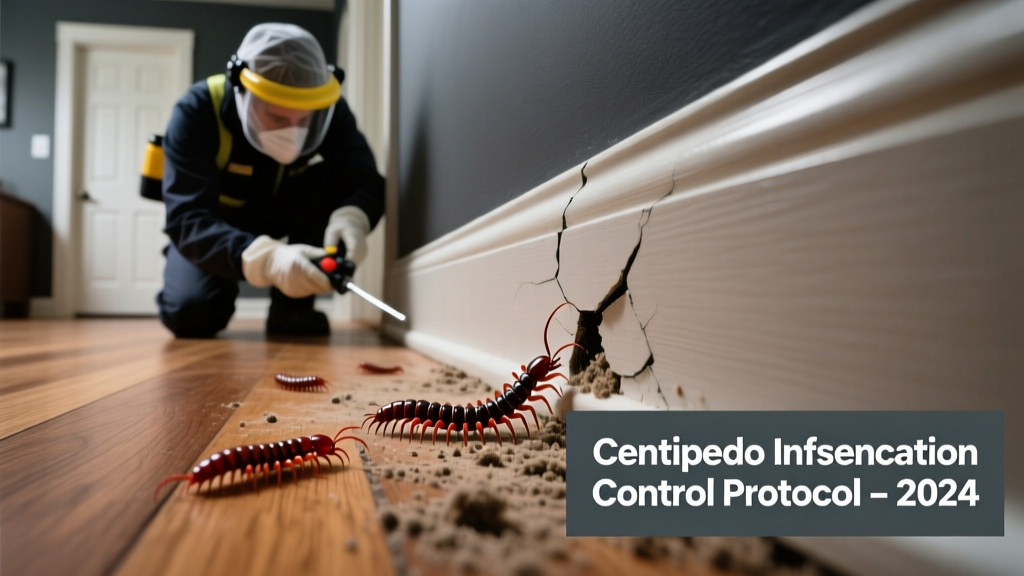
Centipedes are fast-moving, multi-legged arthropods that invade homes seeking moisture and prey—like spiders, silverfish, and cockroaches. Though they don’t transmit disease or damage structures, their sudden appearance in basements, bathrooms, or under sinks triggers alarm. Most species found indoors (especially Scutigera coleoptrata, the house centipede) are harmless to humans—but their speed, size, and leg count make them unwelcome guests.
Identification
House centipedes are tan to yellowish-gray with 15 pairs of long, banded legs—each leg noticeably longer than the one before it. Adults reach 1–1.5 inches and move with a distinctive skittering motion. Unlike millipedes, centipedes have one pair of legs per body segment and possess venomous forcipules (modified front legs) used to subdue prey.
Look for these signs:
- Sudden, rapid movement across floors or walls, especially at night
- Shed exoskeletons near baseboards or in damp corners
- Live specimens hiding under cardboard, mulch piles, or bathroom rugs
| Feature | Centipede | Millipede |
|---|---|---|
| Legs per segment | One pair | Two pairs |
| Movement | Fast, erratic | Slow, wave-like |
| Diet | Carnivorous (preys on insects) | Detritivore (feeds on decaying leaves) |
| Defense | Bites possible (rarely harmful) | Secretes foul-smelling fluid |
What Attracts Them
Centipedes don’t seek humans—they seek conditions that support their survival. They need high humidity (above 70% RH), shelter from light, and a steady food supply. According to the National Pest Management Association’s 2022 Field Survey, 68% of centipede infestations occur in homes with documented moisture issues—leaky pipes, poor ventilation, or ungraded soil against foundations.
- Basements with standing water or sump pump discharge pooling nearby
- Bathrooms without exhaust fans or with cracked grout
- Exterior mulch beds within 6 inches of foundation walls
- Cluttered garages storing cardboard boxes, old newspapers, or firewood
Treatment Methods
Natural Remedies
Start with non-toxic options—especially if children or pets are present. Diatomaceous earth (food-grade) applied as a thin line along baseboards disrupts centipedes’ waxy cuticle, causing dehydration. Essential oil sprays (10 drops peppermint + 1 cup water) deter centipedes when misted near entry points twice weekly—but won’t kill existing populations.
Vacuuming is highly effective: use a shop vac with a hose attachment to remove live centipedes and egg sacs from cracks and corners. Dispose of the bag immediately outdoors.
Chemical Treatments
For persistent infestations, targeted insecticide applications work best. Pyrethroid-based sprays (e.g., bifenthrin or cyfluthrin) applied to baseboards, window frames, and garage door thresholds create a residual barrier. The U.S. EPA notes that indoor pyrethroid use should be limited to crack-and-crevice applications—not broadcast spraying—to reduce exposure risk.
Granular insecticides like deltamethrin are useful for perimeter treatment: apply a 3-foot band around the foundation, keeping material 6 inches away from doors and vents. Reapply after heavy rain.
Prevention
Centipedes are symptom pests—their presence signals underlying moisture or pest problems. Fixing those root causes stops reinfestation better than any spray.
- Install dehumidifiers in basements (target ≤50% RH)
- Repair leaking faucets and insulate cold-water pipes to reduce condensation
- Replace damaged weatherstripping on exterior doors and windows
- Keep gutters clean and extend downspouts 5 feet from the foundation
Reduce outdoor harborage by moving firewood piles at least 20 feet from the house and trimming shrubs to allow airflow against siding. For more strategies, see our guide on moisture control for pest prevention.
When to Call an Exterminator
Call a licensed professional if you’re finding 5+ centipedes per week despite consistent DIY efforts—or if you suspect hidden moisture damage behind walls. Licensed exterminators can perform thermal imaging scans and install targeted bait stations that target centipedes’ prey, breaking the food chain at its source.
"Centipedes rarely infest in isolation. If you're seeing them regularly, check your home for springtails, silverfish, or drain flies—they're likely feeding on those pests." — Dr. Lena Cho, Entomologist, Purdue Extension IPM Program, 2023
Do centipedes bite humans?
Yes—but only defensively, and rarely. Their forcipules can pierce human skin, causing localized redness and mild swelling similar to a bee sting. No hospitalizations from centipede bites were reported in the American Association of Poison Control Centers’ 2021 annual report.
Are centipedes beneficial?
In gardens and crawl spaces, yes—they eat termites, cockroach nymphs, and ants. But indoors, their presence reflects conditions that also attract more destructive pests. Think of them as a biological early-warning system.
Why do I see centipedes after it rains?
Heavy rainfall saturates soil and flood-prone areas like crawl spaces, forcing centipedes to seek drier shelter—including your home. This is especially common in late spring and early fall, when soil moisture peaks and indoor humidity lags behind.
Can centipedes climb walls and ceilings?
Absolutely. House centipedes have adhesive pads on their legs and routinely scale smooth surfaces—including tile, glass, and painted drywall. That’s why you’ll often spot them on bathroom walls or bedroom ceilings at night.
How long do centipedes live indoors?
Up to 6 years in ideal conditions—making ongoing prevention essential. They mature slowly, taking 2–3 years to reach adulthood, and reproduce year-round in heated homes. A single female may lay 150 eggs over her lifetime.
Will sealing cracks alone stop centipedes?
Sealing helps—but it’s not enough. Centipedes enter through gaps as narrow as 1/16 inch and can squeeze under doors with >¼-inch clearance. Combine sealing with moisture reduction and prey control for lasting results. For detailed sealing instructions, refer to our guide to sealing entry points.
Centipedes aren’t dangerous, but they’re a clear signal that your home’s microclimate needs attention. Focus first on humidity and secondary pests—and the centipedes will follow suit. For related concerns, explore our guides on silverfish control and basement pest management.