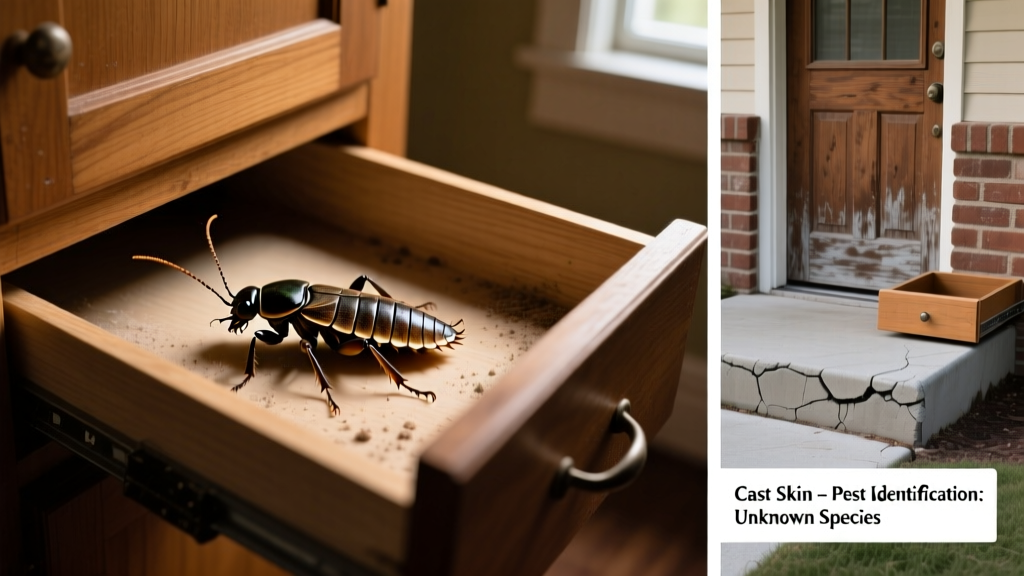
Seeing papery, translucent, or segmented cast skins in a drawer—especially near wool sweaters, stored paper, or dried food—isn’t just unsettling—it’s a red flag. These exoskeletons signal active molting, meaning immature pests are feeding and growing nearby. Left unchecked, they can ruin textiles, contaminate pantry items, or degrade archival materials.
Identification
Cast skins alone aren’t enough to name the culprit—but size, shape, location, and associated damage narrow it down fast. Clothes moth larvae shed up to 5 times before pupating; silverfish molt dozens of times over their 2–8-year lifespan; dermestid beetle larvae (like carpet beetles) cast distinct bristly, C-shaped skins with dark bands.
| Pest | Skin Appearance | Typical Location | Associated Damage |
|---|---|---|---|
| Clothes Moth Larva | 1/4" long, pale tan, oval, often stuck to fabric fibers | Wool, cashmere, feather-filled items | Irregular holes in natural fibers, silken trails |
| Silverfish | 1/8"–3/8", pear-shaped, shiny gray, frequently found near cardboard or glue | Bookshelves, paper files, behind dresser drawers | Notched edges on paper, yellow stains on wallpaper paste |
| Dermestid Beetle Larva (e.g., carpet beetle) | 1/8"–1/4", dark brown, densely hairy, often with tufts at rear | Under baseboards near drawers, inside lint traps, wool rugs | Bare patches on rugs, chewed leather, damaged taxidermy |
What Attracts Them
These pests don’t wander in randomly—they’re drawn by specific resources. Clothes moths seek keratin-rich materials: wool, fur, feathers, even pet hair trapped in drawer crevices. Silverfish thrive where humidity exceeds 75% and starchy adhesives (book bindings, wallpaper paste, cereal boxes) are present. Dermestids follow protein sources: dried pet food, rodent carcasses in walls, or neglected wool blankets stored without cedar or vacuum sealing.
- Drawers with poor ventilation + seasonal humidity spikes (e.g., summer in basements)
- Unwashed winter clothing stored in plastic bins (traps moisture and skin flakes)
- Old paper archives, photo albums, or books bound with animal-based glue
Treatment Methods
Natural Methods
Start here—especially if you’re treating closets, linen drawers, or areas near children or pets. Freeze infested items for 72 hours at 0°F (-18°C) to kill all life stages of clothes moths and carpet beetles. For silverfish, reduce humidity below 50% using a dehumidifier; they desiccate rapidly. Diatomaceous earth (food-grade) applied as a thin line along drawer runners disrupts exoskeletons—reapply after cleaning.
Chemical Options
Only consider targeted chemical use when natural methods fail and activity persists >2 weeks. Pyrethrin-based aerosols (e.g., Bedlam Plus) can be sprayed along drawer tracks and hinges—but never directly on clothing or food storage areas. According to the National Pesticide Information Center’s 2022 review, residual insect growth regulators like methoprene are effective against clothes moth larvae but require 10–14 days to halt development.
Prevention
Prevention isn’t about perfection—it’s about breaking the breeding cycle. Store off-season woolens in airtight plastic bins (not cedar chests alone—cedar oil evaporates in 6 months). Vacuum drawers quarterly, focusing on cracks and under liners, then dispose of the bag outside. Replace cardboard file folders with acid-free polypropylene boxes—silverfish avoid smooth, non-porous surfaces.
- Wash or dry-clean natural-fiber garments before storage
- Use silica gel packs in enclosed drawers to maintain RH <50%
- Inspect secondhand furniture and vintage textiles for live larvae or skins before bringing them indoors
When to Call an Exterminator
Call a licensed pest professional if cast skins appear in 3+ separate drawers across different rooms—or if you find live larvae in wall voids, HVAC ducts, or ceiling insulation. Widespread dermestid activity often traces back to a dead rodent in the wall cavity, which only a trained technician can locate and remove safely. The National Pest Management Association reports that 68% of confirmed carpet beetle infestations involve hidden animal matter requiring structural inspection.
"Finding one cast skin means there are at least 5 more you haven’t seen yet—larvae hide in seams, folds, and dust bunnies. Don’t wait for holes to appear; act at first molt." — Dr. Lena Cho, Entomologist, Purdue University Extension (2023)
Are cast skins dangerous to humans?
No—cast skins themselves pose no health risk. But their presence signals active infestation, and some pests (like carpet beetle larvae) can cause allergic dermatitis from tiny barbed hairs. In rare cases, silverfish feces may trigger asthma symptoms in sensitive individuals.
Can I vacuum up the cast skins and be done?
Vacuuming removes visible evidence—but not eggs or larvae embedded in fabric weaves or drawer joints. Always follow up with deep cleaning, temperature treatment, or monitoring traps. A standard vacuum won’t reach larvae hiding under drawer glides or inside wooden dowels.
Do cast skins mean the pest is gone?
Not at all. Molting means the pest is alive and growing. Clothes moth larvae molt 5 times over 6–50 days; finding multiple skins in one spot suggests multi-generational activity. If skins reappear within 7 days after cleaning, active larvae remain.
Why do I only see skins in one drawer—not others?
Microclimates matter. That drawer likely has higher humidity (e.g., near a bathroom wall), contains a preferred food source (a forgotten wool scarf, old bookbinding glue), or hasn’t been disturbed in months—giving pests time to complete development cycles unseen.
Will washing clothes remove moth eggs?
Hot water (120°F+) and detergent will kill most clothes moth eggs—but many delicate wools and silks can’t withstand that heat. Dry cleaning is more reliable for egg elimination, and freezing remains the safest option for heat-sensitive items. See our guide on clothes moth eggs on clothes for step-by-step protocols.
Can pantry pests leave cast skins in kitchen drawers?
Yes—Indian meal moths and sawtoothed grain beetles rarely leave obvious skins in drawers, but confused flour beetles do. If you see tiny, tan, segmented skins near flour or oat containers, check for webbing and clumping. Review our pantry pests in kitchen drawers guide for species-specific ID.
Cast skins are nature’s receipt—proof something has been feeding, growing, and preparing to reproduce. Catching them early gives you control before damage spreads beyond the drawer. Monitor with pheromone traps for moths or sticky monitors for silverfish, and revisit prevention steps every season—especially before storing winter layers or holiday decorations. For persistent cases, refer to our clothes moth treatment plan or silverfish control in homes for room-by-room strategies.