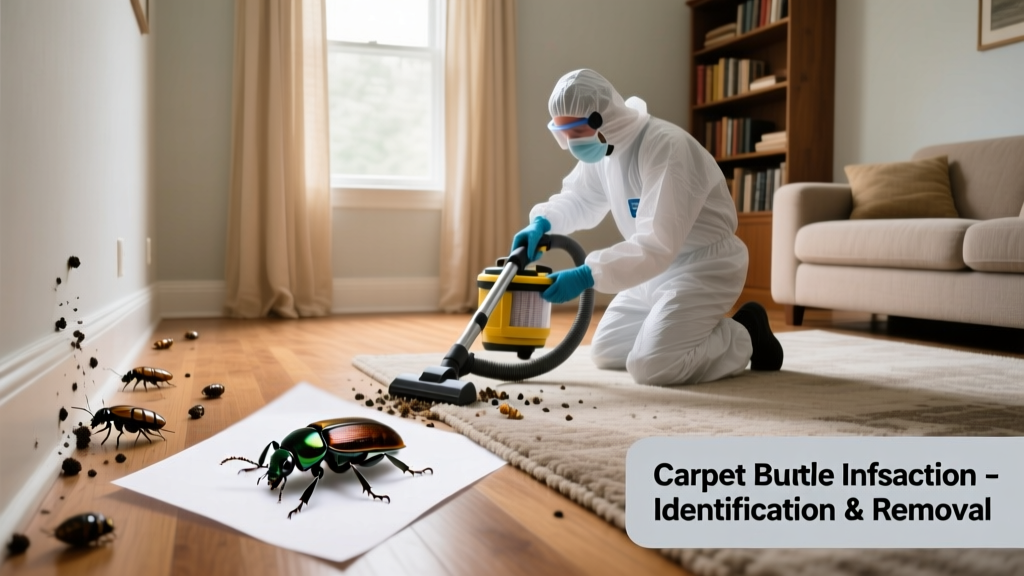
Carpet beetles (Anthrenus spp.) aren’t just a nuisance—they’re silent destroyers of wool rugs, silk garments, taxidermy mounts, and even stored pet food. Unlike moths, they don’t spin webs or leave obvious trails—but their tiny, bristly larvae chew irregular holes and leave behind shed skins and gritty frass that looks like dandruff. Left unchecked, an infestation can escalate for months before you notice damage.
Identification
Adult carpet beetles are oval, 1/16–1/8 inch long, and often mistaken for ladybugs—except they lack spots and don’t fly toward light. Common species include the varied carpet beetle (black with white, yellow, and orange scales), the furniture carpet beetle (mottled brown), and the black carpet beetle (solid dark brown to black). Larvae are the real culprits: 1/8–1/4 inch long, reddish-brown, covered in banded bands of fine hairs, and highly mobile—they crawl up walls and into ceiling corners.
| Feature | Carpet Beetle | Clothes Moth |
|---|---|---|
| Adult appearance | Hard-shelled, oval, colorful scales or solid black | Small, beige-gray, narrow wings held roof-like |
| Larva shape | Elongated, segmented, hairy, with bristly tail tufts | Cylindrical, off-white, legless, hidden in silken cases |
| Droppings | Small, gritty, tan-to-black pellets (frass) | Small, shiny, buff-colored casings |
| Damage pattern | Irregular holes; edges look chewed, not smooth | Smooth-edged holes, often near seams or folds |
What Attracts Them
Carpet beetles don’t seek out clean homes—they’re drawn to organic debris. Their larvae feed on keratin, so they thrive where animal-based materials accumulate: under baseboards, inside HVAC ducts, behind picture frames, in unused closets, and especially in attics where bird nests or rodent carcasses may be present. According to the Entomological Society of America’s 2022 Pest Management Guide, over 68% of confirmed carpet beetle infestations originate from undisturbed animal matter—not clothing storage alone.
- Pet hair trapped in carpet fibers and upholstery
- Dry, unvacuumed areas under furniture and along wall edges
- Old wool blankets, feather pillows, or natural-fiber rugs
- Bird or rodent nests in eaves, soffits, or wall voids
Treatment Methods
Natural Treatments
Vacuuming is your most effective first step—use a crevice tool on baseboards, window sills, and behind radiators. Empty the vacuum bag or canister outside immediately. Steam cleaning carpets at 200°F+ kills eggs and larvae on contact. Diatomaceous earth (food-grade) applied as a thin line along baseboards disrupts larval exoskeletons—reapply after vacuuming or humidity spikes. Freezing infested items (e.g., hats, scarves) at 0°F for 72 hours halts development.
Chemical Treatments
Pyrethrin-based aerosols (like Bedlam Plus) offer contact kill for adults and larvae in cracks and crevices—but avoid spraying on fabrics unless labeled safe. Boric acid dust works well in wall voids and under appliances when applied by a licensed technician. The U.S. EPA notes that carbaryl (Sevin Dust) is effective against larvae but should never be used near pet bedding or children’s play areas due to neurotoxicity risks.
"Most homeowners miss the source entirely. We find carpet beetle larvae feeding on dead wasps behind light fixtures or moth pupae in attic insulation—never in the rug itself." — Dr. Lena Torres, Urban Entomologist, Purdue Extension, 2023
Prevention
Prevention hinges on eliminating larval food sources and blocking entry points. Seal gaps around windows, doors, and utility lines with silicone caulk—adult beetles fly in through cracks as small as 1/32 inch. Store woolens and furs in airtight plastic bins (not cedar chests, which attract beetles). Wash or dry-clean seasonal clothing before storage. Replace old HVAC filters every 90 days—carpet beetle larvae feed on accumulated pet dander and skin cells trapped in filters.
- Inspect window screens for tears twice yearly
- Remove bird nests from gutters and vents before spring nesting season
- Wipe down baseboards with vinegar-water solution monthly to remove skin flakes and oils
- Rotate area rugs quarterly and vacuum both sides thoroughly
When to Call an Exterminator
Call a licensed pest professional if you find larvae in more than three rooms, see adult beetles indoors for four consecutive weeks, or discover evidence of nesting animals in your walls or attic. DIY efforts rarely reach larvae hiding deep in wall voids or behind built-in shelving. A certified technician can perform targeted dusting in voids and install monitoring traps to confirm elimination.
Do carpet beetles bite humans?
No—carpet beetles do not bite or feed on blood. However, their tiny larval hairs can cause allergic dermatitis in sensitive individuals, leading to itchy, red welts that resemble bites. This is a reaction—not an actual bite—and usually clears within 48 hours.
Can carpet beetles live in mattresses?
Rarely. Mattresses made with synthetic fibers aren’t attractive food sources. But if your mattress has wool batting, horsehair, or down filling—and hasn’t been cleaned in over a year—larvae may colonize seams and tufting points. Vacuum thoroughly with a HEPA-filter vacuum and encase in a tightly woven allergen-proof cover.
How long does it take to get rid of carpet beetles?
With consistent vacuuming, heat treatment, and source removal, visible adults drop within 7–10 days. Complete lifecycle interruption (eggs → adults) takes 6–12 weeks, depending on temperature. Cooler rooms slow development—larvae in basements may take up to 10 months to mature.
Are carpet beetles attracted to light?
Yes—adults are phototactic and gather near windows, lamps, and porch lights. That’s why you’ll often find them on sills or stuck in light fixtures. Use yellow LED bulbs outdoors to reduce attraction, and install tight-fitting screens on all openings.
Will washing clothes kill carpet beetles?
Hot water (130°F+) and high-heat drying (30+ minutes at 120°F) will kill all life stages. Cold washes and air-drying won’t. For delicate items, dry cleaning or freezing is safer. Always inspect pockets and hems before washing—larvae hide in stitching and buttonholes.
Do carpet beetles come from outside?
Yes—most infestations begin outdoors. Adults fly in during spring and early summer to lay eggs in protected spots: under shingles, in soffits, or inside dryer vents. They’re not seeking your carpet—they’re looking for pollen, dead insects, or bird feathers to lay eggs on. Once larvae hatch, they wander indoors searching for keratin-rich food.
Carpet beetles don’t vanish overnight—but they’re highly responsive to environmental control. Focus first on removing their food, then sealing entry points, and finally disrupting breeding sites. For persistent issues, review our bed bug inspection checklist—many detection tactics overlap. If you’ve found larvae near baseboards, also check for silverfish activity; both thrive in similar damp, dusty conditions. And if you spot adults near windows regularly, consider installing tighter window seals—it stops more than just beetles.