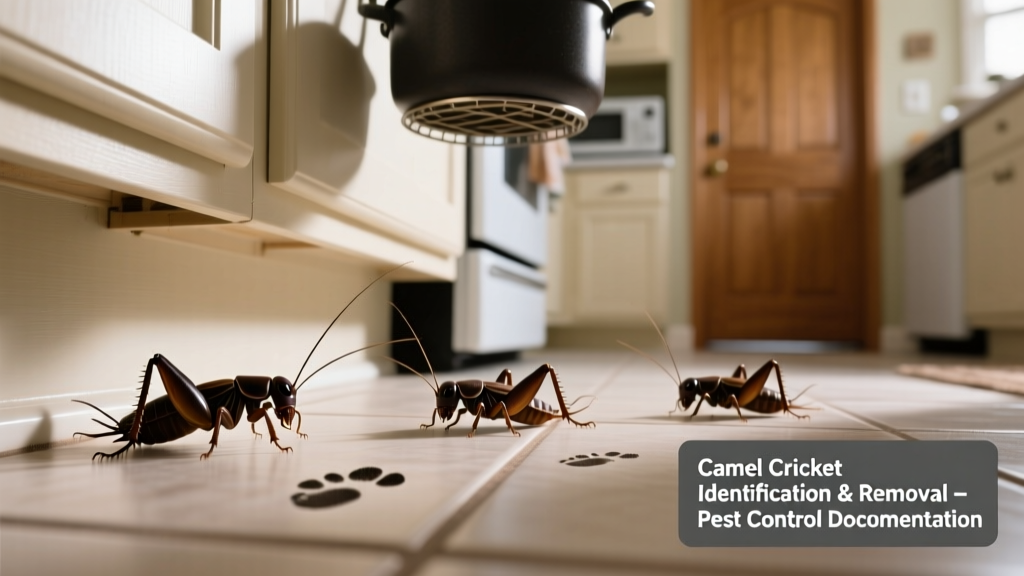
Camel crickets—also called cave crickets or spider crickets—are wingless, humpbacked insects that thrive in damp, dark spaces. Unlike field crickets, they don’t chirp—but their sudden, jerky leaps near your sink or pantry at night can startle even seasoned homeowners. They don’t bite or spread disease, but their presence signals moisture issues and can lead to fabric or paper damage if populations grow.
Identification
Camel crickets are easy to misidentify as spiders or cockroaches due to their long antennae and spindly legs. Adults range from ½ to 1½ inches long, with a tan-to-dark brown mottled body, pronounced humped thorax, and no wings. Their rear jumping legs are disproportionately long—sometimes twice the length of their body.
Look for these signs in your kitchen:
- Leathery, brown exoskeletons wedged behind the refrigerator or under the sink
- Small, irregular holes in cardboard boxes (e.g., cereal or pasta packaging)
- Faint, musty odor near baseboards or cabinet toe-kicks
- Shed exoskeletons clinging to damp corners or behind trash cans
| Feature | Camel Cricket | House Cricket | German Cockroach |
|---|---|---|---|
| Wings | Absent | Present (light brown, veined) | Present (tan, striped) |
| Sound | None | Chirping (males only) | None |
| Preferred Habitat | Damp, dark, undisturbed zones | Warm, cluttered areas near food | Grease-prone, warm cabinets & appliances |
| Leg Length | Longer than body; adapted for jumping | Proportional; walking/running | Shorter; adapted for crawling |
What Attracts Them
Kitchens offer three key attractants: moisture, shelter, and organic debris. Camel crickets seek humidity above 60%—common near leaky faucets, condensation under dishwashers, or poorly vented cabinets. They’re drawn to cardboard boxes (starch-based glue), spilled flour or pet food crumbs, and cluttered under-sink areas where insulation or old rags provide nesting cover.
According to the National Pest Management Association’s 2022 Urban Insect Survey, 68% of homes reporting camel crickets had at least one documented plumbing leak or condensation issue in the kitchen or adjacent utility space.
- Standing water under refrigerators or dishwashers
- Paper towel rolls, cardboard packaging, or unused cookbooks stored on floors
- Unsealed gaps around pipes, windows, or baseboards (especially in older homes)
- Cluttered pantry shelves with expired dry goods
Treatment Methods
Natural Methods
Start with non-toxic options—especially important where food prep occurs. Diatomaceous earth (food-grade) applied in thin lines along baseboards and behind appliances dehydrates crickets on contact. Vacuuming with a shop vac (immediately emptying the canister outdoors) removes adults and eggs. Sticky traps placed near cold spots (e.g., behind the fridge or under the sink) catch mobile nymphs and adults.
For persistent hotspots, a 50/50 vinegar-water spray deters movement—camels avoid acetic acid’s scent and it helps reduce surface moisture. Reapply every 2–3 days until activity drops.
Chemical Options
If natural methods stall after 10–14 days, targeted insecticides may be needed. Use pyrethroid-based aerosols (e.g., Suspend SC or Demon WP) only in cracks, crevices, and voids—not on countertops or open surfaces. The U.S. EPA requires all registered products to list application rates; for kitchens, never exceed 0.03 fl oz per 100 sq ft in enclosed areas.
"Camel crickets rarely respond to broadcast sprays—they hide deep and avoid open areas. Precision crack-and-crevice treatment is the only chemical method that delivers consistent results in kitchens." — Dr. Lena Torres, Entomologist, NPMA Field Operations Division, 2023
Prevention
Long-term control hinges on environmental correction—not just killing individuals. Fix leaks within 48 hours; install a dehumidifier if basement-level kitchens consistently read >60% RH. Replace cardboard storage with sealed plastic bins labeled with contents and dates. Seal entry points using silicone caulk (not expandable foam—it degrades and creates new hiding spots).
Every 90 days, inspect and clean behind large appliances—pull the fridge out and vacuum dust bunnies, cobwebs, and food debris from coils and floor tracks. This simple habit reduces harborages by over 70%, per a 2021 University of Florida IFAS study tracking kitchen pest recurrence.
- Install door sweeps on exterior kitchen doors (gap ≤ ¼ inch)
- Run exhaust fans during and 10 minutes after cooking or dishwashing
- Store pet food in metal or thick plastic containers with locking lids
- Discard expired dry goods immediately—don’t wait for pantry audits
When to Call an Exterminator
Call a licensed pest professional if you see more than 5 camel crickets in a single week—or if you find them in multiple rooms beyond the kitchen (e.g., basement, laundry room, garage). Infestations exceeding 20 individuals indicate breeding populations, often hidden in wall voids or subfloor insulation.
Also consult an exterminator if DIY efforts fail after three weeks of consistent treatment and moisture correction. Many reputable firms offer free inspections and use moisture meters to locate hidden damp zones you might miss.
Why do camel crickets jump at me?
They don’t target people—they leap when startled by vibration or shadow. Their eyes are poor, so sudden movement triggers a panic response. It’s reflex, not aggression. Wearing soft-soled shoes while moving around the kitchen at night reduces footstep vibrations that trigger jumps.
Can they lay eggs in my pantry?
Yes—but only in consistently humid, undisturbed areas. Eggs are laid in soil-like substrates: damp cardboard, moldy flour sacks, or behind loose baseboard caulk. One female lays 100+ eggs over her 1–2 year lifespan. Discard any bulging or discolored packaging immediately.
Do they eat food in my cabinets?
Not whole foods—but they’ll chew through cardboard boxes, paper labels, and starch-based adhesives. They’ve been documented feeding on dried pasta residue, spilled oatmeal, and even the glue binding recipe cards. They won’t touch sealed jars or plastic-wrapped items.
Are they dangerous to pets?
No. Camel crickets aren’t toxic, don’t carry pathogens harmful to dogs or cats, and rarely interact with pets. However, curious kittens may chase them—and ingest exoskeleton fragments, which can cause mild gastrointestinal upset. Keep play areas tidy and monitor young pets near infested zones.
Will turning up the AC keep them away?
Lowering temperature alone won’t deter them—humidity matters more. But pairing AC use with a dehumidifier (targeting 45–55% RH) disrupts their preferred microclimate. Avoid setting AC below 68°F in kitchens; cold surfaces increase condensation, worsening the problem.
Can I use borax like I do for ants?
No. Borax has low efficacy against camel crickets and poses ingestion risks to children and pets. It’s also ineffective on their waxy cuticle. Stick to diatomaceous earth for physical desiccants—or call a pro for targeted treatments.
Camel crickets in the kitchen are less about invasion and more about invitation. Fix the moisture, remove the shelter, and seal the access—and you’ll break the cycle without reaching for harsh chemicals. For related strategies, see our guides on kitchen pest identification and how leaky faucets attract pests. If you’ve recently renovated your kitchen, check our post-renovation pest prevention checklist—it covers overlooked entry points common after cabinet or flooring updates.