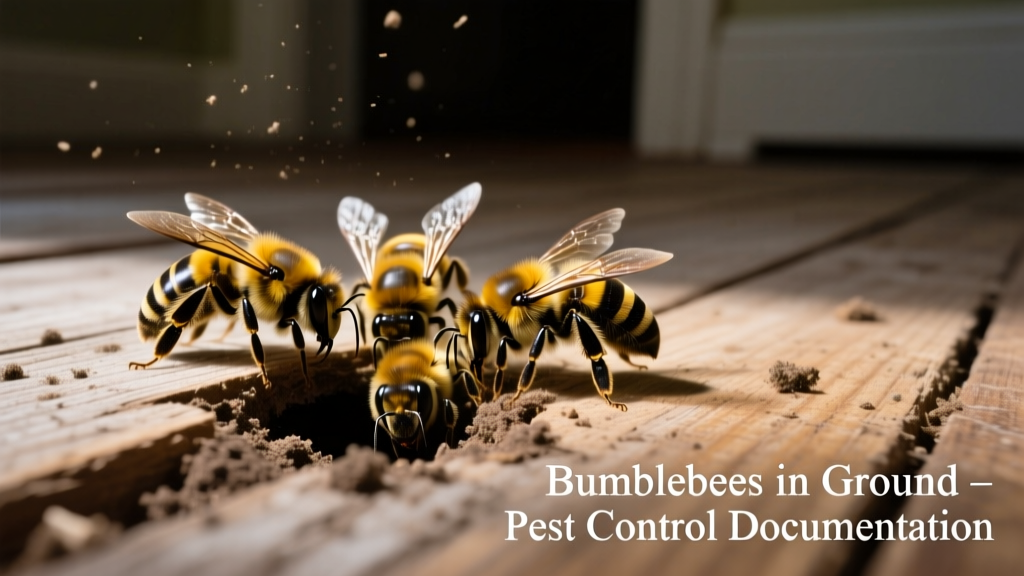
Bumblebees nesting in the ground aren’t a sign of infestation — they’re often native, non-aggressive pollinators using abandoned rodent burrows or loose soil. But confusion with aggressive yellowjackets or carpenter bees can lead to unnecessary panic or harmful interventions. Misidentification may result in killing beneficial insects or ignoring a real threat.
Identification
Ground-nesting bumblebees (Bombus spp.) are robust, fuzzy, black-and-yellow insects, typically 0.6–1 inch long, with rounded abdomens and dense hair that gives them a ‘plush’ appearance. They fly with a low, buzzing hum and rarely sting unless their nest is directly disturbed. Unlike wasps, they don’t build papery nests underground — instead, they occupy pre-existing cavities like old vole tunnels or compost piles.
| Insect | Size & Color | Nest Structure | Behavior Near Nest |
|---|---|---|---|
| Bumblebee | 0.6–1″; black/yellow, very hairy | Uses existing burrows; no visible mound | Calm; only defensive if stepped on or dug up |
| Yellowjacket | 0.5–0.75″; shiny black/yellow, smooth | Builds papery comb in soil; often has visible entrance hole + small dirt mound | Aggressive; swarms if disturbed |
| Miner Bee | 0.25–0.5″; metallic blue/black, slender | Individual tunnel entrances, often in compacted soil; no mound | Non-aggressive; solitary; flies low, darting |
- Look for fuzzy bodies and slow, deliberate flight — classic bumblebee traits
- Check for multiple bees entering/exiting one spot: bumblebees use single entrances, while yellowjackets may have dozens
- Observe timing: bumblebee activity peaks mid-morning to early afternoon, especially on warm, sunny days
What Attracts Them
Bumblebees don’t seek out human spaces — they follow ecological cues. Bare, south-facing soil patches with sparse vegetation attract queens in spring searching for sheltered nesting sites. Compost heaps, mulch beds, and undisturbed garden edges offer warmth and protection. According to the Xerces Society’s Pollinator Conservation Handbook (2022), over 70% of North American bumblebee species nest underground — so attraction is often just good habitat.
- Loose, sandy or loamy soil that’s easy to excavate
- Sheltered spots near flowering perennials (e.g., lavender, echinacea, clover)
- Areas free of heavy foot traffic or frequent digging
Treatment Methods
Natural Options
First, confirm it’s actually bumblebees — not yellowjackets. If confirmed, relocation is rarely needed. Instead, gently discourage nesting by watering the area deeply once daily for 3–4 days (bumblebees avoid saturated soil). Cover bare soil with 2–3 inches of wood chip mulch or plant low-growing groundcovers like creeping thyme or sedum. These reduce nesting appeal without harming bees.
Chemical Options
Chemical treatment should be avoided for bumblebees — they’re federally protected under the U.S. Fish and Wildlife Service’s Endangered Species Act monitoring program (2023) for several regional species, including the rusty-patched bumblebee (Bombus affinis). If misidentified yellowjackets are confirmed, dust formulations containing deltamethrin may be applied at dusk directly into the entrance, but only as a last resort and never near children, pets, or flowering plants. Always read the label — many products are illegal for use on pollinators.
"If you see more than 5–6 bees entering one hole and they’re fast, shiny, and dive-bombing your ankles, it’s almost certainly yellowjackets — not bumblebees. Don’t assume — watch for 10 minutes before acting." — Dr. Sarah Lin, Entomologist, Penn State Extension (2023)
Prevention
Prevent future nesting by modifying soil conditions and habitat year-round. Keep bare soil covered: use dense turfgrass, shade-tolerant groundcovers under shrubs, or gravel pathways in high-traffic zones. Avoid leaving piles of leaves, grass clippings, or rotting wood near foundations — these attract rodents whose abandoned burrows bumblebees later repurpose. Trim low-hanging branches to increase sun exposure and soil drying in potential nesting zones.
- Mow lawns regularly to maintain dense root structure — discourages tunneling
- Install shallow edging (e.g., metal or stone) along garden beds to block burrow access
- Plant native flowering shrubs away from patios and play areas to draw bees outward
When to Call an Exterminator
Call a licensed pest management professional only if you’ve confirmed yellowjackets or hornets — not bumblebees — and the nest is within 10 feet of a doorway, swing set, or outdoor kitchen. Most reputable companies now offer yellowjacket-specific protocols and will verify species before treatment. Never hire a service that guarantees “bee removal” without on-site ID — many default to extermination. For true bumblebees, contact a local pollinator conservation group instead; they often provide free, humane nest relocation for at-risk species.
Can bumblebees damage my lawn or foundation?
No. Bumblebees don’t excavate soil or chew wood. Their nests cause no structural harm. Any visible disturbance is usually from prior occupants (voles, moles) — not the bees themselves. Turf thinning near entrances is temporary and recovers in 2–3 weeks after colony decline.
Are ground bumblebees dangerous to kids or pets?
Rarely. Bumblebees lack the colony-defense instinct of yellowjackets. A sting requires direct pressure on the nest — think stepping barefoot on the entrance or digging with a shovel. Even then, most bumblebees sting only once and die afterward. The CDC reports fewer than 0.02% of all insect stings annually involve bumblebees.
How long do ground bumblebee colonies last?
One season. Queens emerge in early spring, establish nests by late April, rear workers by June, and produce new queens and males by late summer. By October, the colony dies off — only mated queens survive winter underground elsewhere. You’ll see no activity after first hard frost.
Why do I see dead bumblebees on my patio?
Often a sign of nearby nesting — but also common during colony decline in late summer. Worker bees forage farther as resources dwindle and may become exhausted or disoriented. Check for nesting signs first, but also consider pesticide drift from neighboring properties — a major factor in local bee mortality per the Neonicotinoid Effects Report (2023).
Can I move a bumblebee nest myself?
Not safely or legally in many states. Disturbing active nests risks stings and violates protections for endangered species. Licensed wildlife rehabilitators or university extension offices sometimes assist with gentle relocations — but only for verified at-risk species and only in early spring, before worker emergence.
Do bumblebees reuse the same nest each year?
No. Each queen starts fresh. However, favorable sites — like south-facing banks with loose soil and adjacent wildflowers — may host new queens annually. Long-term prevention means altering those site conditions, not targeting individual nests.
Ground-nesting bumblebees are more ally than adversary. Their presence signals healthy soil and diverse forage — signs your yard supports broader ecosystem resilience. When in doubt, pause, observe, and consult local extension agents before acting. Tolerance, not treatment, is often the most effective and ecologically sound response.