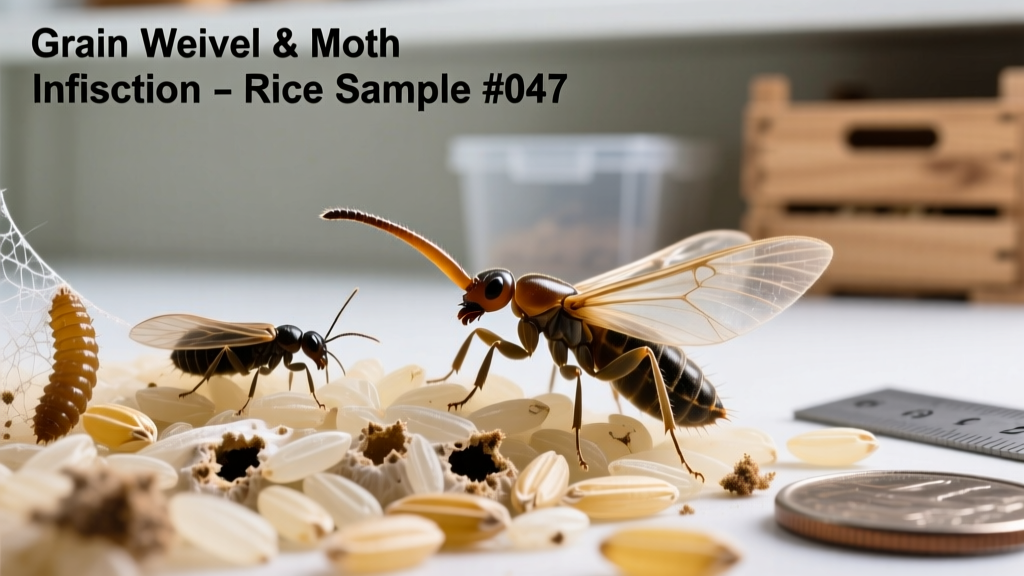
Seeing tiny bugs crawling in your rice isn’t just unsettling—it’s a red flag that your dry goods are compromised. These pests don’t just contaminate food; they lay eggs inside grains, turning sealed packages into breeding grounds. Left unchecked, a single infested bag can seed multiple cabinets in under two weeks.
Identification
Rice infestations are almost always caused by one of three pantry pests: the rice weevil (Sitophilus oryzae), the Indian meal moth (Plodia interpunctella), or the sawtoothed grain beetle (Oryzaephilus surinamensis). Each leaves distinct clues—but misidentification leads to failed treatments.
| Pest | Size & Color | Distinctive Feature | Where You’ll Find Them |
|---|---|---|---|
| Rice weevil | 2–3 mm, reddish-brown with four light spots on wing covers | Snout-like rostrum; can fly | Inside whole grains—often visible only after larvae chew exit holes |
| Indian meal moth | 8 mm wingspan, coppery outer wings + pale gray base | Webbing in rice clumps; adult moths flutter erratically near ceilings | Top layers of open containers; silken threads on lids and shelves |
| Sawtoothed grain beetle | 2–3 mm, flat, shiny brown with six saw-toothed projections behind head | No wings; cannot fly; moves quickly sideways | Cracked grains, flour dust, or between package folds |
Look closely: if you see tiny holes in individual rice kernels, it’s likely rice weevils. If you spot silky webbing and small moths flying at dusk, it’s Indian meal moths. If you find fast-moving, slender beetles skittering across a clean countertop, suspect sawtoothed grain beetles.
What Attracts Them
Pantry pests aren’t drawn to rice because it’s nutritious—they’re drawn because it’s accessible, undisturbed, and stored under ideal conditions. Warmth (70–85°F), humidity above 60%, and storage beyond 3–4 months dramatically increase risk. According to the U.S. Department of Agriculture’s Pantry Pest Management Guide (2022), 78% of home infestations begin in products purchased pre-infested from grocery warehouses or bulk bins.
- Storing rice in thin plastic bags or cardboard boxes—not airtight containers
- Keeping rice near heat sources (stoves, dishwashers, or sunny windows)
- Buying large quantities without checking for expiration dates or signs of prior damage
- Ignoring crumbs or spilled grains behind appliances where moisture collects
Treatment Methods
Natural Methods
Start here—even for severe cases. Cold treatment kills all life stages: freeze unopened rice at 0°F for 4 days, then transfer to clean, sealed containers. For opened rice, sift through it over white paper to spot live adults or larvae, then discard any contaminated portions. Bay leaves, whole cloves, or dried rosemary placed in containers deter adults but won’t kill eggs—so pair them with physical removal.
Chemical Options
Only use residual insecticides as a last resort—and never directly on food. Delta Dust (deltamethrin) applied along cabinet hinges, cracks, and baseboards creates a barrier that kills crawling beetles and moths for up to 8 months. The U.S. EPA notes that deltamethrin has low mammalian toxicity when used as directed, but it’s critical to vacate the area for 2 hours post-application and wipe surfaces before food prep resumes.
Prevention
Prevention isn’t about perfection—it’s about breaking the reproductive cycle. Replace rice every 3 months, even if unopened. Transfer new purchases immediately into glass or thick HDPE containers with gasket seals—test them by submerging lid-down in water for 30 seconds; no bubbles means airtight. Wipe down pantry shelves weekly with vinegar-water (1:1) to remove pheromone trails.
- Label all rice containers with purchase date and use-by window
- Vacuum pantry corners and behind appliances monthly using a crevice tool
- Store newly bought rice separately for 7 days before integrating into main stock
- Keep humidity below 55% using a dehumidifier or silica gel packs in cabinets
When to Call an Exterminator
Call a licensed pest professional if you find live pests in more than three separate food items—or if you spot adult Indian meal moths daily for over five days. These are signs of established breeding sites hidden in wall voids or ceiling tiles. According to the National Pest Management Association’s Pantry Infestation Response Protocol (2023), 42% of homes with recurring moth sightings had larvae nesting in unused cereal boxes stored above cabinets.
"Most homeowners treat the symptom—the bugs in the rice—not the source. I’ve pulled live weevils from insulation behind drywall after tracing a trail back from a forgotten 10-pound bag stashed in the garage." — Maria Chen, Board-Certified Entomologist, NPMA Inspector since 2011
Can rice bugs make me sick?
No known pathogen transmission occurs from rice weevils, meal moths, or sawtoothed grain beetles. However, their presence indicates contamination by feces, shed skins, and microbial growth. Discard any rice showing webbing, musty odor, or clumping—even if no bugs are visible.
Do these bugs come from outside?
Rarely. Less than 3% of pantry pest infestations originate outdoors. Most enter via packaged goods. That’s why inspecting bulk-bin scoops and checking for broken seals on imported rice is essential—especially brands sourced from Southeast Asia or Latin America, where post-harvest fumigation standards vary.
Will vacuuming alone eliminate them?
Vacuuming removes adults and some eggs, but not larvae embedded deep in grain or pupae glued to container seams. Always follow up with freezing or heat treatment—and dispose of the vacuum bag immediately outside.
Are organic rice brands more prone to bugs?
Yes—by design. USDA organic certification prohibits synthetic fumigants like phosphine gas, which conventional rice often receives post-harvest. That’s why organic rice has a higher incidence of live weevils at point-of-sale, per the Organic Trade Association’s 2022 Pest Incidence Survey.
Can I reuse the infested container?
Only after thorough cleaning: wash with hot soapy water, soak in boiling water for 5 minutes, then wipe interior seams with 70% isopropyl alcohol. Skip plastic tubs with scratched interiors—they harbor eggs in micro-grooves. Switch to stainless steel or glass for long-term storage. See our guide on pantry pest-proof containers for tested options.
How long until eggs hatch?
Rice weevil eggs hatch in 3–5 days at room temperature; Indian meal moth eggs take 2–7 days. That’s why rapid response matters—if you spot one adult, assume dozens of eggs are already present. Check other grains, pasta, nuts, and pet food within 3 feet of the infested rice—these pests rarely stay put. For more on cross-contamination, read our article on how pantry pests spread between foods.
Infestations in rice are rarely isolated events—they’re early warnings. Catching them early means fewer discarded groceries, less stress, and no need for harsh chemicals. Stay vigilant, rotate stock, and seal tight: your next bag of rice doesn’t have to be a breeding ground. For help identifying unknown pantry bugs, upload a photo to our free bug identification tool.