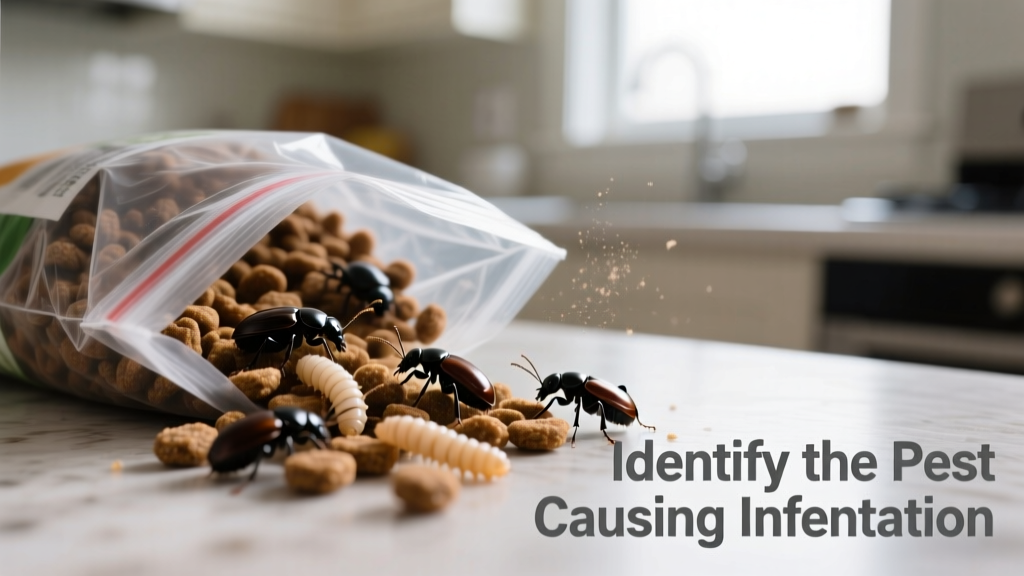
Pet food—especially dry kibble stored in warm, humid environments—is a prime target for pantry pests. These insects don’t just ruin bags of food; they introduce feces, webbing, and live larvae into your pet’s meals, posing health risks to dogs, cats, and even humans handling contaminated packaging.
Identification
Three pests dominate pet food infestations: Indian meal moths (Plodia interpunctella), sawtoothed grain beetles (Oryzaephilus surinamensis), and granary weevils (Sitophilus granarius). All thrive in dry, starchy foods—but their appearance, behavior, and damage differ sharply.
| Pest | Size & Color | Distinctive Features | Signs in Food |
|---|---|---|---|
| Indian meal moth | ½ inch wingspan; coppery-bronze rear wings, tan front wings | Flying adult; larvae spin silk webbing | Clumped kibble, silky threads, tiny white larvae crawling on bag interior |
| Sawtoothed grain beetle | 1/10 inch; flat, brown, six saw-like teeth on each side of thorax | Cannot fly; moves quickly across surfaces | No webbing; found whole in food or crawling on bag seams |
| Granary weevil | 1/8 inch; dark reddish-brown, elongated snout | Flies poorly; adults bore into whole grains to lay eggs | Hollowed-out kibble pieces; fine powder (frass) at bottom of bag |
Look closely inside opened bags, along seams, and under storage bins. Use a magnifying glass if needed—granary weevils are often missed without one.
What Attracts Them
These pests rarely originate in sealed, newly purchased food. Instead, they enter through tiny tears, resealable zipper failures, or cardboard box flaps left open. Once inside, they multiply rapidly: Indian meal moths complete a generation in 27–35 days at 77°F (University of California Agriculture & Natural Resources, 2022).
- Storage in warm areas (>70°F) accelerates egg development
- Humidity above 60% RH encourages mold growth—another attractant
- Transferring food to clear plastic bins exposes it to light and air, drawing moths
- Older stock kept past its "best by" date becomes more vulnerable to infestation
Treatment Methods
Natural methods
Start with non-chemical steps—especially if you have young pets or children. Discard all infested food immediately in an outdoor trash bin. Vacuum shelves, cracks, and baseboards thoroughly, then dispose of the vacuum bag outside.
- Freeze unopened bags at 0°F for 4 days to kill eggs and larvae (U.S. Department of Agriculture, 2021)
- Wipe down containers with vinegar-water (1:1) to remove pheromone trails
- Place bay leaves or whole cloves in new storage containers—they repel but don’t eliminate active infestations
Chemical options
Only consider targeted insecticides after natural methods fail—and never apply directly to pet food or feeding areas. The U.S. EPA permits pyrethrin-based aerosols for crack-and-crevice treatment in pantries, but label instructions must be followed exactly.
"If you see more than 5 adult Indian meal moths indoors over 48 hours, assume multiple life stages are present—even in unopened packages." — Dr. Susan Jones, Ohio State University Extension Entomologist, 2023
Prevention
Prevention hinges on breaking the pest lifecycle before it begins. Rotate stock using the "first in, first out" rule. Buy smaller bags if your pet eats slowly—most dry kibble loses freshness and increases pest risk after 6 weeks post-opening.
- Store food in rigid, opaque, airtight containers—preferably stainless steel or thick HDPE plastic with gasket seals
- Inspect every new bag before bringing it inside: check for pinholes, webbing, or live insects near seams
- Clean storage areas weekly with soapy water—not just sweeping—to remove residual oils and crumbs
- Keep pet food in a cool, dry location (ideally <65°F and <50% RH)
When to Call an Exterminator
Call a licensed pest professional if you find pests in three or more unrelated food items (e.g., pet food, flour, birdseed, cereal), or if adults continue appearing after two weeks of strict sanitation and freezing. Hidden infestations often nest in wall voids behind pantry cabinets—something DIY methods can’t reach.
Can I feed my pet food that had bugs in it?
No. Even if you pick out visible insects, larvae and frass may carry bacteria like Salmonella or E. coli. Discard the entire bag—and inspect adjacent items. For peace of mind, see our guide on safe pet food storage practices.
Do these pests bite people or pets?
No. Indian meal moths, grain beetles, and weevils do not bite, sting, or transmit disease to mammals. Their threat is contamination—not physical harm. Still, avoid inhaling dust from infested food, which may trigger respiratory irritation.
Why did this happen even though the bag was sealed?
Most infestations begin before purchase. Eggs or tiny larvae can be present inside the bag at the manufacturing or distribution stage—especially if the facility stores raw grains nearby. That’s why visual inspection at home is critical, even on factory-sealed products.
Are organic or grain-free pet foods more prone to bugs?
Yes—often. Organic formulas avoid synthetic preservatives like BHA/BHT, relying instead on rosemary extract or mixed tocopherols, which offer shorter shelf-life protection against pests. Grain-free diets frequently use legumes (peas, lentils) that are highly attractive to granary weevils. Check our organic pet food pest risks comparison.
Can I reuse the storage bin after an infestation?
Yes—if thoroughly cleaned. Wash with hot, soapy water, then wipe interior seams with 70% isopropyl alcohol. Let air-dry completely before refilling. Avoid porous containers like wood or untreated ceramic—they harbor eggs in microscopic pores.
How long until the problem is fully gone?
With full sanitation and freezing, most infestations resolve in 2–3 weeks—the time needed for remaining eggs to hatch and die without food. Monitor with sticky traps near storage zones for 14 days after the last sighting to confirm elimination.
Consistent habits—not just one-time fixes—keep pantry pests out of pet food for good. Airtight storage, routine inspection, and prompt disposal make all the difference. For help choosing the right container, explore our best pet food containers roundup based on real-world pest resistance testing.