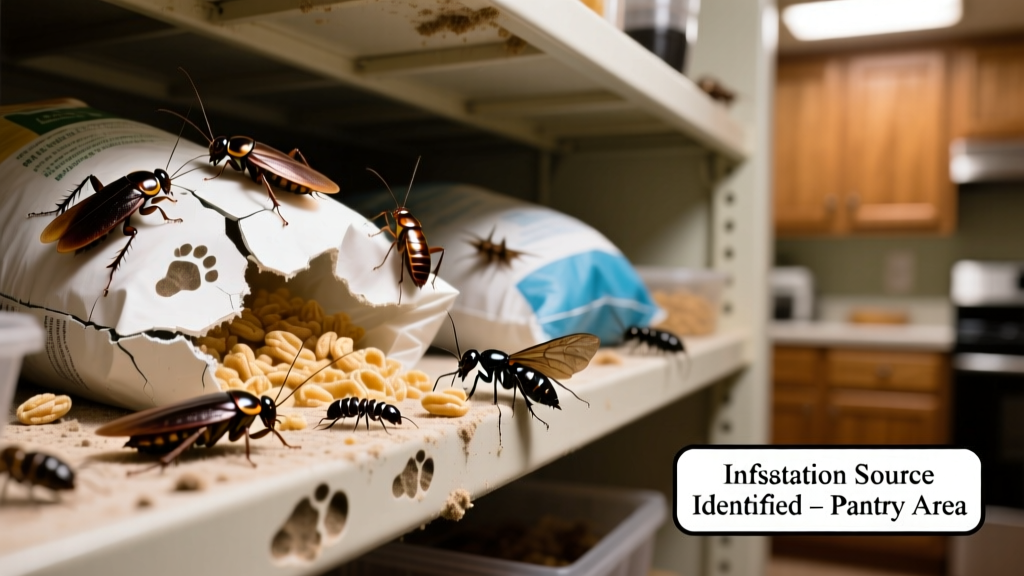
Pantry pests aren’t just annoying—they’re food thieves that chew through packaging, lay eggs in grains and spices, and leave behind webbing, frass, and foul odors. Most infestations start with a single contaminated bag of flour or cereal, then explode within 2–3 weeks as larvae mature and reproduce.
Identification
Four common pantry pests dominate U.S. kitchens: Indian meal moths, sawtoothed grain beetles, drugstore beetles, and flour beetles. Each leaves distinct clues—knowing which is present determines your next move.
- Indian meal moth: 8–10 mm wingspan; coppery outer wings, pale gray inner wings; larvae spin silk webbing in food and crawl up walls.
- Sawtoothed grain beetle: 2–3 mm long, flat brown body with six tooth-like projections on each side of thorax; no wings, moves fast across surfaces.
- Drugstore beetle: 2–3 mm, reddish-brown, oval-shaped, fine hair covering body; boring larvae tunnel into pills, spices, and dried herbs.
- Confused flour beetle: 3–4 mm, reddish-brown, elongated, antennae gradually widen toward tip; cannot fly but reproduces rapidly in warm, humid pantries.
| Pest | Size & Color | Distinctive Markings | Primary Signs in Pantry |
|---|---|---|---|
| Indian meal moth | 8–10 mm; coppery + gray wings | Bicolor wings; adult flies near ceiling | Silky webbing, clumped grains, tiny white larvae |
| Sawtoothed grain beetle | 2–3 mm; shiny brown | 6 saw-like teeth on thorax sides | Found crawling in open cereal, oatmeal, or crackers |
| Drugstore beetle | 2–3 mm; reddish-brown | Fine hairs visible under magnification | Holes in spice tins, powdered supplements, dried tea |
| Confused flour beetle | 3–4 mm; reddish-brown | Antennae widen gradually (not abruptly) | Cloudy flour, musty odor, live adults in bulk bins |
What Attracts Them
Pantry pests don’t invade randomly—they follow scent trails to starches, oils, and proteins. Whole grains, nuts, dried fruit, pet food, birdseed, and even potpourri provide ideal breeding grounds. Warmth (70–85°F) and humidity above 60% accelerate development: Indian meal moth eggs hatch in just 2–7 days under those conditions (University of Florida IFAS Extension, 2022).
- Cracked or porous packaging (paper bags, thin plastic)
- Unsealed containers left open for >24 hours
- Expired or long-stored dry goods (especially >6 months)
- Spills and crumbs trapped behind shelves or in drawer tracks
Treatment Methods
Natural Methods
Start here—especially if you have kids or pets. Discard all infested items immediately (double-bag in sealed plastic and remove from home). Vacuum pantry shelves, cracks, and crevices thoroughly, then wipe with vinegar-water (1:1) to disrupt pheromone trails. Freeze unopened dry goods at 0°F for 4 days to kill hidden eggs and larvae—a method validated by USDA ARS studies (2021).
- Bay leaves (2–3 per container) deter moths and beetles
- Diatomaceous earth (food-grade) applied in shelf corners disrupts exoskeletons
- Cedar blocks placed near entry points mask attractant scents
Chemical Options
Reserve these for persistent cases where natural methods fail after two full cleaning cycles. Pyrethrin-based aerosols (e.g., CB-80) can target flying moths in upper cabinets—but never spray near food prep surfaces. For beetles hiding in wall voids, a crack-and-crevice application of deltamethrin dust (e.g., DeltaDust) may be needed. Always follow EPA label instructions precisely and ventilate well.
"Over 65% of pantry infestations traced back to a single contaminated grocery item—yet 90% of homeowners treat the entire pantry instead of isolating and discarding the source." — Dr. Elena Ruiz, Entomologist, UC Riverside Pest Management Program, 2023
Prevention
Prevention isn’t about perfection—it’s about breaking the life cycle. Store all dry goods in rigid, airtight containers: glass jars with silicone seals or thick HDPE plastic with locking lids (tested to resist beetle chewing). Label containers with purchase dates and rotate stock using “first in, first out.” Inspect new groceries at checkout—look for webbing in pasta boxes or tiny holes in spice tins.
- Clean pantry every 3 months: pull everything out, vacuum shelf tracks, wipe with diluted vinegar
- Keep humidity below 55% using a dehumidifier or exhaust fan during cooking
- Store pet food and birdseed in metal or heavy-duty plastic outside the kitchen if possible
When to Call an Exterminator
Call a licensed pest professional if you find live adults daily for more than 10 days after full cleanup—or if you spot larvae or pupae inside wall voids, light fixtures, or ceiling tiles. These indicate established breeding sites beyond reach of DIY tools. Also contact one if beetles appear in multiple rooms (bedroom closets, bathroom cabinets), suggesting structural harborage.
Why are there moths flying near my pantry ceiling?
Indian meal moths seek high, warm spots to mate and lay eggs. Their flight pattern isn’t random—it’s a sign active adults are emerging from infested food nearby. Check flour, cornmeal, and nut butters first; larvae often pupate in ceiling corners after crawling upward.
Can pantry bugs get into sealed plastic bags?
Yes—sawtoothed and drugstore beetles chew through thin polyethylene (like standard zip-top bags). Even “resealable” bags aren’t beetle-proof unless labeled ASTM F1249 barrier grade. That’s why rigid containers are non-negotiable for long-term storage.
Do pantry pests carry diseases?
They’re not known disease vectors like cockroaches or flies, but they do contaminate food with feces, shed skins, and webbing. The FDA allows up to 75 insect fragments per 50g of wheat flour (FDA Defect Levels Handbook, 2023)—but that doesn’t mean it’s safe to eat infested product.
Will cold weather kill pantry pests?
Room-temperature cooling won’t help. You need sustained freezing: 0°F for 4 days kills all life stages. Refrigeration (32–40°F) only slows development—it doesn’t stop egg hatching or larval feeding.
How long does a pantry infestation last?
With no intervention, Indian meal moths complete a generation in 25–40 days. Left unchecked, populations can peak at hundreds of adults in 8–10 weeks. But with prompt removal and sanitation, most infestations resolve in 7–14 days.
Are pantry beetles the same as carpet beetles?
No. Carpet beetles (Anthrenus spp.) feed on animal fibers—wool, fur, feathers—not pantry items. Their larvae look fuzzy and avoid light; pantry beetles are sleek, active, and thrive in stored foods. Confusing them leads to misdirected treatment—so learn the difference before spraying.
A pantry infestation is rarely about cleanliness—it’s about vulnerability. Once you know which pest you’re dealing with, targeted action stops reproduction fast. For ongoing protection, pair physical barriers with routine inspection: check one shelf deeply each week, and always smell before opening old packages. If you’ve had repeated issues, consider upgrading to pest-resistant pantry organizers with integrated sealing systems—and revisit your grocery sourcing habits. Some bulk-food suppliers have higher pest incidence rates than others; ask about their IPM protocols before buying in volume.