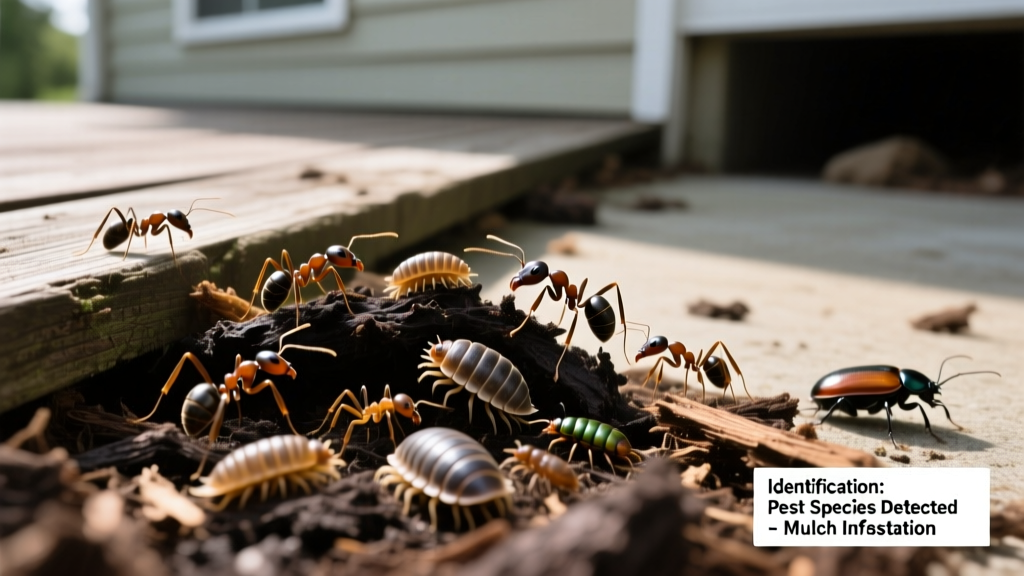
Mulch is meant to suppress weeds and retain moisture—but when it starts teeming with bugs, it’s often a sign of underlying moisture issues or hidden infestations. Not all mulch-dwelling insects are harmless: some damage plants, others signal structural risk, and many indicate poor drainage or decaying organic matter.
Identification
Three pests commonly mistaken for one another live in mulch: springtails, pill bugs (roly-polies), and subterranean termites. Springtails are tiny (1–2 mm), gray or black, and jump when disturbed—they’re harmless but thrive where mold or fungus grows. Pill bugs are oval, slate-gray, and roll into balls; they feed on decaying leaves, not living plants. Termites are pale, soft-bodied, ant-like but without a narrow waist—and their presence in mulch near foundations is a red flag.
| Pest | Size & Color | Behavior | Risk Level |
|---|---|---|---|
| Springtail | 1–2 mm, gray/black | Jump 3–4 inches when prodded; swarm on wet surfaces | Low — nuisance only |
| Pill Bug | 4–15 mm, slate-gray | Rolls into ball; avoids light; clusters under damp mulch | Low — beneficial decomposer |
| Subterranean Termite | 4–6 mm, creamy white or tan | Never seen alone; found in mud tubes or swarming near lights at dusk | High — can compromise wood structures within 3–6 months |
What Attracts Them
Mulch itself isn’t the problem—it’s how it’s used. Overmulching (more than 3 inches deep), piling mulch against house siding, or using fresh hardwood chips that ferment and generate heat all create ideal microhabitats. According to the University of Florida IFAS Extension’s 2022 mulch management bulletin, 78% of termite inspections linked to mulch involved beds >4 inches deep and within 6 inches of foundation walls.
- Excess moisture from poor grading or clogged gutters
- Decaying wood chips (especially oak or pine bark)
- Direct contact between mulch and wood siding or deck posts
- Lack of airflow due to dense plantings or overwatering
Treatment Methods
Natural Treatments
Dry out the environment first—rake mulch thin (2–3 inches), pull it back 12 inches from foundations, and improve soil drainage. Diatomaceous earth (food-grade) applied as a dry dust along mulch edges disrupts exoskeletons of springtails and pill bugs—but must stay dry to work. For localized termite activity, borax-based baits like termite bait stations can be installed 3–4 feet from the foundation, monitored monthly.
Chemical Treatments
For confirmed termite infestations, liquid termiticides (e.g., imidacloprid or fipronil) applied as a continuous barrier 6 inches deep and 12 inches wide around the perimeter are required by most state pest control regulations. Do not apply these to mulch beds directly—always treat soil beneath. The U.S. EPA notes that improper application increases runoff risk by up to 40% in clay soils (EPA Pesticide Registration Notice 2021-1).
Prevention
Switch to less hospitable mulch types: cedar or cypress contain natural oils that repel many arthropods, and gravel or rubber mulch eliminates organic food sources entirely. Replenish mulch annually—not more than once—and always inspect the soil surface underneath for mud tubes or frass before adding new layers.
- Keep mulch depth at 2–3 inches max
- Maintain a 12-inch mulch-free zone around all exterior walls
- Install French drains or extend downspouts 5+ feet from foundation
- Inspect mulch beds weekly during spring and early summer for swarming or tunneling
When to Call an Exterminator
Call immediately if you find mud tubes bridging from soil to wood, discarded wings near doors or windows (a sign of termite swarmers), or if multiple locations show consistent, unexplained insect die-offs—this may indicate pesticide resistance or secondary infestation. Licensed exterminators can perform moisture mapping and use infrared cameras to detect hidden nests behind siding.
Are springtails harmful to plants?
No—they don’t chew roots or stems. They feed exclusively on fungi and decaying organic matter. Their presence signals excess moisture or fungal growth, not plant disease. If you see them on seedlings, check for overwatering or poor ventilation in greenhouses.
Can pill bugs damage my garden?
Rarely. Pill bugs prefer rotting vegetation and rarely touch healthy tissue. However, during drought stress, they may nibble on tender seedlings or strawberries resting on damp soil. Elevating fruit with straw or plastic mesh reduces contact.
Is cedar mulch really termite-resistant?
Partially. Eastern red cedar contains thujone, which deters foraging workers—but it won’t stop established colonies. A 2020 study in Journal of Economic Entomology found cedar mulch reduced termite foraging by 32% compared to pine bark, but didn’t prevent colony establishment when soil moisture remained high.
Why do I see bugs only after rain?
Most mulch-dwellers are negatively phototactic and highly sensitive to desiccation. Rain saturates the upper mulch layer, forcing them upward temporarily. If they’re still active 48 hours post-rain, the underlying soil likely stays saturated—pointing to drainage failure, not just weather.
Does colored mulch attract more bugs?
No evidence supports this. The dye (usually iron oxide or carbon-based) has no nutritional value. However, dyed mulches often come from recycled pallets or construction debris—materials more likely to harbor pre-existing insect eggs or fungal spores. Always source from reputable suppliers who heat-treat mulch to 160°F for 30 minutes.
How long does it take for treatment to work?
For springtails and pill bugs: 3–7 days after drying and raking. For termites: bait stations require 30–90 days to transfer slow-acting toxins through the colony. Liquid barriers act faster (within 2 weeks) but demand precise trenching and calibration—best left to pros.
"Mulch isn't the pest—it's the symptom. Fix the moisture, fix the habitat, and 90% of 'buggy mulch' resolves without a single chemical." — Dr. Lena Cho, Urban Entomologist, Rutgers Cooperative Extension, 2023
If you’ve corrected moisture, replaced suspect mulch, and still see consistent activity beyond two weeks, consider testing soil pH and salinity—some pests thrive in compacted, alkaline soils common in urban landscapes. For ongoing monitoring, place a damp cardboard square on top of mulch overnight; check underside at dawn for clustered insects. This simple trick helps confirm species and activity level before escalating control methods. Also see our guide on signs of termites in walls and how to get rid of springtails for targeted next steps.